
Main Courses
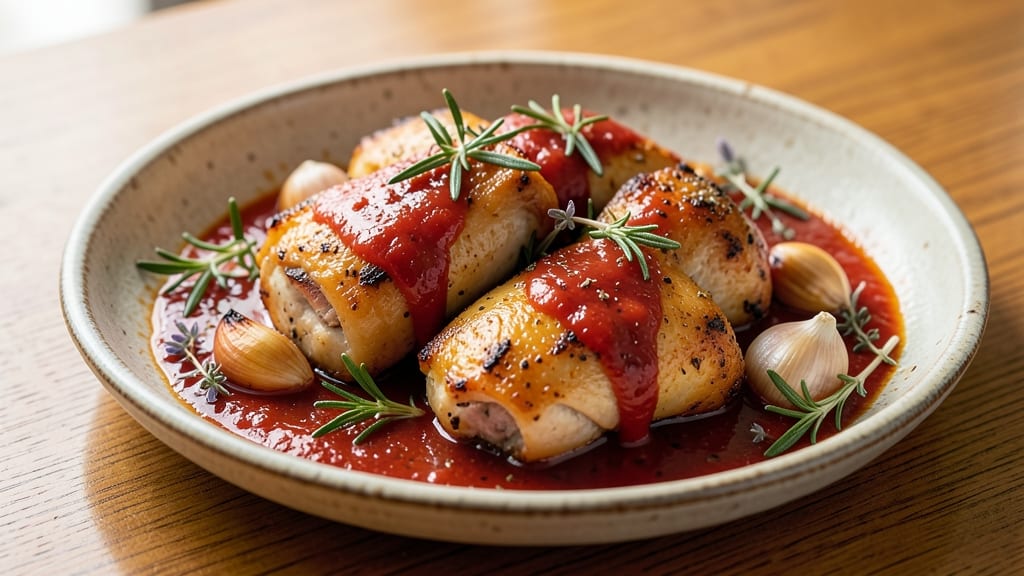
Rao’s Chicken Cacciatore transforms a simple weeknight dinner into a restaurant-worthy Italian masterpiece with just a few key ingredients and patient simmering.
This classic dish—where tender chicken braises in a rich, tomato-based sauce with garlic, herbs, and a splash of wine—delivers deep, savory flavors that taste like a slice of Rome on your dinner table.
The secret lies in Rao’s tomato sauce, which provides that authentic, slightly sweet base that’s the heart of any great cacciatore.
What sets this recipe apart is its balance of simplicity and depth—no fancy techniques, just a foolproof method that builds flavor layer by layer.
You’ll start with seared chicken, deglaze the pan with wine to capture all those caramelized bits, then let the sauce simmer until it’s thick, aromatic, and perfectly balanced. The result? Juicy chicken swimming in a sauce that’s tangy, herby, and just sweet enough to make every bite irresistible.
This dish is designed for weeknights but tastes like a celebration—ideal for feeding a family or impressing guests without hours in the kitchen. The 30-minute prep and 1-hour simmer mean dinner is on the table when you need it, while the flavors develop into something extraordinary.
Serve it with crusty bread to soak up every last drop of that velvety sauce, or pair it with polenta for a heartier meal.
The beauty of Rao’s Chicken Cacciatore is its versatility—it’s classic enough to feel traditional but flexible enough to adapt to what you have on hand. Whether you’re a seasoned home cook or new to Italian cuisine, this recipe delivers restaurant-quality results with minimal effort.
Let’s get to the simmering—your taste buds will thank you.
Ingredients for rao's chicken cacciatore
Pantry staples meet Italian tradition in this weeknight classic. Just 13 ingredients transform simple chicken into restaurant-worthy cacciatore.
| Ingredient | Amount | Notes |
|---|---|---|
| Boneless, Skinless Chicken Thighs 🍗 | 1 ½ lb | Cut into bite-sized pieces |
| Rao's Tomato Sauce 🍅 | 2 cups | Jarred, high-quality preferred |
| Dry Red Wine 🍷 | ½ cup | Bold, like Cabernet Sauvignon |
| Garlic Cloves 🧄 | 4 cloves | Minced, fresh preferred |
| Fresh Rosemary 🌿 | ½ tsp | Finely chopped, or dried substitute |
| Fresh Thyme Leaves 🌿 | 1 tsp | Or 0.5 tsp dried thyme |
| Olive Oil 🫒 | ¼ cup | Extra-virgin for richness |
| Chicken Broth 💧 | ½ cup | Low-sodium preferred |
| Capers 🥒 | 1 tbsp | Optional, for briny depth |
| Salt 🧂 | 1 tsp | Kosher or sea salt |
| Black Pepper 🌶️ | ½ tsp | Freshly ground preferred |
| Red Pepper Flakes 🌶️ | ¼ tsp | Optional, for heat |
| Fresh Parsley 🌿 | ¼ cup | Chopped, for garnish |
Rao’s tomato sauce is the star here—grab the jarred kind from the Italian aisle (not the canned diced tomatoes). The good stuff has that perfect balance of sweetness and acidity. If you’re feeling fancy, Whole Foods or Trader Joe’s carry the best brands. For the wine, any bold, dry red works—Cab Sauv, Merlot, whatever’s open. The chicken thighs are key: bone-in, skin-on stays juicier, but boneless works too. I always buy them on sale and freeze extras—they keep for months. The herbs? Fresh is best, but dried thyme and rosemary work at half the amount if that’s all you’ve got.
No red wine? Substitute with extra chicken broth plus a splash of balsamic vinegar—it mimics the depth. Short on capers? Skip them or use a pinch of salted anchovy paste (trust me, it’s a game-changer). The garlic can be roasted for a sweeter flavor—just toss whole cloves in olive oil at 400°F for 10 minutes. No fresh rosemary? Dried works, but toast it first in a dry pan for 30 seconds to wake up the flavor. The parsley is just for garnish, but if you’re out, basil or cilantro in a pinch won’t ruin the dish.
This sauce gets better the next day—make extra and freeze portions for lazy nights. Store leftovers in the fridge for 4-5 days, or freeze for 3 months. I always reheat gently on the stove with a splash of broth to keep it from drying out. Serve it with crusty bread (the good stuff, not the pre-sliced kind) to soak up every last drop of that velvety sauce. The chicken reheats beautifully too—just warm through with a splash of broth or wine.
Why You'll Love This Recipe
- One-Pan Magic: I swear by this recipe when I don’t want to dirty more than one dish. Brown the chicken thighs in a skillet, deglaze with wine, toss in Rao’s sauce and herbs—boom. Twenty minutes later, you’ve got a restaurant-worthy dish with zero extra pots.
- Wine-Paired Perfection: That splash of dry red wine? It’s not just for show—it cuts through the richness of the chicken and lets the garlic and rosemary shine. Honestly, I’ll often pour myself a glass while it simmers, and by the end, the whole kitchen smells like a Tuscan trattoria.
- Leftovers That Don’t Suck: Between us, cacciatore is one of the few dishes where leftovers taste better the next day. The flavors meld into this deep, saucy goodness that’s perfect for sandwiches, pasta, or just reheating with a sprinkle of cheese. (Yes, even on a Tuesday night.)
- Budget-Friendly Feast: Chicken thighs are forgiving, Rao’s sauce is affordable, and a bottle of wine stretches further than you’d think. I’ve fed four people for under $15 with this—plus, the leftovers stretch it even further. Solid for when you want to impress without breaking the bank.
Step-by-step instructions for Rao's chicken cacciatore recipe
Here's how to make this comforting Italian classic—simple, flavorful, and perfect for busy weeknights.
Sear the Chicken for Maximum Flavor
Heat the 0.25 cup olive oil in a large, heavy skillet over medium-high heat until shimmering. Pat the 1.5 lb boneless, skinless chicken thighs dry with paper towels—this ensures a good sear. Working in batches to avoid overcrowding, add the chicken pieces and cook for 4-5 minutes per side until golden brown and cooked through to 165°F internally.
Real talk: Don't rush this step. You want deep color on the chicken—that's where all the flavor starts. If the pan gets too crowded, the chicken will steam instead of sear. Once browned, remove the chicken and set it aside on a plate.
Build the Rich Tomato-Wine Sauce
Reduce the heat to medium and add the 4 cloves minced garlic cloves, 0.5 tsp finely chopped fresh rosemary, and 1 tsp fresh thyme leaves to the same skillet. Cook for 1-2 minutes until fragrant—you should smell that aromatic punch of garlic and herbs.
Pour in the 0.5 cup dry red wine and scrape up any browned bits from the bottom of the pan with a wooden spoon. This deglazing step captures all those flavorful fond bits that would otherwise go to waste. Let the wine simmer for 3-4 minutes until reduced by about half.
Add the 2 cups Rao's tomato sauce, 0.5 cup chicken broth, 1 tbsp capers, 1 tsp salt, 0.5 tsp black pepper, and 0.25 tsp red pepper flakes. Stir well to combine, then bring the mixture to a gentle simmer. Let it cook uncovered for 10-12 minutes, stirring occasionally, until slightly thickened.
Braise the Chicken Until Tender
Return the chicken to the skillet, spooning the sauce over the top to coat evenly. Cover with a lid and reduce the heat to low. Let it simmer gently for 20-25 minutes, stirring occasionally, until the chicken is fork-tender and the sauce has thickened to a glossy consistency.
Here's the thing—this low-and-slow braising is what makes the chicken melt-in-your-mouth tender while keeping it juicy. If the sauce reduces too much before the chicken is done, add a splash of water or broth to maintain the right consistency.
Finish and Garnish
Once the chicken is tender and the sauce has reached your desired thickness, remove the skillet from heat. Stir in the 0.25 cup chopped fresh parsley and taste for seasoning. Adjust with additional salt or pepper if needed—this is your chance to perfect the flavors.
Let the cacciatore rest for 5 minutes before serving. This resting time allows the juices to redistribute throughout the chicken, ensuring each bite is moist and flavorful. Serve immediately over polenta, crusty bread, or your favorite pasta to soak up that delicious sauce.
Pro Tips For Making Rao'S Chicken Cacciatore
- SEAR THE CHICKEN FIRST: That Rao’s sauce is rich, but it won’t cling to pale, steamed chicken. Hit the thighs with a hot pan—no oil needed, their own fat will release—until they’re deep golden on both sides. I learned this the hard way after serving dinner where the chicken looked like it was boiled in marinara.
- DEGLaze WITH WINE IMMEDIATELY: Once the chicken’s out, don’t wipe the pan—those browned bits are flavor gold. Splash in the red wine right away and let it bubble for 30 seconds. Skimp here, and you’ll miss half the depth of the sauce. (Yes, even if you’re impatient like me.)
- MINCE THAT GARLIC FINE: Rao’s sauce is already bold, but fresh garlic makes it sing. Use a knife—not a press—and chop those cloves into a paste. Whole cloves just sit there like decorative rocks. My grandmother swore by this, and she was right: the sauce actually tastes like garlic, not just "something tomato-y."
- STIR THE SAUCE LOW AND SLOW: After adding the Rao’s sauce, resist the urge to crank the heat. Simmer on medium-low, stirring occasionally, for at least 20 minutes. Rushing turns the sauce into a thin, one-dimensional glaze. Patience here guarantees that thick, velvety texture you crave. (Your future self will thank you.)
Regional styles of this dish
Roman Roots
This dish traces back to Rome, where cacciatore literally means "hunter-style"—originally made with whatever game or poultry hunters brought home. In Rome, you’ll find versions with guanciale (cured pork cheek) instead of wine, but the tomato-wine base remains iconic.
The Rao’s tomato sauce connection comes from its authentic Italian flavor, which became a pantry staple for home cooks recreating restaurant-quality results. 🍅
In traditional Roman kitchens, the dish was slow-cooked in a terra cotta pot over open flames, allowing flavors to meld for hours. Today, we replicate that depth with a Dutch oven or heavy skillet on the stovetop.
The key difference? Modern versions use jarred tomato sauce (like Rao’s) for convenience, while purists insist on fresh San Marzano tomatoes simmered for hours.
Southern Italian Twist
Down in Southern Italy, particularly in Naples and Sicily, cacciatore often includes olives, anchovies, or even a splash of vinegar for brightness. The Sicilian version might swap red wine for white wine or even Marsala wine, creating a sweeter, more complex sauce.
I’ve made this adaptation by adding ½ cup pitted Kalamata olives and 2 anchovy fillets (finely chopped) to the sauce during the final simmer—it adds a briny depth that’s pure Southern Italian magic.
Another regional favorite is the Calabrian variation, where hot Calabrian chili paste replaces red pepper flakes, giving the dish a smoky, fiery kick. For a milder heat, I recommend ½ tsp of the paste—it’s intense! This version pairs beautifully with crusty ciabatta to soak up the bold sauce.
American Homestyle
When Italian immigrants brought cacciatore to the US, they adapted it to local pantries—replacing hard-to-find ingredients like guanciale with bacon or pancetta. The American version often includes bell peppers and onions for extra sweetness, creating a sweeter, slightly thicker sauce.
I’ve seen family recipes where ½ cup diced bell peppers are sautéed with the garlic, adding a touch of natural sweetness that balances the acidity.
Another common American twist is the addition of mushrooms—cremini or white button—sautéed with the garlic for an earthy depth. For a heartier dish, some cooks add ½ cup diced potatoes to the braise, turning it into a one-pot meal.
This works especially well if you’re serving it over mashed potatoes instead of bread.
Modern Fusion
Today’s chefs are putting their own spin on cacciatore, blending Italian tradition with global flavors. One of my favorites is a Thai-Italian fusion where lemongrass and lime zest replace rosemary, and coconut milk lightens the sauce.
For a smoky twist, I’ve added 1 tbsp smoked paprika to the tomato sauce and served it over cilantro-lime rice—the contrast is unexpected but delicious.
For a Mexican-inspired version, swap the capers for pickled jalapeños and add ½ tsp ground cumin to the sauce. Serve it with warm corn tortillas for dipping—it’s a crowd-pleaser at dinner parties.
The key is balancing the bold new flavors with the classic tomato-wine base so the dish still feels Italian at its core.
Nutrition facts
Frequently asked questions
Can I use Rao’s tomato sauce in other Italian dishes besides cacciatore?
Rao’s tomato sauce is incredibly versatile—use it for lasagna, spaghetti Bolognese, or even as a base for stuffed peppers. For cacciatore, it provides that perfect balance of sweetness and acidity, but it also works beautifully in marinara sauces or as a quick pizza sauce. The key is to adjust seasoning to match the dish.
What’s the best way to store leftovers?
Store leftovers in an airtight container in the fridge for 4-5 days. For longer storage, freeze portions in single-serving containers for up to 3 months. When reheating, add a splash of chicken broth or water to prevent the sauce from drying out. Warm gently on the stove over low heat for best results.
Can I make this dish with chicken breast instead of thighs?
Yes, but thighs are ideal—they stay juicier during the long simmer. If using chicken breast, cut them into small, even pieces (about 1-inch cubes) and reduce the simmering time to 15-20 minutes to avoid drying out. For extra moisture, add 2 tbsp olive oil to the sauce or cover the pan tightly with foil during braising.
How do I adjust the heat level in the sauce?
For a milder sauce, reduce the red pepper flakes to ¼ tsp or omit them entirely. For extra heat, add ½ tsp crushed red pepper or a pinch of Calabrian chili paste (it’s smoky and intense!). If you love spice, stir in 1 chopped fresh chili (like jalapeño or serrano) during the final simmer. Always taste as you go!
Why did my sauce turn out too thin?
This usually happens if the sauce simmers too long uncovered. To fix it, remove the chicken and reduce the sauce on medium-high heat for 5-10 minutes, stirring often, until thickened. If it’s still too thin, mix 1 tsp cornstarch with 1 tbsp water, stir it in, and simmer for 2 more minutes. For next time, keep the pan partially covered while simmering to slow evaporation.