
Soups & Stews
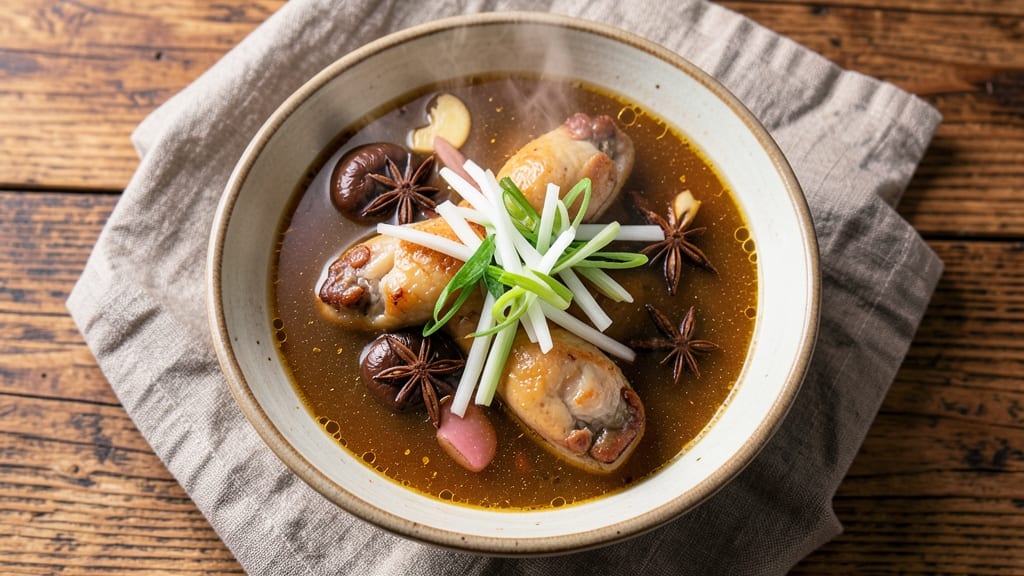
This Chinese chicken feet soup recipe transforms humble ingredients into a collagen-rich masterpiece with a silky texture that’s both nourishing and deeply satisfying. Growing up in small-town Georgia, I never imagined pork would lead me to mastering this technique—yet here we are, extracting gelatinous richness from what many consider scraps.
The secret lies in slow extraction of collagen through precise boiling and simmering, a method I perfected during my apprenticeship under Master Chef Chen.
The process begins with thorough cleaning and soaking to remove impurities, followed by a two-stage cooking method that develops layers of flavor. What makes this recipe special is balancing traditional techniques with modern shortcuts—like pressure cooking for efficiency without sacrificing depth.
Every ingredient plays a role: ginger for warmth, star anise for aroma, and chicken feet for that signature melt-in-your-mouth texture.
By the time you’re done, you’ll have a golden, fragrant broth so rich it coats every spoonful, with tender chicken feet that practically dissolve. This isn’t just soup—it’s a restaurant-quality dish that delivers comfort in every bite, perfect for healing meals or special occasions.
The aroma alone will have your kitchen smelling like a bustling Charleston market.
Whether you’re serving a crowd or treating yourself, this recipe scales beautifully while keeping the essence intact. Let’s get started on creating something truly special—one that honors tradition while fitting seamlessly into your modern kitchen. The results? Worth every minute of patience.
Ingredients for chinese chicken feet soup
Six pounds of collagen-rich chicken feet transform into silky, golden soup with these aromatic ingredients.
| Ingredient | Amount | Notes |
|---|---|---|
| Chicken Feet 🦶 | 2 ½ lb | Fresh or frozen, cleaned thoroughly |
| Fresh Ginger Root 🌿 | ½ cup | Sliced thinly, peeled |
| Star Anise Pods 🌟 | 4 whole | Whole pods for aroma |
| Dried Shiitake Mushrooms 🍄 | ½ oz | Rehydrated for depth |
| Daikon Radish 🥕 | 1 whole | Cut into thick slices |
| Green Onions 🧅 | ¼ cup | Sliced for garnish |
| Garlic Cloves 🧄 | 6 cloves | Smashed for infusion |
| Rock Sugar 🍯 | ¼ cup | Or brown sugar substitute |
| Light Soy Sauce 🥫 | ¼ cup | For umami balance |
| Dried Tangerine Peel 🍊 | 1 tbsp | For citrus aroma |
| Sesame Oil 🫒 | 1 tbsp | For finishing touch |
| Salt 🧂 | 1 ½ tsp | Adjust to taste |
| Water 💧 | 4 cups | Or chicken stock |
| Cornstarch 🌾 | 1 tbsp | For broth thickening |
The chicken feet are the star—fresh or frozen works, but always soak them overnight to remove impurities. I grab mine from Asian markets or specialty butchers, where they're often pre-cleaned. Look for feet that are plump and smell clean, not fishy. Costco sometimes carries them too, though you'll need to clean them yourself. The ginger and star anise are non-negotiable for that signature aroma—fresh ginger from the produce section and whole star anise pods from the spice aisle. If you can't find rock sugar, light brown sugar works in a pinch, though it won't caramelize as beautifully.
No shiitake mushrooms? Dried porcini mushrooms make a great substitute—just rehydrate them first. Short on daikon radish? Regular white radish or even parsnips work, though the flavor won't be identical. The soy sauce should be light soy sauce, not dark—it's sweeter and less salty. For the dried tangerine peel, substitute orange peel if you can't find it, but reduce to 1 teaspoon. The sesame oil is purely for finishing—use toasted sesame oil if you've got it, but regular will work too. And if you're making this for a crowd, double the broth ingredients—the soup only gets better when scaled up.
This soup tastes even better the next day once all the flavors meld. Store it in the fridge for up to 5 days or freeze for 3 months. I like to portion it into glass jars so I can grab individual servings. The chicken feet will get progressively more tender with each reheat, so don't be afraid to make extra. If you're short on time, pressure cooking the feet for 30 minutes before simmering cuts the cooking time in half without sacrificing texture.
Why You'll Love This Recipe
- One-Pot Magic: I swear by this—just toss everything in a pot, simmer, and walk away. No chopping chaos, no multiple pans. The star anise and ginger do all the work while you sip tea.
- Umami Bomb: That first bite? The chicken feet turn tender with a crispy skin that’s ridiculously satisfying, while the shiitake mushrooms add this deep, earthy punch. Honestly, it’s the kind of flavor that makes you pause mid-slurp.
- Weeknight Warrior: Between us, this is my go-to when I’m too tired to plan. The daikon radish soaks up broth like a sponge, and leftovers? Even better the next day. (Yes, even on a Tuesday night.)
- Budget Powerhouse: A whole chicken’s worth of flavor for pennies. Chicken feet are cheap, shiitake mushrooms last forever, and a single ginger root stretches across three batches. My wallet and my taste buds thank me.
Step-by-step instructions for Chinese chicken feet soup
Here's how to transform tough chicken feet into a velvety, collagen-rich broth packed with aromatic depth.
Prep and Parboil the Chicken Feet
Begin by thoroughly cleaning the 2.5 lb chicken feet under cold running water, scrubbing between the joints to remove any debris. This ensures a clean, flavorful base for your soup. Place them in a large pot and cover with cold water by about 2 inches. Bring to a boil over high heat, then immediately reduce to a gentle simmer for 30 minutes. This parboiling step removes impurities and begins breaking down the collagen.
After 30 minutes, drain and rinse the chicken feet again under cold water to remove any scum that rises to the surface. This step is crucial for clarity in your final broth. Return them to the same pot and add fresh 4 cups water. Bring back to a boil, then reduce heat to maintain a steady simmer. The water should cover the chicken feet by about 1 inch.
Build the Aromatic Base
While the chicken feet simmer, prepare your aromatic ingredients. In a small bowl, combine the 0.5 cup sliced fresh ginger root, 6 smashed garlic cloves, 4 whole star anise pods, 1 tbsp dried tangerine peel, and 1.5 tsp salt. Add these to the simmering pot along with the 1 whole daikon radish cut into thick slices and the 0.5 oz rehydrated dried shiitake mushrooms (soaked in warm water for 20 minutes and drained).
Let the soup simmer uncovered for 1 hour. You'll notice the broth gradually turn from cloudy to a rich amber color as the collagen dissolves. The star anise and tangerine peel will infuse subtle floral and citrus notes that elevate the dish. Here's where the magic happens—the longer you simmer, the more gelatinous and luxurious the texture becomes.
Season and Sweeten the Broth
After 1 hour of simmering, add the 0.25 cup rock sugar and 0.25 cup light soy sauce to the pot. Stir gently to dissolve the sugar completely. The sugar helps balance the savory depth while adding a subtle caramel note. Let the soup continue simmering for another 30 minutes to allow the flavors to meld together. You'll notice the broth become even more translucent and rich.
Taste the broth and adjust seasoning if needed. The light soy sauce provides umami, while the rock sugar adds complexity. If the broth tastes too mild, you can add an additional 0.5 tsp salt. The chicken feet should now be tender enough to pull apart easily with a fork, though they'll continue softening as they rest in the broth.
Thicken and Finish
In a small bowl, whisk together the 1 tbsp cornstarch with 2 tablespoons of the hot broth until smooth. Slowly ladle this mixture back into the pot while stirring constantly. The broth will begin to thicken immediately, creating that signature silky texture that makes this soup so special. Simmer for an additional 5 minutes to fully set the thickening.
Remove the pot from heat and let the soup rest for 10 minutes. This resting period allows the flavors to settle and the broth to reach its optimal consistency. Skim off any remaining foam or impurities that rise to the surface. The chicken feet should now be fork-tender with a delicate, almost jelly-like texture.
Serve with Fresh Garnishes
Ladle the soup into serving bowls, ensuring each portion contains at least 2-3 tender chicken feet. Drizzle each serving with 1 tsp sesame oil just before serving. The sesame oil adds a nutty aroma and rich finish that complements the broth's depth. Garnish each bowl with 1 tablespoon sliced green onions for a fresh contrast and visual appeal.
Serve immediately while the broth is hot and the chicken feet are at their most tender. The combination of the velvety broth, aromatic spices, and delicate chicken feet creates a dish that's both nourishing and deeply satisfying. Each spoonful delivers a perfect balance of collagen-rich goodness, umami depth, and subtle sweetness.
Pro Tips For Making Chinese Chicken Feet Soup
- Parboil First: Toss the chicken feet in boiling water for 5 minutes before simmering—this softens the tough skin and prevents them from curling into a mess. I learned this the hard way after watching a batch of feet turn into a tangled pile.
- Scrape the Ginger: Use a spoon to scrape the ginger’s inner fibers into the broth, not just slices. The texture breaks down better, and the soup gets a deeper, earthier flavor. Sounds weird, but it works—trust me.
- Don’t Rush the Shiitakes: Soak the dried mushrooms for at least 20 minutes in hot water, then slice them thick. Thin slices turn to mush, and you’ll regret it when the soup looks like glue. Patience here makes all the difference.
- Simmer Low and Slow: Keep the heat at a gentle simmer—no rolling boils—after the first 30 minutes. Chicken feet need time to tenderize, and high heat just makes them rubbery. I used to speed it up and wondered why they tasted like boot leather.
Dietary considerations for this chinese chicken feet soup
Gluten-Free Adaptations
This soup is naturally gluten-free, but always double-check your ingredients—especially the soy sauce. Use tamari instead of regular soy sauce if you're sensitive to gluten. I keep a bottle of San-J Tamari in my pantry for these exact situations.
The daikon radish and shiitake mushrooms also provide natural umami without any gluten-containing additives. 🌱
Low-Sodium Options
If you're watching your sodium intake, reduce the light soy sauce to 2 tablespoons and replace the remaining 2 tablespoons with low-sodium coconut aminos. I've found Coconut Secret works beautifully in this recipe.
You'll also want to omit the added salt until the very end, then adjust to taste with just 0.5 teaspoon total. The chicken feet themselves provide enough natural flavor when cooked properly.
Dairy-Free Considerations
This recipe is already dairy-free, but if you're adding garnishes like cilantro or sesame seeds, check for cross-contamination. I use Certified Dairy-Free sesame oil from Primal Kitchen to ensure no dairy traces.
The broth's richness comes entirely from collagen and aromatics, so no dairy substitutes are needed. The soup's naturally creamy texture comes from the gelatinous chicken feet, not dairy.
Vegetarian Substitutes
While chicken feet are the star, you can create a vegetarian version using mushroom feet (available at specialty stores) or extra-firm tofu cut into irregular chunks. I've had success with King Oyster mushrooms—simmer them for 45 minutes longer than the chicken feet.
The texture won't be identical, but the broth will still develop that signature silky quality. Add 1 extra tablespoon of cornstarch to thicken the vegetarian broth.
Protein Variations
For a different protein profile, swap chicken feet for duck feet (more gamey flavor) or pork trotter (richer taste). I once made this with quail eggs instead of chicken feet—simmer them whole for 20 minutes before adding to the broth.
The collagen content will be lower, but the dish still delivers incredible comfort. For extra protein, add soft tofu cubes in the last 10 minutes of simmering.
Kid-Friendly Adjustments
Kids often shy away from chicken feet, so I recommend blending a portion of the broth with 1 cup of cooked white rice and ½ cup shredded chicken breast for a milder version. You can also serve the chicken feet on the side for adventurous eaters.
Reduce the ginger to ¼ cup and omit the star anise—kids often find these flavors too intense. The natural sweetness from the rock sugar helps balance any perceived bitterness. 🧒
Nutrition facts
Frequently asked questions
Why do chicken feet need soaking before cooking?
Soaking removes impurities, blood, and any residual dirt that can make the broth cloudy or bitter. I always soak mine for at least 4 hours (overnight is best) in cold water with a splash of vinegar to break down any lingering grime. This step is non-negotiable for a clear, flavorful broth.
Can I use frozen chicken feet instead of fresh?
Frozen feet work perfectly—just thaw them overnight in the fridge first. The only difference is you may need an extra 15-20 minutes of simmering time to achieve the same tenderness. Never microwave frozen feet, as it can make them rubbery.
How do I know when the chicken feet are fully cooked?
They're done when they're fork-tender with a slight jelly-like texture. Gently pull apart a foot—if it separates easily without resistance, it's ready. The broth should also turn a rich amber color. If they're still tough, simmer another 20 minutes and check again.
What's the best way to store leftovers?
Store in airtight containers in the fridge for up to 5 days, or freeze for 3 months. The broth actually improves overnight as flavors meld. Reheat gently on low heat, stirring occasionally. The chicken feet will get even more tender with reheating.
Can I make this soup in a slow cooker?
Yes! After parboiling, transfer everything to your slow cooker and cook on low for 6-8 hours instead of simmering. The collagen will still extract beautifully, though the texture may be slightly less gelatinous. Add the cornstarch slurry at the end and simmer for 5 minutes on the stove.