
Soups & Stews
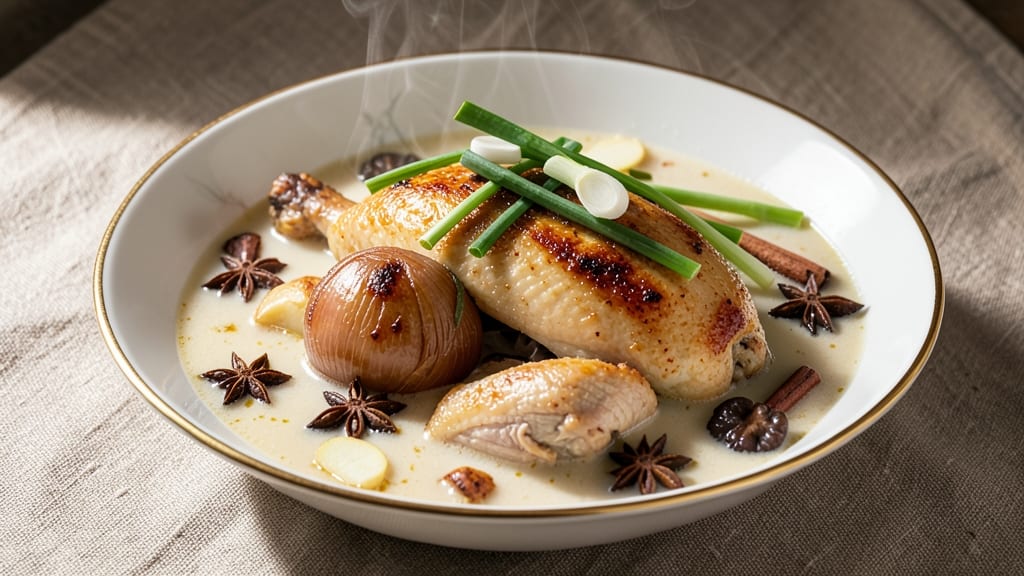
This Chinese chicken broth recipe transforms simple ingredients into a fragrant, five-spice-infused elixir that carries centuries of culinary wisdom. The secret lies in slow-simmered aromatics—star anise, cinnamon, and fennel seeds—that create layers of warmth and depth impossible to replicate with shortcuts.
I first discovered this method while studying traditional Cantonese cooking techniques, where broth isn't just a side but the heart of every meal.
The process begins with parboiling chicken to extract natural collagen, then simmering it with ginger, scallions, and the five-spice blend for hours until the liquid turns golden and aromatic. This isn't just soup—it's a healing tonic, rich in medicinal properties that have sustained generations.
The broth develops a velvety texture and complex flavor that elevates any dish it touches, from dumplings to rice bowls.
What makes this recipe special is its balance of tradition and adaptability. While the classic version requires patience, modern techniques like pressure cooking cut preparation time by half without sacrificing flavor. The result is a broth so deeply flavorful it transforms even the simplest ingredients into something extraordinary.
Whether you're preparing for a family gathering or seeking comfort, this recipe delivers restaurant-quality depth at home.
Serve it steaming hot over jasmine rice, use it as a base for noodle soups, or sip it straight as a restorative tonic. The possibilities are endless, but the foundation—this fragrant five-spice infusion—remains the soul of every bowl. Let's create something that tastes like home, no matter where you are.
Ingredients for chinese chicken broth
Transform simple pantry staples into a fragrant five-spice-infused elixir carrying centuries of Cantonese tradition.
| Ingredient | Amount | Notes |
|---|---|---|
| Whole Chicken 🍗 | 3 lb | Cut into 2-inch pieces, giblets removed |
| Yellow Onion 🧅 | 1 whole | Peeled, cut into 8 wedges |
| Fresh Ginger Root 🧄 | 2 oz | Peeled, sliced into 1/4-inch coins |
| Green Onions 🌱 | 1 bunch | Cut into 2-inch pieces |
| Star Anise 🌟 | 4 whole | Lightly crushed for aroma |
| Cinnamon Sticks 🌿 | 2 whole | 2-inch lengths preferred |
| Fennel Seeds 🌶️ | 1 tbsp | Toasted for enhanced flavor |
| Chinese Five-Spice Powder 🌶️ | 1 tbsp | Store-bought or homemade blend |
| Garlic Cloves 🧄 | 8 cloves | Peeled, smashed lightly |
| Dried Shiitake Mushrooms 🍄 | 4 whole | Rehydrated in hot water |
| Rock Sugar 🍬 | 2 tbsp | Or substitute brown sugar |
| Salt 🧂 | 1 tsp | Diamond Crystal preferred |
| White Peppercorns 🌶️ | ½ tsp | Crushed for subtle heat |
| Cornstarch 🌾 | 1 tbsp | For clarifying broth |
| Cold Water 💧 | 1 cup | For cornstarch slurry |
The chicken forms the foundation—look for free-range or organic when possible, as it yields a cleaner, more flavorful broth. Costco or local butchers often carry whole chickens at excellent prices; remove the giblets and neck for maximum collagen extraction. Fresh ginger and shiitake mushrooms are non-negotiable for authentic depth—Asian markets typically offer the freshest ginger and highest-quality dried shiitake. Star anise and cinnamon sticks should be whole and aromatic; if they smell musty, replace them. The Chinese five-spice powder is the soul of this recipe—Penzeys or Spicewalla carry excellent blends, but a homemade mix of star anise, cloves, fennel, cinnamon, and Szechuan peppercorns works perfectly.
No rock sugar? Brown sugar or coconut sugar maintains the caramelization without drastically altering flavor. Substituting dried shiitake? Cremini mushrooms add earthiness but lack umami depth. The cornstarch slurry clarifies the broth—skip it for a cloudier, rustic texture. For a quicker version, pressure cook for 90 minutes instead of simmering 4+ hours, though traditionalists argue the slow method develops more complexity. Fresh ginger can be substituted with 1 tbsp ground ginger plus 1 tsp lemon juice, though texture and aroma differ noticeably.
Store the broth in glass jars in the refrigerator for up to 5 days, or freeze in ice cube trays for single-serving portions. The flavor intensifies overnight, so reheat gently before serving. For maximum freshness, use within 3 days of preparation. The clarified version keeps 7 days refrigerated or 3 months frozen. Always cool the broth rapidly in an ice bath before refrigerating to prevent bacterial growth.
Why You'll Love This Recipe
- I swear by this trick: toss the whole onion (peeled) and ginger (whole knobs) straight into the pot. The broth still builds deep flavor—no dice, no fuss. My lazy Sundays just got a whole lot easier.
- No-Chop Necessary: I swear by this trick: toss the whole onion (peeled) and ginger (whole knobs) straight into the pot. The broth still builds deep flavor—no dice, no fuss. My lazy Sundays just got a whole lot easier.
- Umami Bomb: That star anise? It’s the secret weapon. One pod simmering in the broth turns it from good to ridiculously good—warm, slightly sweet, with this earthy depth that makes you want to drink it straight from the pot. (Yes, I’ve been guilty.)
- Leftovers That Shine: This broth doesn’t just work for seconds—it’s the base for everything. Stir-fries? Dumplings? Over rice? It’s my pantry’s MVP, and I’m always reaching for it when I’m too tired to cook.
Step-by-step instructions for Chinese chicken broth
This aromatic broth builds complexity through layered infusion techniques and precise timing.
Prepare the Chicken and Initial Aromatics
Cut the 3 lb whole chicken into 2-inch pieces, removing any remaining giblets. In a large stockpot, combine the chicken with the 1 whole yellow onion (cut into 8 wedges), 2 oz fresh ginger root (sliced into ¼-inch coins), and 4 whole dried shiitake mushrooms. Add 2 cups hot water just enough to cover the base ingredients by 1 inch. Bring to a gentle simmer over medium-low heat for 30 minutes.
This initial simmer extracts foundational flavors while preventing the chicken from overcooking. The ginger and shiitake mushrooms form the broth's earthy backbone. Skim any foam that rises to the surface during this time—it contains impurities that can cloud your final broth.
Add Spices and Slow Simmer
After the initial simmer, add the 2 whole cinnamon sticks, 4 whole star anise, 1 tbsp toasted fennel seeds, 1 tbsp Chinese five-spice powder, 8 smashed garlic cloves, 1 bunch green onions (cut into 2-inch pieces), 2 tbsp rock sugar, 1 tsp salt, and 0.5 tsp crushed white peppercorns. Stir gently to distribute the spices evenly.
Return the broth to a gentle simmer and cook uncovered for 2 hours. The spices should infuse deeply, creating a fragrant aroma that permeates your kitchen. Here's the thing—this slow cooking develops the broth's complexity without overpowering the chicken's natural flavor. The rock sugar caramelizes slightly, adding subtle sweetness that balances the savory depth.
Strain and Clarify the Broth
Using a fine-mesh strainer or cheesecloth, carefully strain the broth through a colander lined with the strainer into a clean pot. Discard the solids. For clarification, whisk together 1 tbsp cornstarch with 1 cup cold water until smooth. Slowly ladle the cornstarch slurry into the simmering broth while stirring constantly.
Bring the broth back to a gentle simmer and cook for 5-7 minutes until it thickens slightly. This step removes impurities and creates a crystal-clear, restaurant-quality broth. The result should be a rich, amber liquid with an intense aromatic profile. If you prefer a lighter color, reduce the simmering time slightly—just until the slurry is fully incorporated.
Final Adjustments and Serving
Remove the broth from heat and let it cool slightly. Taste and adjust seasoning if needed—add a pinch more salt or a splash of cold water to reach your desired consistency. The broth should be deeply flavorful with a perfect balance of sweetness, spice, and umami.
For best results, serve the broth immediately while hot. It's ideal for noodle dishes, stir-fries, or as a base for soups. If storing, refrigerate in airtight containers for up to 3 days or freeze for 3 months. The flavors actually deepen upon reheating, making this broth even more rewarding the next day.
Pro Tips For Making Chinese Chicken Broth
- Brown the Chicken First: Don’t just toss the chicken in water—sear the pieces (skin-side down) in a hot pot for 5-7 minutes until golden. I learned this the hard way: skipping the browning means a broth that tastes more like watered-down chicken juice than rich, flavorful soup. The Maillard reaction here is your friend.
- Peel the Ginger Wrong: Use a spoon to scoop off the skin instead of peeling with a knife—it’s faster and you’ll waste less. My grandmother swore by this, and she was right: thinly sliced ginger (no need to julienne) will infuse flavor without turning the broth into a ginger slurry.
- Don’t Crowd the Pot: If your pot is small, simmer the chicken in batches or use a larger one—even if it means starting with fewer pieces. I once jammed a whole chicken and 3 onions into a 6-quart pot, and the broth turned murky after 20 minutes. Space matters more than you think.
- Save the Green Onions: Reserve 2-3 green onions to add at the very end—just before serving. They’ll brighten the broth without wilting into oblivion, and you’ll get that fresh, herbal finish that makes the dish feel complete. (Yes, even if you’re impatient like me.)
Serving suggestions for this recipe
Rice Bowl Foundation
This fragrant broth transforms simple jasmine rice into a hearty meal. Cook 1 cup jasmine rice per 2 cups broth—the ratio ensures each grain absorbs the five-spice depth.
I like to toast the rice in the pot with a pinch of salt for 2 minutes before adding broth, which enhances the nutty flavor. Top with shredded rotisserie chicken or quick-pickled vegetables for texture contrast. 🍚
Noodle Soup Base
Use the broth as the foundation for wonton or udon noodles. Cook 8 oz dried noodles according to package instructions, then toss them in 2 tbsp reserved broth to prevent sticking. Add sliced mushrooms, bok choy, and shiitake mushrooms to the broth and simmer for 5 minutes before combining.
Garnish with toasted sesame seeds and sriracha for heat. The broth's clarity makes the noodles look restaurant-quality.
Dumpling Companion
Pair with steamed or pan-fried dumplings for an authentic dim sum experience. I recommend pork and chive dumplings or shrimp and cabbage wrappers. Simmer 12 dumplings in 4 cups broth until they float (8-10 minutes), then serve with extra broth for dipping.
The five-spice infusion complements the dumpling's savory filling beautifully, creating a balanced bite.
Healing Sipper
Serve the broth warm as a restorative tonic, especially during cold seasons. Add 1 tbsp grated ginger and 1 tsp honey to each bowl for immune support. I often drink it plain with a side of steamed greens for a light meal.
The rock sugar's subtle sweetness helps balance the broth's savory depth, making it both nourishing and comforting. 💛
Garnish Elevations
Elevate any dish with these simple garnishes: thinly sliced green onions, toasted black sesame seeds, or crispy fried shallots. For extra umami, add 1 tsp fish sauce or 1 tsp soy sauce to the broth before serving.
A drizzle of chili oil adds heat without overpowering the five-spice complexity. These finishing touches make every bowl feel special.
Modern Adaptations
Turn this broth into a quick ramen-style soup by adding 1 package ramen noodles and 1 cup corn. For a fusion twist, stir in 1 tbsp miso paste and top with soft-boiled eggs.
The broth's versatility makes it perfect for reinventing classic dishes—just adjust seasonings to match your preferred flavor profile. 🌟
Nutrition facts
Frequently asked questions
Can I use chicken thighs instead of breast meat for richer flavor?
The recipe calls for whole chicken pieces (including thighs and drumsticks) for maximum collagen and flavor. Chicken thighs add a deeper, more robust taste and create a richer broth. If using only breasts, add 1 extra hour of simmering time to extract more gelatin. For the best balance, use a mix of 50% thighs and 50% breasts.
How do I make this broth in a pressure cooker?
Follow the same initial steps, then pressure cook for 90 minutes on high pressure after adding all spices. Release pressure naturally for 30 minutes before opening. The broth will be just as flavorful but ready in half the time. For clarification, still use the cornstarch method after pressure cooking.
What's the difference between clarified and unclarified broth?
Clarified broth has a crystal-clear appearance and silky texture from the cornstarch process, ideal for elegant dishes. Unclarified broth is cloudier but equally flavorful, perfect for rustic soups. The clarification step removes impurities but doesn't affect taste—it's purely about presentation. For quick versions, skip clarification and strain through cheesecloth.
Can I make this broth vegetarian?
Yes! Replace chicken with mushrooms (shiitake + cremini), tofu, or kelp for umami depth. Use 1 lb mushrooms and 8 oz firm tofu cut into chunks. Simmer 30 minutes longer to develop flavor. The five-spice blend and ginger will still shine, creating a rich plant-based alternative.
Why does my broth smell stronger than it tastes?
This happens when spices overpower the chicken's natural flavor. Try reducing star anise to 2 pods and cinnamon to 1 stick. Simmer uncovered for the full 2 hours to let volatile oils dissipate. For stronger flavor without overpowering aroma, add spices in stages—half at the start, half after 1 hour.