
Soups & Stews
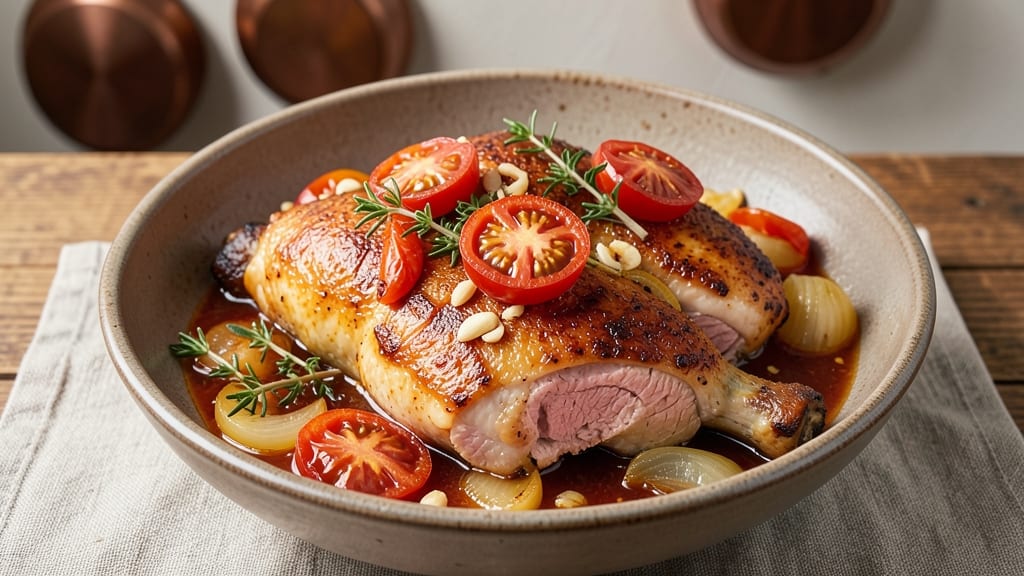
This chicken thighs stewed tomatoes recipe transforms tough cuts into melt-in-your-mouth tenderness with caramelized layers that sing of slow-cooked perfection. Growing up in small-town Georgia, I learned that patience in the kitchen creates magic—just like this deeply savory braise that simmers until every bite reveals complex flavors.
The secret lies in browning the chicken first, creating a flavorful crust that dissolves into the tomatoes, building depth as it cooks.
The beauty of this dish is its simplicity—just a handful of ingredients working together to create restaurant-quality results. A splash of red wine deglazes the pan, while aromatics like garlic and thyme infuse the sauce with warmth.
The tomatoes caramelize beautifully, balancing acidity with sweetness as they break down into a rich, velvety consistency that coats every forkful of chicken.
What you'll end up with is a dish that's hearty enough for a weeknight dinner but elegant enough for company—juicy chicken thighs swimming in a glossy, tomato-based sauce with layers of flavor that build with every bite.
The aroma alone will have everyone gathering around the table, and the leftovers reheat beautifully for days of satisfying meals.
Serve it alongside crusty bread to soak up every last drop of that caramelized sauce, or pair it with a simple green salad to balance the richness. This is comfort food at its finest—simple, deeply flavorful, and impossible to resist. Let's get cooking.
Ingredients for chicken thighs stewed tomatoes
Simple pantry staples transform into a deeply flavorful chicken braise with caramelized tomato sauce.
| Ingredient | Amount | Notes |
|---|---|---|
| Chicken Thighs, Bone-In 🍗 | 1 ½ lb | Skin-on preferred for flavor |
| Canned San Marzano Tomatoes 🍅 | 2 cups | Crushed or diced, no salt added |
| Red Wine 🍷 | ½ cup | Bold dry variety like Cabernet |
| Yellow Onion 🧅 | 1 whole | Diced, medium size preferred |
| Garlic Cloves 🧄 | 4 cloves | Minced, fresh preferred |
| Fresh Thyme 🌿 | ¼ cup | Leaves only, stems removed |
| Carrots 🥕 | 2 medium | Peeled, sliced into rounds |
| Olive Oil 🫒 | ¼ cup | Extra-virgin for richness |
| Chicken Broth 💧 | ½ cup | Low-sodium preferred |
| Tomato Paste 🍅 | 2 tbsp | Squeeze tube works fine |
| Diamond Crystal Kosher Salt 🧂 | 1 ½ tsp | Adjust to taste |
| Ground Black Pepper 🌶️ | ½ tsp | Freshly ground preferred |
| Fresh Parsley 🌿 | ⅛ cup | Chopped, for garnish |
The chicken thighs are the star—bone-in, skin-on cuts give the most flavor, though boneless works in a pinch. Trader Joe's and Whole Foods usually carry them pre-cut, but any grocery store will have them. Look for thighs with good marbling—those white streaks of fat mean juicier meat. The San Marzano tomatoes are worth seeking out for their sweetness, but any high-quality canned tomatoes will work. Fresh thyme is ideal, but dried thyme at one-third the amount gets you close if you're in a hurry.
No red wine? Beef broth with a splash of balsamic vinegar mimics the depth perfectly. The tomato paste can be skipped if you're using really good tomatoes, but I always include it—it's the secret to that rich, velvety sauce. For the carrots, baby carrots work great if you don't have time to peel and slice. The olive oil matters here—use something fruity and peppery, not that bland vegetable oil. And trust me on the fresh parsley at the end—it brightens everything up and makes the dish look restaurant-worthy.
This braise tastes even better the next day as the flavors meld. Store leftovers in the fridge for up to 4 days, or freeze portions for 3 months. I like to portion it into individual containers so I can grab a meal whenever I need it. The sauce thickens as it cools, so you might want to add a splash of broth or water when reheating. Serve it with crusty bread—it's the perfect vehicle for soaking up all that delicious sauce.
Why You'll Love This Recipe
- One-Pot Magic: The chicken thighs brown right in the same pot where the sauce simmers—no extra pans, no extra mess. I swear by this method: sear the thighs until golden, then let the wine and tomatoes work their magic while I chop the onions. It’s the kind of recipe that makes me feel like a home cook, not a chef.
- Wine-Infused Depth: That splash of red wine isn’t just for show—it dissolves into the San Marzano tomatoes, turning the sauce into something rich and layered. The bone-in thighs melt into the sauce, soaking up all the umami, while the garlic cloves release their punch in the last few minutes. Honestly, the first bite makes me close my eyes.
- Leftovers That Beg for More: This stew only gets better the next day. The flavors meld overnight, and the sauce thickens just enough to coat every forkful. I’ll be real: I’ve reheated this for lunch three times this week, and my kids still ask for it over pizza. It’s the kind of dish that turns a random Tuesday into a cozy night.
- Budget-Friendly Luxury: Bone-in chicken thighs are cheaper than breasts, and a can of San Marzano tomatoes lasts forever. The red wine? A small bottle stretches for two recipes. Between us, this is the kind of meal that makes frugal eating feel indulgent—no one has to know it’s also my wallet’s best friend.
Step-by-step instructions for chicken thighs stewed tomatoes recipe
This deeply savory braise transforms simple ingredients into a rich, caramelized masterpiece.
Sear the Chicken Thighs for Maximum Flavor
Pat the 1.5 lb chicken thighs, bone-in completely dry with paper towels—this ensures a perfect sear. Heat 0.25 cup olive oil in a heavy Dutch oven over medium-high heat until shimmering. Add the chicken thighs skin-side down and let them sear undisturbed for 5-6 minutes until the skin turns deep golden brown and crispy.
Flip the thighs and sear the other side for another 4-5 minutes. The skin should be crisp and well-browned, and the internal temperature should reach 150°F when checked with an instant-read thermometer. Remove the thighs and set aside on a plate. Here's the thing—this initial sear builds the foundation for all that deep, savory flavor we're after.
Build the Aromatic Base
In the same Dutch oven, reduce the heat to medium and add 1 whole yellow onion, diced, and 2 medium carrots, sliced into rounds. Cook for 5-6 minutes until the onions soften and the carrots begin to caramelize. Add 4 cloves garlic cloves, minced, and 0.25 cup fresh thyme leaves, stirring for 30 seconds until fragrant.
Stir in 2 tbsp tomato paste and cook for 1 minute until it darkens slightly and releases its deep, concentrated flavor. This step creates the flavor backbone of your stew—don't rush it. The tomato paste will mingle with the caramelized vegetables, creating layers of complexity that elevate the entire dish.
Deglaze and Simmer the Tomatoes
Pour in 0.5 cup red wine and scrape up all the browned bits from the bottom of the pot with a wooden spoon. This deglazing step captures all the concentrated chicken flavor that's stuck to the pan. Let the wine simmer for 3-4 minutes until it reduces by about half, then add 2 cups canned San Marzano tomatoes. Stir well to combine.
The wine should smell rich and slightly boozy at this point—this is where the magic happens. The tomatoes will begin to break down and release their natural sweetness, creating a luscious base for the stew. If the mixture looks too thick, add 0.25 cup chicken broth now to loosen it slightly.
Braise Until Tender Perfection
Return the chicken thighs to the pot, skin-side up, and add the remaining 0.25 cup chicken broth. Bring to a gentle simmer, then reduce the heat to low and cover partially with a lid. Here's the critical part: braise for 45-50 minutes until the chicken is fork-tender and the sauce has thickened to a glossy, velvety consistency.
Check the internal temperature of the chicken—it should reach 175°F in the thickest part of the thigh. The skin should be tender when pressed, and the meat should pull apart easily. If the sauce looks too thin, uncover and simmer for another 5-10 minutes to reduce it to your desired consistency. This slow cooking transforms tough chicken into melt-in-your-mouth perfection.
Finish and Garnish
Season the stew with 1.5 tsp Diamond Crystal kosher salt and 0.5 tsp ground black pepper, adjusting to taste. Taste and make any final adjustments—this is where you ensure the balance of acidity, sweetness, and saltiness is just right. The stew should be rich, deeply savory, and perfectly seasoned.
Remove from heat and stir in 0.125 cup fresh parsley, chopped. Garnish each serving with an additional sprinkle of parsley and a drizzle of the caramelized sauce. Serve immediately with crusty bread or over polenta to soak up every last bit of that luxurious stew. The aroma alone will have everyone gathering around the table—this is comfort food at its finest.
Pro Tips For Making Chicken Thighs Stewed Tomatoes
- Brown the Thighs Deep: DESCRIPTION: Don’t just sear—get those bone-in thighs golden brown in a hot pan with oil before adding wine. I used to rush this, and the sauce stayed dull. Take your time; crispy skin means richer flavor when it braises in the tomatoes.
- Drain the Tomatoes: DESCRIPTION: San Marzano tomatoes from a can are sweet but packed with juice. Drain and crush them by hand—skip the blender. The extra liquid dilutes the sauce, and you’ll end up with a thin, watery stew instead of a thick, velvety one.
- Deglaze with Wine First: DESCRIPTION: After browning the thighs, pour in the red wine before adding onions or garlic. The alcohol will sizzle and lift all those stuck-on bits, giving the sauce depth. Add the other aromatics after the wine reduces by half—trust me, it matters.
- Salt the Wine: DESCRIPTION: Yes, even red wine. Add a pinch of salt (about ¼ teaspoon) when you deglaze—it balances the acidity and rounds out the flavor. I learned this from an Italian chef who scoffed at my "unsalted wine" habit. The sauce tastes more cohesive after.
Troubleshooting this dish
Chicken Too Dry?
If your chicken thighs end up dry, you likely didn’t cook them long enough. Bone-in, skin-on thighs need to reach 175°F internal temperature—the bone helps distribute heat and keeps the meat moist.
I’ve found that 45-50 minutes of braising at low heat is ideal. If you’re short on time, add 1 extra cup of broth halfway through cooking to help tenderize the meat.
Sauce Too Thin?
A thin sauce usually means too much liquid was added. If this happens, uncover the pot and simmer for 10-15 minutes to reduce the sauce naturally. For extra thickness, stir in 1 tbsp tomato paste or a cornstarch slurry (mix 1 tbsp cornstarch with 1 tbsp cold water).
The key is patience—rushing the reduction can make the sauce grainy.
Tomatoes Too Acidic?
If the tomatoes taste overly tart, balance the acidity with a pinch of sugar or a splash of red wine (about 1 tbsp). I also like adding ½ tsp dried oregano or a bay leaf during cooking to mellow the acid.
For a richer flavor, stir in 1 tbsp balsamic vinegar at the end—it adds depth without overpowering the dish.
Skin Not Crispy?
For perfectly crispy skin, sear the thighs skin-side down for 5-6 minutes undisturbed over medium-high heat. If your skin isn’t browning, your heat might be too low. I use a Lodge cast iron Dutch oven—it retains heat better than stainless steel.
After searing, place the thighs on a wire rack over a baking sheet to crisp up further while the rest of the dish cooks.
Flavor Too Mild?
If your stew lacks depth, boost the flavor by adding 1 tsp smoked paprika or ½ tsp red pepper flakes during the braising stage. For extra richness, deglaze with a mix of red wine and beef broth instead of just wine.
I also recommend browning the chicken longer—those dark, crispy bits are packed with flavor that dissolves into the sauce.
Vegetables Overcooked?
To keep carrots and onions from turning mushy, add them later in the cooking process. I add the carrots and onions 5 minutes before the end of braising to preserve their texture.
If they soften too quickly, reduce the heat slightly or add them to the pot after returning the chicken thighs. The goal is al dente—firm enough to bite into but tender enough to enjoy.
Nutrition facts
Frequently asked questions
Can I use boneless chicken thighs instead of bone-in?
Yes, but expect slightly faster cooking—boneless thighs will finish in about 35-40 minutes instead of 45-50 minutes. The bone helps distribute heat, so without it, you'll want to monitor the internal temperature closely. For extra richness, add 1 extra tablespoon of olive oil when searing to compensate for the lost moisture.
What if I don't have red wine?
No problem! Use ½ cup beef broth plus 1 tablespoon balsamic vinegar for depth, or substitute with ½ cup apple cider for a sweeter profile. The key is balancing acidity—if using broth alone, add a pinch of sugar to mimic the wine's fruitiness. The dish will still be delicious!
How can I make this dish ahead of time?
This braise actually tastes better the next day as flavors meld! Cook the full recipe, then refrigerate in an airtight container for up to 4 days. Reheat gently on the stove over low heat, adding 2-3 tablespoons of broth or water if the sauce thickens too much. The chicken will stay juicy, and the sauce will regain its glossy texture.
What's the best way to serve leftovers?
Reheat gently in a saucepan over low heat until warmed through—never microwave, as it can make the chicken rubbery. Serve over mashed potatoes or crusty bread to soak up the sauce. For a quick meal, spoon over steamed rice or polenta. The sauce thickens when cooled, so add a splash of broth when reheating.
Can I freeze this recipe?
Portion into airtight containers or freezer bags, leaving ½-inch headspace for expansion. Freeze for up to 3 months. Thaw overnight in the fridge, then reheat on the stove. The texture remains excellent, though the sauce may need a quick stir with broth to loosen it. Great for meal prep!