
Sauces & Condiments
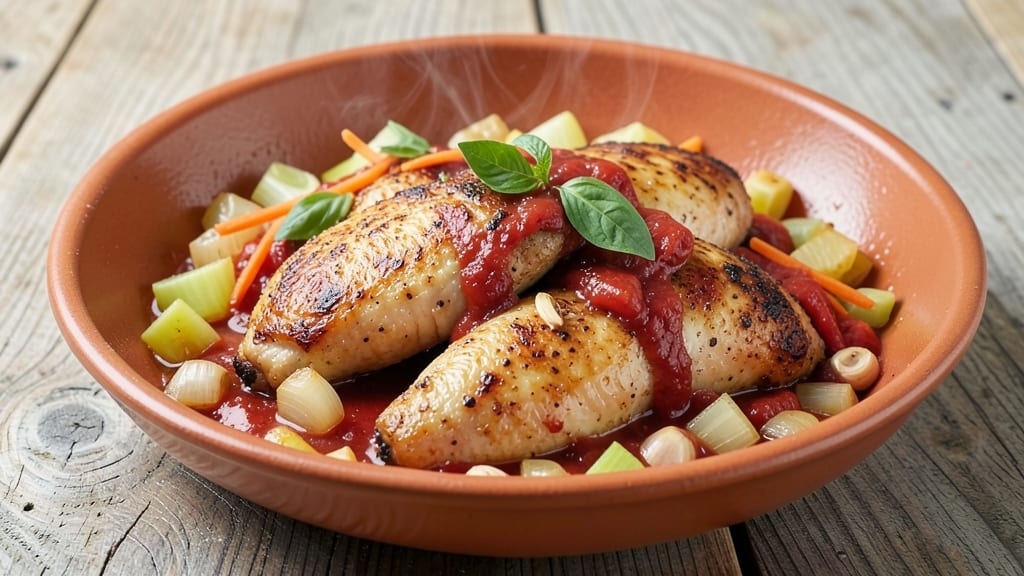
This grandma's chicken cacciatore recipe with tomato sauce brings the warm, comforting flavors of a classic Italian home dinner to your kitchen table. 💛 After years of studying my grandmother's handwritten notes—those maddeningly vague but precious cards—this is the version I've perfected, where tender chicken simmers in a rich, herb-infused tomato sauce with just the right balance of acidity and depth.
What makes this recipe special is its simplicity combined with professional results. You'll start by browning the chicken and vegetables in a Dutch oven, then deglaze with white wine to build layers of flavor.
The sauce develops over time as it simmers, creating a velvety texture that coats every bite of chicken. No fancy techniques—just good, old-fashioned cooking that delivers restaurant-quality results.
The end result is fork-tender chicken swimming in a sauce that's perfectly balanced—tangy from the tomatoes, aromatic from the herbs, and rich from the wine. This is the kind of dish that tastes even better the next day, when all the flavors have had time to meld together.
Serve it with crusty bread or over pasta to soak up every last drop of that delicious sauce.
My grandmother always said the secret was patience, and she was right. This recipe requires time, but the effort is worth every minute. Let's get started on creating a dish that will transport you straight to her kitchen.
Ingredients for grandma's chicken cacciatore recipe with tomato sauce
Classic Italian flavors in one comforting pot—just 15 simple ingredients for grandma's perfect cacciatore.
| Ingredient | Amount | Notes |
|---|---|---|
| Boneless, Skinless Chicken Thighs 🍗 | 1 ½ lb | Cut into 1-inch pieces |
| Yellow Onion 🧅 | 1 whole | Sliced into half-moons |
| Garlic Cloves 🧄 | 4 cloves | Minced, fresh preferred |
| Carrots 🥕 | 2 medium | Cut into thick rounds |
| Celery Stalks 🌿 | 2 whole | Sliced into 1/2-inch pieces |
| Canned San Marzano Tomatoes 🍅 | 2 cans (28 oz each) | Crushed by hand |
| Dry White Wine 🍷 | ½ cup | Sauvignon Blanc or Pinot Grigio |
| Chicken Broth 💧 | 1 cup | Low-sodium preferred |
| Fresh Rosemary 🌿 | 1 tbsp | Chopped, or 1 tsp dried |
| Fresh Thyme 🌿 | 1 tbsp | Leaves only, or 1 tsp dried |
| Fresh Parsley 🌿 | ¼ cup | Chopped, for garnish |
| Olive Oil 🫒 | ¼ cup | Extra-virgin for richness |
| Salt 🧂 | 1 ½ tsp | Kosher or sea salt |
| Black Pepper 🌶️ | ½ tsp | Freshly ground preferred |
| Tomato Paste 🍅 | 1 tbsp | Squeeze tube preferred |
The chicken thighs are key here—bone-in, skin-on if you can find them, but boneless works too. I grab mine from the Italian market section at Whole Foods when I'm feeling fancy, but the regular supermarket package is fine. Look for good marbling in the meat—that's where the flavor hides. The San Marzano tomatoes are non-negotiable for that authentic sweetness. Trader Joe's sells them canned, or grab fresh ones if you're near a good produce stand. Fresh herbs make all the difference, but if you're short on time, dried works at one-third the amount—just make sure they're labeled 'culinary' not 'ornamental'.
No white wine? Chicken broth with a splash of lemon juice works in a pinch. The tomato paste might seem like overkill for just a tablespoon, but trust me on this—it deepens the flavor. If you can't find San Marzano, any good-quality crushed tomatoes will do, but avoid the watery kinds. The carrots and celery can be swapped for bell peppers if you're feeling adventurous—just keep the same quantity. And if you're making this ahead, add the fresh parsley at the very end so it doesn't wilt in the sauce.
This sauce gets better with time—day-old is even more flavorful. Store leftovers in the fridge for up to 5 days, or freeze for 3 months. I like to portion mine into containers so I can grab a quick lunch. The wine smell fades completely as it cooks, so don't worry about that. If you're serving with pasta, make it a day ahead—the flavors meld perfectly overnight. And if anyone asks, no, you can't skip the wine—it's what makes this dish sing.
Why You'll Love This Recipe
- One-Pot Magic: I swear by this recipe because it’s all in one pot—no chopping chaos, just a quick dice of onion, celery, and carrots (that’s your soffritto, by the way) while the chicken browns. Honestly, the only real effort is stirring occasionally, and the rest? Pure reward.
- Garlic-Kissed Magic: Between us, the garlic and tomato sauce do all the heavy lifting. That slow simmer lets the flavors meld into something so rich, it’s like a hug in a bowl—especially when the crispy chicken edges soak up the sauce. My daughter picks out the carrots, but still asks for seconds.
- Weeknight to Dinner Party: This recipe works whether I’m feeding myself after a long day or hosting a crowd. Double the batch, and you’ve got tomorrow’s lunch or a potluck dish that’ll disappear faster than you can say “pass the bread.” (Yes, even on a Tuesday night.)
- Budget-Friendly Feast: Chicken thighs and veggies stretch into three meals without breaking the bank. The leftovers? Even better the next day—if you can resist eating the whole pan straight from the fridge. Between us, I’ve never thrown away a scrap.
Step-by-step instructions for grandma's chicken cacciatore
Here's how to create that rich, aromatic tomato sauce your grandma made famous.
🍳 Step 1: Sear the Chicken to Perfection
Heat the 0.25 cup olive oil in a large Dutch oven over medium-high heat until shimmering. Pat the 1.5 lb boneless, skinless chicken thighs dry with paper towels and season generously with 1 tsp salt and 0.25 tsp black pepper—this ensures maximum flavor and crispy edges. Add the chicken in a single layer and cook undisturbed for 4-5 minutes until golden brown on one side.
Here's the thing—don't move the chicken until you see those beautiful golden-brown crusts form. Flip carefully and cook another 4-5 minutes until fully browned. Remove the chicken and set aside on a plate. You'll notice the chicken releases easily from the pan when it's ready to flip—this is your signal. The browned bits left behind will form the flavor base for your sauce.
👨🍳 Step 2: Build the Flavor Foundation
In the same Dutch oven (no need to wipe it clean—those browned bits are pure flavor), add the 1 whole yellow onion sliced into half-moons, 2 medium carrots cut into thick rounds, and 2 whole celery stalks sliced into ½-inch pieces. Cook for 5-6 minutes until the vegetables soften slightly and begin to caramelize.
Add the 4 cloves garlic cloves minced and the 1 tbsp tomato paste, stirring constantly for 1 minute until the raw garlic smell disappears. This is where the magic happens—the tomato paste deepens the sauce color and adds concentrated flavor. Pour in the 0.5 cup dry white wine and scrape up any browned bits from the bottom with a wooden spoon. Let it simmer for 2-3 minutes until mostly evaporated.
🥘 Step 3: Simmer with Herbs and Tomatoes
Add the 2 cans (28 oz each) crushed San Marzano tomatoes, 1 cup chicken broth, 1 tbsp chopped fresh rosemary, and 1 tbsp fresh thyme leaves. Stir everything together and bring to a gentle simmer over medium-low heat. Return the chicken to the pot, spooning some of the sauce over the top to keep it moist. Cover and simmer for 30-35 minutes until the chicken is tender and the sauce has thickened slightly.
I know it seems like a long wait, but this slow cooking is what creates that rich, velvety texture. Stir occasionally to prevent sticking, and taste the sauce after 20 minutes to adjust seasoning. You might need to add more salt or black pepper depending on your preference. If the sauce gets too thick, add a splash of water or broth to loosen it.
⏰ Step 4: Finish with Fresh Herbs and Rest
Once the chicken is tender (it should pull away from the bone easily), remove it from the pot and set aside. Strain the sauce through a fine-mesh sieve into a clean saucepan to remove any herb stems or vegetable pieces. Return the sauce to the Dutch oven and simmer uncovered for 5-7 minutes to reduce slightly and intensify the flavors.
Return the chicken to the pot and stir to coat in the sauce. Sprinkle with 0.25 cup chopped fresh parsley and let it sit off the heat for 5 minutes to allow the flavors to meld. This resting period ensures the chicken stays juicy and the sauce clings beautifully. Serve immediately with crusty bread or over pasta to soak up every last drop of that delicious sauce.
Pro Tips For Making Grandma'S Chicken Cacciatore Recipe With Tomato Sauce
- Sear the Chicken Properly: After patting the chicken thighs very dry (yes, even if you’re impatient like me), hit them with high heat in a cold pan for 5-6 minutes per side—no peeking. I learned this the hard way when my sauce turned gray instead of golden. The crust locks in flavor and keeps the meat juicy.
- Soften the Veggies First: Dice the onion, carrots, and celery into even ¼-inch pieces and sweat them in olive oil over low heat for 10 minutes before adding garlic. This prevents burning and builds flavor without browning—my grandmother swore by this, and she was right.
- Deglaze with Wine Early: Once the chicken’s out of the pan, immediately pour in the wine (or broth) and scrape every last bit of fond off the bottom. Skip this, and you’re losing half the flavor. I know, I know—it’s an extra 30 seconds, but it makes a real difference.
- Simmer Gently, Not Boil: After adding tomatoes, lower the heat so the sauce barely bubbles—think tiny, lazy ripples. Boiling toughens the chicken and makes the sauce taste flat. I was skeptical until I tried it; now I double-check the heat every 5 minutes.
Regional styles of this grandma's chicken cacciatore recipe with tomato sauce
Classic Tuscan Style
My grandmother's version was pure Tuscan countryside—simple but packed with flavor. She'd use San Marzano tomatoes straight from the garden (or canned when out of season) and always included a handful of sun-dried tomatoes chopped into the sauce for that deep, concentrated sweetness.
The key was slow simmering—she never rushed it, letting the flavors meld for at least 2 hours on low heat. I've found that adding a pinch of red pepper flakes at the end gives it that classic Tuscan kick without overpowering the dish. 🌶️
Southern Italian Adaptation
In Southern Italy, this dish often includes sausage—I like to add ½ lb Italian sweet or spicy sausage, sliced and browned with the chicken. The fat from the sausage infuses the sauce with richness, and the herbs get an extra depth from the meat's natural spices.
For an even heartier version, I've seen recipes call for a splash of balsamic vinegar at the end, which adds a tangy brightness that cuts through the richness. This version feels more like a rustic stew than a sauce-based dish.
Northern Italian Twist
Up north, they take a different approach—often using white wine (like Pinot Grigio) and a touch of cream at the end for a lighter, more elegant sauce.
I've adapted this by adding ¼ cup heavy cream in the final 5 minutes of cooking, which creates a velvety texture while keeping the dish rich. Northern versions also sometimes include mushrooms—I like 8 oz cremini mushrooms sautéed with the vegetables for an earthy depth.
The result is a sauce that's sophisticated enough for company but still feels homey.
American Weeknight Shortcut
For busy weeknights, I've simplified it by using pre-minced garlic (from a jar) and dried herbs—just 1 tsp each of dried rosemary and thyme. I also swap the white wine for ½ cup chicken broth + 1 tbsp lemon juice to keep the acidity bright.
The secret to making it feel special is a sprinkle of Parmesan cheese on top before serving. This version cooks in under 45 minutes but still delivers that comforting, familiar flavor. It's the kind of dish that makes weeknights feel like a celebration. 💛
Nutrition facts
Frequently asked questions
Can I use chicken breasts instead of thighs for this recipe?
Chicken breasts will work, but thighs are ideal because they stay juicier during the long simmer. If using breasts, cut them into 1-inch pieces and bake them separately for 10 minutes at 375°F before adding to the sauce to prevent drying. The skin-on version is even better—it adds richness to the sauce!
What if I don't have white wine? Can I substitute it?
Use ½ cup chicken broth + 1 tbsp lemon juice for the same acidity and depth. For extra richness, add 1 tbsp olive oil to the deglazing step. The flavor won't be identical, but it'll still taste delicious—just slightly less complex.
How do I make this sauce ahead of time?
This dish tastes even better the next day! Cook it completely, then refrigerate for up to 5 days or freeze for 3 months. Reheat gently on the stove, adding a splash of water or broth if the sauce thickens too much. The flavors meld beautifully overnight, making it perfect for meal prep.
Can I add potatoes or other vegetables to this?
Yes, but add them later to avoid mushiness. Toss in 1 lb baby potatoes (halved) or zucchini (sliced) during the last 20 minutes of cooking. Root vegetables like carrots and celery hold up well, but delicate veggies need less time.
Why does my sauce taste too acidic?
Simmering reduces acidity naturally, but if it's still too tangy, balance it with a pinch of sugar or a splash of cream. The wine and tomatoes can sometimes overpower—taste as you go and adjust gradually. A ¼ cup heavy cream stirred in at the end also smooths out sharpness.