
Soups & Stews
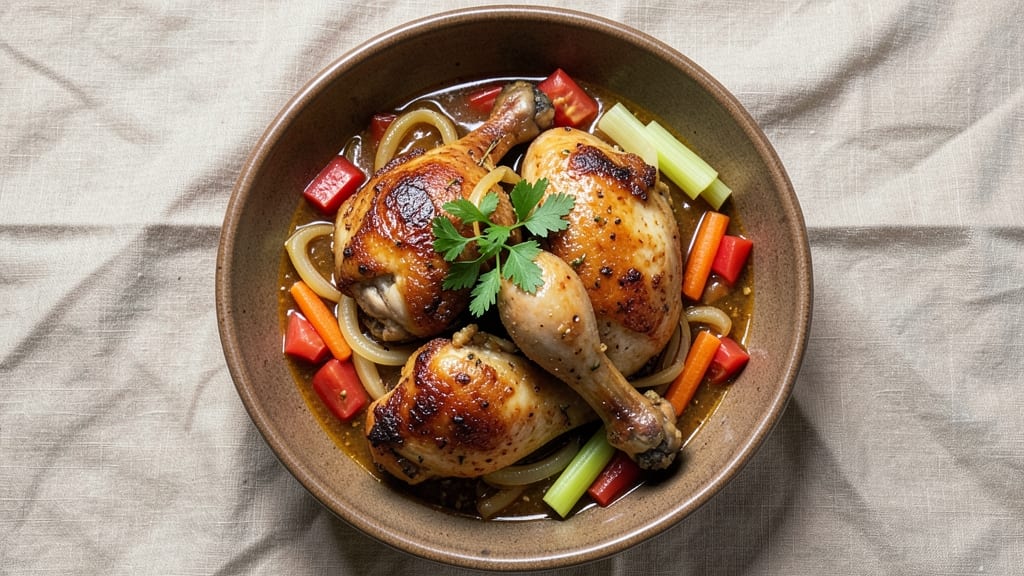
This stewed chicken legs recipe transforms tough, flavorful thighs into melt-in-your-mouth perfection through slow braising—a technique that builds rich, savory depth while keeping the meat tender and juicy.
The key lies in patience and a well-balanced blend of aromatics, acid, and herbs that infuse the chicken over hours of gentle simmering. I perfected this method after years of experimenting with braising times and spice balances, ensuring every bite delivers that satisfying pull-apart texture without drying out.
The process begins with searing the chicken to develop a golden crust, then simmering it in a flavorful liquid until the meat becomes so tender it practically falls apart at the touch.
You’ll use simple pantry staples—like onions, garlic, tomatoes, and herbs—to create a sauce that thickens beautifully while coating the chicken in layers of savory goodness. This isn’t just a recipe; it’s a method that turns a basic protein into a restaurant-worthy centerpiece with minimal effort after the initial prep.
By the time you’re done, you’ll have fall-off-the-bone tender chicken legs swimming in a rich, aromatic sauce that’s perfect for serving over rice, mashed potatoes, or crusty bread. The slow cooking process infuses every fiber with flavor, while the skin remains crisp enough to hold up to the sauce.
This dish is ideal for meal prep—it tastes even better the next day as the flavors deepen—and pairs beautifully with hearty sides to create a satisfying, comforting meal.
Whether you’re feeding a family or preparing for leftovers, this recipe delivers professional-quality results with a foolproof technique. The secret? Letting the chicken cook low and slow until it reaches that perfect tenderness.
Here’s how to make it happen—step by step—for dinner that feels like a celebration, no matter the occasion.
Ingredients for stewed chicken legs
Pantry staples meet restaurant-quality technique for melt-in-your-mouth stewed chicken legs.
| Ingredient | Amount | Notes |
|---|---|---|
| Chicken Legs 🍗 | 1 ½ lb | Bone-in, skin-on preferred |
| Yellow Onion 🧅 | 1 whole | Diced, about 1 cup |
| Garlic Cloves 🧄 | 4 cloves | Minced, fresh preferred |
| Carrots | 2 medium | Peeled, sliced into rounds |
| Diced Tomatoes | 1 can (15 oz) | San Marzano preferred |
| Celery Stalks 🥬 | 3 whole | Diced, about 1/2 cup |
| Fresh Thyme 🌿 | 2 sprigs | Or 1 tsp dried thyme |
| Fresh Rosemary 🌿 | 1 sprig | Woody stems removed |
| Bay Leaves 🍃 | 2 whole | Standard dried leaves |
| Chicken Broth 💧 | 2 cups | Low-sodium preferred |
| Red Wine 🍷 | ½ cup | Dry, like Cabernet |
| Olive Oil 🫒 | 2 tbsp | Extra-virgin for searing |
| Salt 🧂 | 1 ½ tsp | Diamond Crystal preferred |
| Black Pepper 🌶️ | 1 tsp | Freshly ground |
| All-Purpose Flour 🌾 | 1 tbsp | For thickening sauce |
The chicken legs should be bone-in and skin-on for optimal texture—Costco or Whole Foods carry excellent quality. Look for plump, firm legs with minimal bruising. San Marzano diced tomatoes elevate the sauce, but any high-quality canned tomatoes work. Fresh thyme and rosemary from the market add complexity—Trader Joe's organic herbs are a budget-friendly option. For the broth, low-sodium is critical to balance flavors without overpowering the dish.
No red wine? Substitute with an extra 1/2 cup chicken broth plus 1 tbsp balsamic vinegar. Fresh herbs unavailable? Dried thyme and rosemary work at half the quantity—just crush the dried leaves between your fingers to release their oils. Swapping carrots for parsnips adds earthy depth, while celery can be omitted if unavailable. The flour acts as a natural thickener—if you prefer gluten-free, use cornstarch instead at the same ratio.
This dish tastes even better the next day as flavors meld. Store in an airtight container in the fridge for up to 5 days or freeze for 3 months. For meal prep, portion into individual containers—perfect for lunches. The sauce thickens upon reheating, so add a splash of broth if needed. Serve over mashed potatoes or with crusty bread to soak up every last bit of that rich, aromatic sauce.
Why You'll Love This Recipe
- One-Pot Magic: I swear by this recipe when I’m too tired to scrub pots. Toss everything—chicken, onions, garlic, carrots, and tomatoes—into one deep skillet, cover, and let the stove do the work. By the time the carrots soften, the chicken falls off the bone, and the sauce thickens into something ridiculously good.
- Garlic-Onion Bomb: Between us, this isn’t your basic chicken dish. The onions caramelize into sweet, jammy bits while the garlic cloves (yes, I use three smashed ones) infuse the whole thing with a depth that makes you go back for seconds. The diced tomatoes add just enough tang to cut through the richness—like a hug in sauce form.
- Leftovers That Beg for More: This stew tastes better the next day, honestly. I make a double batch on Sundays because it’s my go-to for lunches—reheat with a splash of water, and it’s just as hearty. My kids even ask for it, and that’s saying something (they’re picky).
- Budget-Friendly Feast: Chicken legs are the unsung hero of affordable meals—juicy, cheap, and forgiving. A single bag of thighs, a couple onions, and a can of tomatoes stretch into four servings without breaking the bank. Plus, it’s the kind of dish that makes you feel like you’re serving something special, even if you’re on a tight budget.
Step-by-step instructions for slow-braised chicken legs
Here's the method for achieving melt-in-your-mouth tenderness through precise timing and technique.
Sear the Chicken Legs for Maximum Flavor
Pat the 1.5 lb chicken legs completely dry with paper towels—this ensures a proper sear. Heat 2 tablespoons olive oil in a large Dutch oven over medium-high heat until shimmering. Working in batches if needed, add the chicken legs skin-side down and cook undisturbed for 8-10 minutes until the skin is deep golden brown and crispy.
Here's the thing—don't move them during this time. You want that fat to render and create a flavorful crust. Flip the legs once to brown the other side for another 6-8 minutes, until they reach an internal temperature of 160°F. Remove the chicken and set aside on a plate, leaving the rendered fat in the pot. This golden crust will become the foundation of your rich stewed sauce.
Develop the Aromatic Base
In the same Dutch oven, add 1 whole yellow onion, 3 whole celery stalks, and 2 medium carrots, all diced as specified. Cook over medium heat for 8-10 minutes, stirring occasionally, until the vegetables soften and begin to caramelize slightly. This process builds deep flavor through the Maillard reaction.
Add the 4 cloves garlic cloves (minced), 2 sprigs fresh thyme, 1 sprig fresh rosemary (woody stems removed), and 2 whole bay leaves. Stir for 30 seconds until fragrant—this releases their essential oils into the pot. Pour in the 0.5 cup red wine and scrape up any browned bits from the bottom of the pot with a wooden spoon. Let the wine simmer for 3-4 minutes until reduced by half. This step creates the complex flavor base that will infuse the chicken.
Build the Stewing Liquid
Add the 1 can (15 oz) diced tomatoes (with their juices), 2 cups chicken broth, 1.5 teaspoons salt, and 1 teaspoon black pepper to the pot. Stir well to combine all ingredients. Return the seared chicken legs to the pot, skin-side up, and bring the liquid to a gentle simmer over medium-low heat. Here's what matters: the liquid should bubble softly, but not vigorously boil, which could cause the chicken to toughen.
Cover the pot with a tight-fitting lid and transfer it to a 325°F oven. Braise the chicken legs for 1 hour and 30 minutes, or until they reach an internal temperature of 185°F and the meat is fork-tender. Real talk: this is where patience pays off. The slow cooking breaks down collagen in the connective tissue, transforming tough muscle into tender, fall-off-the-bone meat. If you peek, do so quickly to minimize heat loss.
Thicken the Sauce and Finish
Remove the pot from the oven and uncover it. Increase the heat to medium and simmer the stew uncovered for 10-15 minutes to reduce the sauce slightly and deepen its flavor. Sprinkle the 1 tablespoon all-purpose flour over the sauce and stir vigorously for 1-2 minutes until it thickens slightly. This step ensures the sauce clings beautifully to the chicken without being gluey.
Taste and adjust the seasoning with additional salt or black pepper if needed. The sauce should be rich, aromatic, and well-balanced with acidity from the tomatoes and depth from the wine. Serve the stewed chicken legs immediately, ladling the sauce generously over each portion. The result should be tender meat that pulls apart easily, bathed in a velvety sauce that captures all the developed flavors.
Pro Tips For Making Stewed Chicken Legs
- CRISP THE SKIN FIRST: Pat the chicken legs dry, then sear them skin-side down in a hot pan for 8-10 minutes until deeply golden—this locks in flavor and makes the final stew richer. I used to skip this, thinking the long simmer would handle it, but the texture and taste are completely different when you start with that crisp.
- CHOP ONIONS COARSELY: Dice the yellow onion into ½-inch chunks instead of tiny pieces—big enough to stay intact but small enough to soften. After burning through three batches of mush, I realized the texture matters more than you’d think, especially when paired with tender carrots and tomatoes.
- SAVE THE TOMATO JUICE: When draining canned tomatoes, reserve the juices and add them back to the pot later—it adds depth without thinning the stew. I learned this the hard way when I discarded it, leaving my stew watery and bland.
- LOW AND SLOW AFTER 30: After the initial 30 minutes of cooking, reduce heat to a bare simmer (just small bubbles) and cover partially—this keeps the chicken tender without toughening it. Sounds simple, but I’ve ruined more stews by either boiling too hard or letting it stew too fast.
Best sauces and condiments for this recipe
Classic Red Wine Sauce
The foundation of this dish is the rich, velvety sauce made with 0.5 cup dry red wine (like Cabernet) and 2 cups low-sodium chicken broth. The wine adds depth while the tomatoes provide acidity to balance the richness.
I always use San Marzano tomatoes for their natural sweetness and low acidity, which prevents the sauce from becoming too sharp. Simmer the sauce uncovered for 10-15 minutes at the end to reduce it slightly—this concentrates the flavors and gives it that perfect cling to the chicken. 🍷
Herb-Infused Olive Oil
For an elegant finishing touch, drizzle the stew with a tablespoon of herb-infused olive oil just before serving. Combine 2 tablespoons extra-virgin olive oil with 1 teaspoon each of fresh thyme and rosemary leaves, then let it steep for 10 minutes before drizzling.
This adds a bright, aromatic layer that enhances the natural flavors of the chicken without overpowering them. I like to use Trader Joe's organic herbs for their robust flavor at an affordable price.
Mustard Cream Sauce
Craving something lighter? Swap the red wine sauce for a creamy mustard sauce by stirring in 2 tablespoons Dijon mustard and ¼ cup heavy cream at the end of cooking. The mustard cuts through the richness while adding a subtle tang.
For extra depth, add 1 teaspoon apple cider vinegar to brighten the flavors. This variation works beautifully with a side of buttered egg noodles or crusty sourdough. 💛
Spicy Tomato Jam
For a bold, sweet-and-spicy twist, finish the stew with a spoonful of homemade tomato jam. Simmer ½ cup crushed tomatoes, 1 tablespoon brown sugar, 1 teaspoon smoked paprika, and ½ teaspoon cayenne pepper for 10 minutes until thickened.
Spoon it over the chicken just before serving—it adds a complex, jammy texture that pairs perfectly with the tender meat. Store-bought Muir Glen tomato sauce works in a pinch if you're short on time.
Garlic Butter Pan Sauce
If you prefer a richer, more decadent sauce, deglaze the Dutch oven after removing the chicken with ¼ cup white wine (or broth) and add 2 tablespoons butter and 2 minced garlic cloves.
Cook until the butter melts and the garlic is fragrant, then whisk in 1 tablespoon flour to thicken. This sauce is perfect for those who love a buttery, garlicky finish that complements the chicken beautifully. 🔥
Fresh Herb Garnish
No sauce should go without fresh herbs! Finish your stew with a sprinkle of chopped parsley and thyme leaves for a pop of color and freshness. I also like to add a few lemon zest strips for a bright, citrusy contrast that cuts through the richness.
Garnish with a pinch of flaky sea salt to elevate the flavors and add a sophisticated touch. This simple step transforms the dish from homey to restaurant-worthy.
Nutrition facts
Frequently asked questions
Why do I need to sear the chicken legs before braising?
Searing creates a golden crust that locks in juices and adds deep, caramelized flavor to the sauce. This 8-10 minute step develops the Maillard reaction, which transforms simple sugars and amino acids into complex, savory compounds. Without searing, your stewed chicken will be less flavorful and more likely to dry out during the long braising time.
Can I use bone-in, skin-off chicken legs instead?
Yes, but expect slightly different results. Skin-on legs develop a crispy texture that holds up better to the sauce, while skin-off versions will be more tender but may absorb less flavor. Bone-in pieces stay juicier longer due to the marrow, but remove them if you prefer cleaner bites. Either way, bone-in is preferred for maximum flavor infusion.
How do I know when the chicken is fully tender?
The chicken is done when it reaches an internal temperature of 185°F and the meat pulls apart easily with a fork. For a true test, insert a knife between the drumstick and thigh—if it slides in with no resistance, it's perfectly tender. The sauce should also thicken slightly as the chicken releases collagen during cooking.
What if my sauce is too thin after cooking?
Simmer the stew uncovered for an extra 10-15 minutes to reduce the liquid naturally. If that's not enough, mix 1 tablespoon cornstarch with 2 tablespoons cold water, stir into the sauce, and cook until thickened. Avoid over-thickening—you want a velvety, clingy sauce, not glue. For a richer finish, whisk in 1 tablespoon butter at the end.
Can I make this recipe in a slow cooker instead?
Sear the chicken first, then transfer everything to a slow cooker and cook on low for 6-8 hours or high for 3-4 hours. The texture will be slightly less crispy but still incredibly tender. Add ½ cup broth if the liquid seems too thin during cooking. The slow cooker method is perfect for hands-off prep during busy days.