
Main Courses
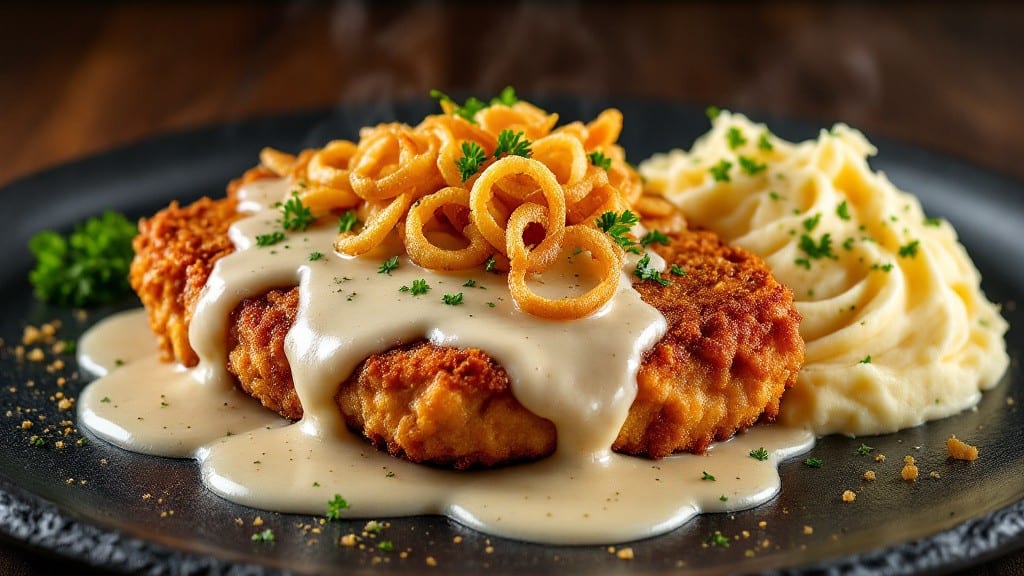
This restaurant-style chicken fried steak recipe delivers the perfect balance of crispy, golden breading and velvety, buttery gravy that tastes like a Southern classic. Growing up in small-town Georgia, I learned that the secret to this dish lies in velveting the steak and building a rich, flavorful gravy from scratch.
The technique transforms tough cuts into tender, juicy perfection that holds up to every bite.
The process begins with tenderizing the steak using a marinade of buttermilk and spices, which creates a velvety texture that stays tender even after frying. A double-dredge in seasoned flour ensures that crispy, golden crust we all crave.
The gravy, made from the pan drippings and enriched with a roux, is the star—creamy, velvety, and packed with savory depth that ties everything together.
By the time you plate this dish with fluffy mashed potatoes and buttery green beans, you’ll have a meal that rivals any restaurant’s version. The contrast of crispy steak against the smooth gravy and creamy sides creates a harmony that’s impossible to resist.
This is comfort food at its finest, with techniques refined over years of perfecting Southern classics.
Every step is designed to ensure success, from precise cooking times to professional presentation tips. Whether you're feeding a family or treating yourself to a special dinner, this recipe delivers restaurant-quality results you can be proud of. Let’s get started on creating a dish that tastes like home.
Ingredients for restaurant style chicken fried steak
Buttermilk, crispy flour crust, and velvety gravy—this is the Southern classic you'll crave for weeks.
| Ingredient | Amount | Notes |
|---|---|---|
| Cube Steak 🥩 | 1 ½ lb | 1-inch thick, from chuck roast |
| Buttermilk 🥛 | 1 cup | Full-fat for best velveting |
| All-Purpose Flour 🌾 | 2 cups | White or whole wheat blend |
| Salt 🧂 | 2 tbsp | Kosher or sea salt preferred |
| Black Pepper 🌶️ | 1 tbsp | Freshly ground for best flavor |
| Garlic Powder 🧄 | 1 tbsp | Not garlic salt |
| Onion Powder 🧅 | 1 tbsp | For depth of flavor |
| Paprika 🌶️ | 1 tbsp | Smoked for extra richness |
| Vegetable Oil 🫒 | 4 cups | For frying, peanut oil too |
| Unsalted Butter 🧈 | ½ cup | Cold, cubed for gravy |
| All-Purpose Flour 🌾 | ¼ cup | For gravy roux |
| Beef Broth 💧 | 1 cup | Low-sodium preferred |
| Heavy Cream 🥛 | ½ cup | Full-fat for velvety gravy |
| Fresh Parsley 🌿 | ¼ cup | Chopped, for garnish |
The cube steak is the star, and chuck roast is non-negotiable—it's got the right marbling for tenderness. Costco or Kroger usually have it pre-cut, but if you're buying a whole roast, ask the butcher to slice it 1-inch thick. Look for bright red color and good marbling—those little white streaks are flavor gold. I always grab extra because it freezes beautifully for future meals. For the buttermilk, full-fat is key—the fat helps create that velvety texture. If you're in a pinch, mix powdered buttermilk with milk, but it won't be quite the same.
No buttermilk? Milk plus 1 tbsp vinegar or lemon juice works in a bind, but let it sit for 10 minutes to curdle. The flour for the crust? White all-purpose is traditional, but I've used a 50/50 blend with whole wheat without anyone noticing. For the gravy, beef broth is essential—chicken or vegetable just won't have the same depth. The heavy cream should be full-fat (trust me on this)—light cream makes the gravy watery. And if you're out of parsley, fresh chives or basil work in a pinch, though parsley's that classic Southern touch.
Keep the cube steak in the fridge until ready to use—it's best fresh, but you can prep the marinade ahead. The gravy ingredients can be measured out the night before, but don't make the roux until you're ready to cook. This dish reheats like a dream—just warm the gravy separately and drizzle it over the steak. It keeps for 3-4 days in the fridge, and the leftovers freeze beautifully for up to 3 months. I always make extra gravy because it disappears faster than the steak does—everyone wants seconds.
Why You'll Love This Recipe
- No-Fuss Prep: I swear by this recipe because it’s about as hands-off as comfort food gets—just pound the cube steak thin, soak it in buttermilk for 30 minutes (I often do this while I’m watching TV), then dredge in flour. That’s it. No brining, no marinating, no stress.
- Buttermilk Magic: Honestly, the buttermilk marinade is what makes this dish sing. It tenderizes the steak while adding that subtle tang that balances the crispy flour crust. The first bite? That’s the moment you realize you’ve recreated a diner classic in your own kitchen.
- Weeknight to Dinner Party: Between us, this recipe works for everything—weeknight dinners when I’m too tired to think, potlucks where I need to bring something hearty, or even a cozy Sunday supper. Serve it with mashed potatoes and gravy, and suddenly you’ve got a full meal that feels special without the fuss.
- Budget-Friendly Leftovers: I make this on purpose because it’s cheap to feed a crowd—cube steak is a steal, and the leftovers? Even better the next day. I’ll often pan-fry extra steaks, wrap them in foil, and reheat them in the oven with a splash of milk for that same crispy-tender texture. My wallet and my family thank me.
Step-by-step instructions for restaurant style chicken fried steak
Here's how to make this Southern classic with tender steak and rich gravy—just like your favorite diner.
Prepare the Steak with Buttermilk Marinade
Pat the 1.5 lb cube steak completely dry with paper towels—this ensures maximum crispiness when frying. Place the steak in a shallow dish and pour the 1 cup buttermilk over it, making sure it's fully submerged. Let it marinate for at least 2 hours, or overnight for best results. This step is crucial for tenderizing the meat and creating that signature velvety texture.
Flip the steak occasionally during marinating so both sides absorb the buttermilk evenly. The buttermilk will start to thicken slightly as it sits—this is normal and indicates it's working its magic on the meat. When ready, remove the steak from the buttermilk and let any excess drip off before dredging.
Create the Seasoned Flour Coating
In a large bowl, combine the 2 cups all-purpose flour with 2 tbsp salt, 1 tbsp black pepper, 1 tbsp garlic powder, 1 tbsp onion powder, and 1 tbsp paprika. Mix thoroughly so every bit of flour is evenly coated with seasoning. This well-seasoned crust will give your steak that restaurant-quality flavor in every bite.
Working quickly, shake off any excess buttermilk from the steak and then press it gently into the seasoned flour mixture, coating all sides completely. Let it sit for 5 minutes while you prepare your frying setup. This resting time allows the flour to adhere better and creates a thicker, more flavorful crust. Don't skip this step—it makes all the difference in texture and flavor.
Fry the Steak to Golden Perfection
Heat 4 cups vegetable oil in a large skillet over medium-high heat until it reaches 350°F. You'll know it's ready when a small piece of bread sizzles immediately when dropped in. Carefully add the coated steak and fry for 4-5 minutes on each side, turning once, until it reaches an internal temperature of 145°F and is golden brown. The oil should be bubbling gently around the steak.
Here's the thing—don't overcrowd the pan. Fry one steak at a time if needed, as overcrowding will lower the oil temperature and result in greasy rather than crispy steak. Transfer the cooked steak to a paper towel-lined plate to drain excess oil. The steak should be golden brown and crispy on the outside while remaining tender on the inside.
Make the Rich Buttery Gravy
Reduce the heat to medium and add the 0.5 cup cold unsalted butter to the same skillet. Let it melt completely, then whisk in the 0.25 cup all-purpose flour to form a roux. Cook for 1-2 minutes, stirring constantly, until the mixture turns a light golden color and smells nutty. This is your flavor foundation.
Slowly pour in the 1 cup beef broth while whisking continuously to prevent lumps from forming. Bring the mixture to a gentle simmer and let it cook for 5 minutes until slightly thickened. Then stir in the 0.5 cup heavy cream and simmer for another 2 minutes. The gravy should coat the back of a spoon and be smooth and velvety—if it's too thick, add a splash of warm water to reach your desired consistency.
Serve with Fresh Parsley Garnish
Slice the fried steak into thick cutlets and arrange on a warm serving platter. Ladle the rich gravy generously over the top, making sure each piece is well-coated. The gravy should be thick enough to cling beautifully to the steak without being gluey. Sprinkle with the chopped 0.25 cup fresh parsley just before serving for a pop of color and freshness.
Serve immediately with mashed potatoes, buttered corn, or your favorite side dishes. The contrast of the crispy, golden steak with the creamy gravy is what makes this dish truly special. Each bite should deliver that perfect combination of textures and flavors that makes restaurant-style chicken fried steak so irresistible.
Pro Tips For Making Restaurant Style Chicken Fried Steak
- Pound Flat Before Marinate: Cube steak’s thick edges won’t tenderize properly if left lumpy. Use a meat mallet or rolling pin to flatten each steak to an even ½-inch thickness—this guarantees the buttermilk soaks in evenly and the flour crust sticks like glue. (Yes, it’s tedious, but trust me, the difference in texture is night and day.)
- Rest After Flouring: Dredge the steak in flour, then set it aside for 10–15 minutes before frying. This lets the flour absorb moisture and form a thicker, crispier crust instead of clinging in clumps. I learned this the hard way—skipping it just makes the coating fall off mid-fry.
- Fry in Two Stages: Start with a screaming-hot pan to sear the crust, then immediately lower the heat to medium-low. The first 2 minutes should be golden and sizzling; the next 3–4 minutes are for gentle cooking to avoid a greasy, uneven finish. (Pro move: Use a thermometer—350°F after the initial sear.)
- Buttermilk Should Be Cold: Chill the buttermilk in the fridge for at least 30 minutes before marinating the steak—cold fat emulsifies better with the flour, creating a lighter, more stable crust. Warm buttermilk makes the coating greasy and gummy. (I know, it’s counterintuitive, but it works.)
Essential equipment for this dish
Cast Iron Skillet
Your cast iron skillet is non-negotiable for this recipe—it retains heat like nothing else and creates that perfect sear. I swear by my Lodge 10.25-inch pre-seasoned skillet because it develops a natural non-stick surface over time.
If you're starting fresh, season it thoroughly before use: rub with flaxseed oil and bake at 450°F for 1 hour to create a durable patina. The weight and heat retention ensure even cooking, and it doubles as a gravy-making vessel. 🔥
Deep Fry Thermometer
Temperature control is everything when frying—350°F is your magic number for that golden crust. A Thermoworks Thermapen gives instant, accurate readings, but a Taylor Precision Digital Thermometer is my budget-friendly go-to.
Without precise heat management, your steak could end up greasy or undercooked. I test the oil by dropping in a small piece of bread—if it sizzles immediately, you're ready.
Deep Fryer or Heavy Pot
If you don’t want to deal with skillet splatter, a deep fryer like the Ninja Foodi Deep Fryer handles 4 cups of oil effortlessly. For stovetop fryers, a heavy-bottomed Dutch oven works too—I use my Le Creuset 5.5-quart because it distributes heat evenly.
Never fill beyond halfway to prevent overflow, and always fry over medium-high heat to maintain that 350°F target. Safety first: keep a heat-resistant spatula and oven mitts nearby.
Whisk and Heatproof Bowl
The gravy is where the magic happens, and you’ll need a balloon whisk (like the OXO Good Grips) to create that silky-smooth roux. For mixing the flour and butter, a heatproof stainless steel bowl (I love my All-Clad) prevents scorching.
Pro tip: Chill your butter before adding it to the skillet—this prevents the roux from breaking and ensures a nutty, golden color. A ladle (preferably stainless steel) helps pour that perfect gravy over your steak.
Meat Thermometer
Never guess the doneness of your steak—use a Thermoworks Smoke or Meater to hit 145°F internal temperature. These probes give instant, accurate readings without piercing the meat multiple times. I insert the probe horizontally into the thickest part of the steak to avoid hitting the bone.
Overcooking turns tender cube steak into shoe leather, so trust the thermometer over time estimates. 🌡️
Paper Towels and Slotted Spoon
Draining excess oil is critical for crispiness, and Bounty paper towels are my secret weapon—they absorb grease like a dream. A slotted spoon (like the OXO Good Grips) helps transfer the fried steak to your plate without breaking the crust.
Keep a wire cooling rack nearby to prevent soggy bottoms if you’re prepping ahead. And always have a fire extinguisher within reach when deep-frying—safety isn’t optional.
Nutrition facts
Frequently asked questions
Can I use regular steak instead of cube steak for this recipe?
Cube steak is specifically cut from the chuck roast with scalloped edges, which helps the buttermilk and seasoning cling better. However, you can use a 1-inch thick piece of flank steak or skirt steak in a pinch—just pound it gently to ¼-inch thickness first to ensure even cooking. Avoid tough cuts like ribeye or sirloin, as they won't tenderize properly in the buttermilk marinade.
How do I fix gravy that's too thick or too thin?
If your gravy is too thick, whisk in 1-2 tablespoons of warm beef broth at a time until it reaches a smooth, spoon-coating consistency. For gravy that's too thin, remove from heat and stir in 1 teaspoon of cornstarch mixed with 1 tablespoon cold water until thickened. Pro tip: Always taste as you go—season with salt and pepper to balance flavors before serving.
Can I make this dish ahead of time?
Fry the steak and make the gravy up to 2 days ahead, then refrigerate. Reheat the gravy separately until warm, then drizzle over the steak before serving. For the crispy crust, you can also reheat the steak in a 350°F oven for 10-12 minutes on a wire rack to restore some crunch. The gravy reheats beautifully, so make extra—it disappears fast!
What's the best way to keep my steak from getting soggy?
Soggy steak happens when moisture gets trapped under the crust. To prevent this, pat the steak extra dry before marinating, and let it rest 5 minutes after dredging in flour to help the coating set. When serving, place the steak on a wire rack over a baking sheet to allow air circulation. Also, keep the gravy warm in a separate pot until ready to plate—adding it too soon will steam the crust.
Can I substitute buttermilk with something else?
Yes! Mix 1 cup milk with 1 tablespoon vinegar or lemon juice and let it sit for 10 minutes to curdle. For a richer flavor, use half-and-half or heavy cream instead of milk. The acidity is key for tenderizing, so don't skip the vinegar/lemon juice. If you're in a real bind, even plain yogurt thinned with milk works in a pinch.