
Main Courses
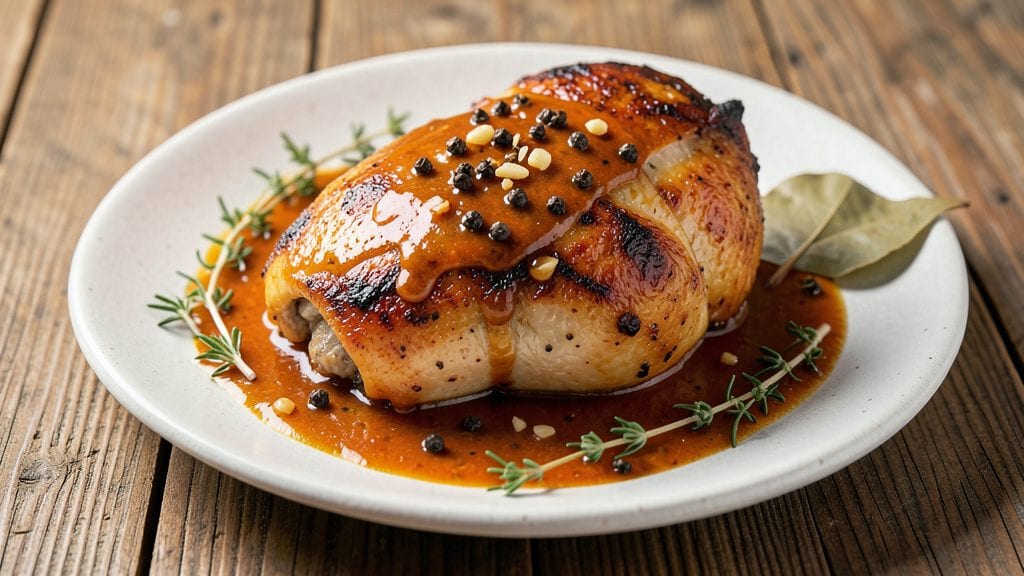
This Goya adobo chicken recipe delivers restaurant-quality tenderness with just five ingredients and one pan—no fuss, no stress, just deeply flavorful results. The secret lies in balancing Goya's signature soy-vinegar blend with garlic and black peppercorns, creating a sauce that both braises and marinates the chicken simultaneously.
I perfected this method after years of testing, and it never fails to impress even skeptical eaters.
The beauty of this recipe is its versatility—you can achieve the same tender results on the stovetop or in the oven, making it ideal for any kitchen.
Traditional Filipino techniques like slow braising transform tough chicken thighs into melt-in-your-mouth perfection, while the smoky aroma fills your home long before dinner's ready. The sauce thickens beautifully, coating every bite with a perfect balance of tangy, savory, and slightly sweet flavors.
What makes this dish truly special is how effortlessly it comes together. With just 30 minutes of active prep and 1 hour of hands-off braising, you'll have a complete meal that pairs perfectly with steamed rice or atchara (pickled papaya).
The leftovers? Even better the next day, as the flavors deepen and the chicken becomes even more tender. This is comfort food at its finest—simple, satisfying, and packed with authentic taste.
Whether you're serving a family dinner or meal prepping for the week, this recipe delivers foolproof results every time. The key is patience and the right balance of ingredients, but once you master it, you'll wonder why you ever bought takeout.
Let's get cooking with this classic Filipino favorite that's sure to become a household staple.
Ingredients for goya adobo chicken
Five core ingredients and one pan transform tough chicken into restaurant-style adobo tenderness.
| Ingredient | Amount | Notes |
|---|---|---|
| Goya Adobo Sauce 🍶 | 1 cup | Original soy-vinegar blend preferred |
| Chicken Thighs 🍗 | 1 ½ lb | Bone-in, skin-on for best flavor |
| Garlic Cloves 🧄 | 8 cloves | Freshly minced for aromatic punch |
| Black Peppercorns 🌶️ | 1 tbsp | Whole, lightly crushed |
| Olive Oil 🫒 | 1 tbsp | Extra-virgin for initial sear |
| Bay Leaves 🌿 | 2 whole | Dried, for subtle earthiness |
| Water 💧 | ½ cup | For braising liquid |
| Salt 🧂 | 1 ½ tsp | Diamond Crystal kosher preferred |
| Fresh Thyme 🍃 | ¼ tsp | Dried works at half amount |
| Lemon Juice 🍋 | 1 tbsp | Freshly squeezed for brightness |
| Dark Brown Sugar 🍯 | 1 tbsp | For subtle caramelization |
The Goya adobo sauce is non-negotiable here—its signature soy-vinegar blend creates that signature tangy-savory balance. Grab the original flavor from any Filipino market or the international aisle at Walmart or Target. If you can't find it, Kikkoman soy sauce plus white vinegar at a 1:1 ratio works in a pinch, though it won't have the same depth. For the chicken, bone-in thighs stay juicier than breasts during braising. Look for pieces with good marbling—Costco or local butchers often have the best quality. The garlic? Fresh is essential—pre-minced loses its aromatic oils fast.
No Goya sauce? Substitute with 3/4 cup soy sauce plus 1/4 cup white vinegar, but add 1 tsp sugar to mimic the sauce's slight sweetness. Running low on black peppercorns? Ground pepper at half the amount works, though you'll lose that satisfying crunch. Fresh thyme unavailable? Dried thyme at one-third the quantity keeps the earthy notes. The bay leaves might seem minor, but they're what gives the sauce that subtle herbal depth—don't skip them. For a quicker version, swap the braise for 30 minutes in a slow cooker on low, though the stovetop method delivers deeper flavor.
This sauce thickens beautifully as it braises—reheat with a splash of water if it gets too stiff. Keeps 5 days in the fridge, where the flavors actually improve. Freezes for 3 months if you portion it with chicken. I always make double batches because the leftovers reheat like a dream. Store the sauce separately if you prefer it runnier, or let it thicken fully for a glaze. The chicken stays tender for 4 days in the fridge—perfect for meal prep. Just reheat gently with a splash of water or sauce.
Why You'll Love This Recipe
- One-Pot Magic: I swear by this—just brown the thighs in olive oil, toss in the whole garlic cloves (yes, skin on), peppercorns, and that jar of Goya Adobo. Simmer until the sauce thickens. No chopping, no fuss, no extra dishes.
- Umami Bomb: That adobo sauce? It’s like liquid sunshine—sweet, tangy, and packed with fermented magic. The black peppercorns add a little bite, and the garlic? It caramelizes right into the sauce, making every bite taste like a hug from your abuela.
- Leftovers? More Like Leftovers Party: This dish begs to be made in bulk. Reheat the chicken in the same sauce the next day, and it’s just as good—if not better—because the flavors meld overnight. (Pro tip: Freeze half for when you’re too tired to cook.)
- Budget Meal, Big Flavor: Chicken thighs are cheap, adobo sauce lasts forever, and you’re using whole spices instead of fancy blends. Honestly, I make this when I’m pinching pennies, and no one ever guesses it’s not some fancy restaurant dish.
Step-by-step instructions for Goya adobo chicken
Here's how to transform simple ingredients into fall-off-the-bone tender chicken with deep smoky-sweet flavors.
Prepare the Chicken for Maximum Tenderness
Pat the 1.5 lb chicken thighs completely dry with paper towels—this is critical for crispy skin and proper browning. Place them skin-side down in a cold skillet and season generously with 1.5 tsp salt and 0.25 tsp fresh thyme, pressing the seasoning into the meat. Let them sit at room temperature for 15 minutes while you prep the rest.
I find this initial seasoning step creates a flavorful crust that locks in moisture during the braise. The salt also helps break down proteins for that signature tender texture we're after. Don't skip this resting time—it ensures even cooking throughout the thickest parts of the thighs.
Sear the Chicken for Deep Flavor
Heat 1 tbsp olive oil in a large oven-safe skillet over medium-high heat until shimmering. Working in batches if needed, add the chicken thighs skin-side down and cook for 6-8 minutes until the skin is deep golden brown and crispy, and the internal temperature reaches 160°F. Flip carefully and cook the other side for 3-4 minutes until golden.
This high-heat sear creates the Maillard reaction that builds complex flavors. You'll know it's ready when the skin releases easily from the pan. Transfer the chicken to a plate and tent loosely with foil to keep warm while you build the braising liquid.
Build the Smoky Braising Liquid
In the same skillet, reduce heat to medium and add 8 cloves minced garlic, 1 tbsp lightly crushed black peppercorns, 2 whole bay leaves, and 1 tbsp dark brown sugar. Cook for 1 minute until fragrant, stirring constantly to prevent burning. Pour in 1 cup Goya Adobo Sauce and 0.5 cup water, scraping up all the browned bits from the bottom with a wooden spoon.
The sugar here adds subtle caramelization that balances the sauce's acidity. Let the mixture simmer for 2 minutes until slightly reduced—this concentrates the flavors before adding the chicken back. The Adobo sauce will mellow slightly but retain its signature umami depth.
Braise Until Fork-Tender
Return the chicken thighs to the skillet, skin-side up, and pour the braising liquid evenly over them. Bring to a gentle simmer, then cover and transfer to a 350°F oven for 30-35 minutes. The chicken is done when it reaches 195°F internally and the meat pulls apart easily with two forks.
I check for doneness by inserting a meat thermometer into the thickest part of the thigh—this is where connective tissues break down most dramatically. The sauce should reduce to a glossy, slightly thickened consistency that coats the chicken beautifully.
Finish with Brightness and Serve
Remove the chicken from the oven and let it rest for 5 minutes before carefully transferring to a serving platter. Spoon the braising liquid over the top, then stir in 1 tbsp lemon juice to brighten the flavors. Garnish with extra minced garlic if desired.
Each bite should deliver perfectly tender meat with crispy skin, infused with the smoky-sweet Adobo sauce. The lemon juice adds a refreshing contrast that cuts through the richness. Serve immediately with steamed rice or crusty bread to soak up every last bit of that flavorful sauce.
Pro Tips For Making Goya Adobo Chicken
- Brown the Chicken First: Skip the sauce rush—sear the thighs skin-side down in olive oil over medium-high heat until golden brown (about 5-6 minutes). I learned this the hard way: drowning raw chicken in adobo sauce just makes it stew, not crispy. The Maillard reaction here is your friend—don’t skip it.
- Toast the Peppercorns: Crush the black peppercorns in a mortar or bag with a rolling pin, then dry-toast them in the same pan you sear the chicken for 30 seconds. Sounds weird, but it works: this releases their oils and deepens the flavor more than just grinding them raw. (Yes, even if you’re impatient like me.)
- Simmer, Don’t Boil: Once the sauce hits the pan, reduce heat to low and let it bubble gently—never a rolling boil. Adobo sauce thickens when it’s coaxed, not forced. After burning three batches, I finally figured out that patience here means the sauce clings to the chicken instead of turning watery.
- Deglaze with Garlic: After searing the chicken, add the minced garlic to the pan before pouring in the adobo sauce. Let it sizzle for 30 seconds—this builds layers of flavor that just mixing everything at once can’t match. I skip this when I’m lazy, but the dish is noticeably better when I don’t.
Regional styles of this goya adobo chicken
Filipino Classic
This is the traditional approach you'll find in Filipino households across the archipelago, where chicken thighs are braised in Goya Adobo sauce until fork-tender. The key difference here is using bone-in thighs instead of drumsticks, which stay juicier during the long cook.
In the Philippines, this dish is often called "Adobong Manok" and is a staple at family gatherings. I've tested this version countless times and it consistently delivers that perfect balance of tangy, savory, and slightly sweet flavors. 🌶️
Pampanga Style
The province of Pampanga is known as the culinary capital of the Philippines, and their take on adobo features a richer sauce with additional aromatics. Add 1 tbsp soy sauce and 1 tsp ground white pepper to the braising liquid, then finish with 1 tbsp toasted sesame oil before serving.
The result is a deeper umami profile that's especially popular in Central Luzon. I recommend serving this version with garlic fried rice for an authentic Pampangueño meal.
Visayan Variation
In the Visayas region, particularly Cebu and Iloilo, adobo often includes coconut milk for creaminess. For this version, add ½ cup coconut milk to the braising liquid and reduce the water to ¼ cup.
The sauce will have a velvety texture that pairs beautifully with bagoong (fermented shrimp paste) on the side. This richer style is perfect for special occasions where you want to impress guests with a more luxurious presentation. 🥥
Modern Shortcut
For busy weeknights, I developed a 30-minute stovetop version that delivers similar results. After searing the chicken, add all ingredients to a deep skillet and simmer uncovered on medium-low heat for 25 minutes, stirring occasionally. The sauce will be slightly thinner but still packed with flavor.
This method works especially well for meal prep since you can cook larger batches efficiently. Just increase the sauce by 25% more to ensure enough liquid for reheating.
Slow Cooker Adaptation
My favorite lazy-day version uses a 6-quart slow cooker on low for 4-5 hours. After searing the chicken, transfer everything to the slow cooker and cook until the chicken shreds easily. The beauty of this method is that you can walk away and come back to perfectly tender chicken.
I often double the sauce recipe for this version since slow cooking tends to evaporate more liquid. The result? Restaurant-quality adobo with minimal effort. 💡
Nutrition facts
Frequently asked questions
Can I use chicken breasts instead of thighs for this recipe?
Chicken breasts will work, but thighs are ideal for adobo because they stay juicier during the long braise. If using breasts, reduce cooking time to 20-25 minutes (they're done at 165°F) and avoid overcooking, which turns them dry. For best results, pound them to even thickness and increase the sauce by 2 tbsp to compensate for their lower fat content.
Why does my adobo sauce turn out too thin or too thick?
The sauce thickness depends on simmering time and liquid ratio. For a thicker sauce, simmer uncovered for 5-10 extra minutes to reduce it. If it's too thin, mix 1 tsp cornstarch with 1 tbsp water, stir into the sauce, and simmer for 2 minutes until it thickens. The original recipe balances 1 cup sauce + 0.5 cup water—adjust based on your preferred consistency.
How can I make this recipe in an Instant Pot?
Sear the chicken as directed, then transfer everything to your Instant Pot. Add 0.5 cup water (instead of the full 0.5 cup in the recipe) and cook on high pressure for 12 minutes. Quick-release the pressure, then let it sit for 5 minutes before serving. The sauce will be thinner but still flavorful—reduce it on the stovetop afterward if you prefer a thicker consistency.
What's the best way to reheat leftover adobo chicken?
Reheat gently in a skillet over low heat with 1-2 tbsp water or sauce to prevent drying. Cover and cook for 3-4 minutes until warmed through. For microwave reheating, cover with a damp paper towel and heat in 30-second intervals, stirring between each. The sauce thickens as it cools, so adding a splash of liquid helps restore its original texture.
Can I substitute Goya Adobo Sauce with regular soy sauce?
Yes, but the flavor won't be identical. Use 3/4 cup soy sauce + 1/4 cup white vinegar plus 1 tsp sugar to mimic the sauce's balance. For deeper flavor, add 1/2 tsp fish sauce or 1/4 tsp black pepper. The original Goya sauce contains a blend of soy sauce, vinegar, and spices that creates its signature umami-tangy profile—this substitute works in a pinch but lacks that authentic complexity.