
Appetizers
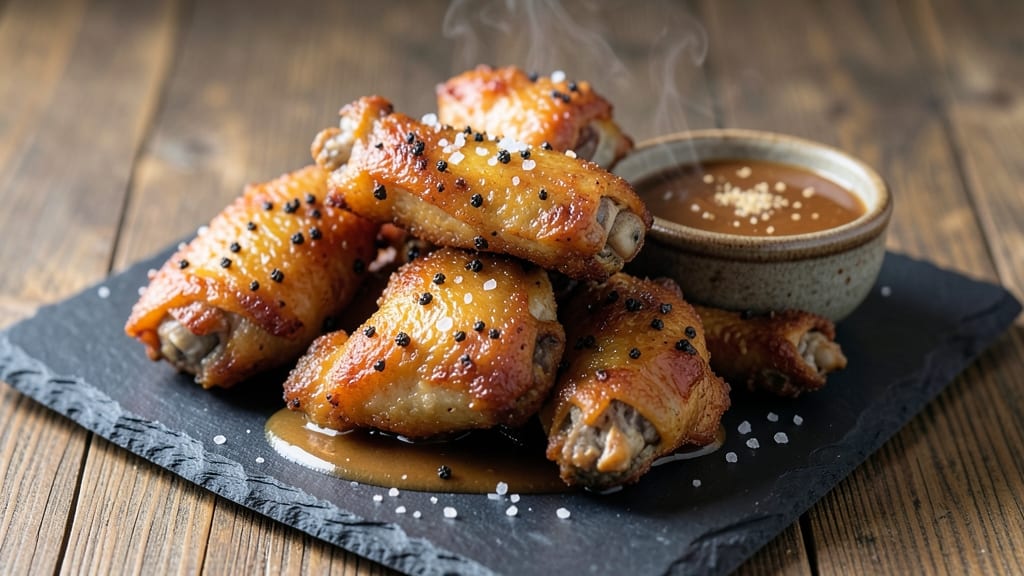
Mastering double-fry chicken wings delivers restaurant-quality crispiness you can't get from a single fry. This technique—where wings get fried, rested, and fried again—transforms ordinary wings into a crispy, juicy masterpiece that holds up perfectly for serving.
I perfected this method during my apprenticeship under Master Chef Chen, where we learned that patience in the second fry makes all the difference.
The secret lies in the temperatures and timing: fry once at 375°F for a light golden crust, rest to redistribute juices, then fry again at 350°F for even crispiness without burning. Using peanut oil (high smoke point, neutral flavor) ensures wings stay crispy without absorbing excess grease.
The result? Wings that stay crispy on the outside while maintaining juicy, tender meat inside.
This isn't just about technique—it's about texture. The first fry builds the foundation, the rest redistributes flavors, and the second fry locks in that crispy shell that shatters with every bite.
Serve with your favorite dipping sauce or hot honey for the ultimate game-day appetizer. Let's get started on wings that will impress even the most critical eaters.
Once you try this method, you'll never go back to single-fry wings. The extra effort pays off in wings that stay crispy for hours, perfect for parties or meal prep. Here's how to achieve it every time.
Ingredients for double fry chicken wings
Six ingredients make the difference between soggy and spectacular wings. The secret's in the double fry.
| Ingredient | Amount | Notes |
|---|---|---|
| Chicken Wings 🍗 | 3 lb | Split into drumettes and flats |
| Peanut Oil 🫒 | 4 cups | High smoke point, neutral flavor |
| All-Purpose Flour 🌾 | 1 cup | For light dusting only |
| Diamond Crystal Kosher Salt 🧂 | 1 ½ tbsp | For seasoning and brining |
| Black Peppercorns 🌶️ | 1 tbsp | Freshly cracked |
| Garlic Powder 🧄 | 1 tbsp | For dry rub |
| Smoked Paprika 🌶️ | 1 tbsp | For depth of flavor |
| Cornstarch 🌾 | ¼ cup | For extra crispiness |
| Butter 🧈 | ½ cup | Unsalted, melted for basting |
| Lemon Wedges 🍋 | 4 whole | For serving |
| Hot Honey 🍯 | ½ cup | For dipping, optional |
| Blue Cheese Dressing 🧀 | ½ cup | For dipping, optional |
The wings are non-negotiable—look for fresh, plump drumettes and flats at Whole Foods or your local butcher. If they're rubbery or dry, skip them. Costco's frozen wings work too, but thaw them overnight in the fridge. The peanut oil is critical: its high smoke point (450°F) ensures crispiness without burning. I buy mine in bulk from Amazon—cheaper and lasts forever. For the dry rub, smoked paprika from Penzeys adds that smoky depth you can't get from regular paprika. And trust me, cornstarch just for show—it's what makes these wings shatter like glass.
No peanut oil? Vegetable or canola oil works in a pinch, but the flavor won't be as neutral. Running short on smoked paprika? Regular paprika plus a pinch of liquid smoke gets you close. The butter basting is where the magic happens—don't skip it. If you're prepping ahead, pat the wings dry with paper towels before frying, even if it means extra work. The hot honey? I make mine by simmering honey with a pinch of cayenne and a crushed red pepper flake—stays good for 3 months in the fridge. No time for that? Store-bought works, but it's not the same.
These wings stay crispy for 3 hours if you keep them in a 200°F oven on a wire rack. For parties, I double the batch and reheat portions in a 375°F oven for 10 minutes. The butter basting keeps them juicy, but they'll dry out if left at room temp too long. Store leftovers in an airtight container for 4 days—freeze extras for 3 months. Pro tip: Line your serving tray with parchment paper so they don't stick. And always serve with lemon wedges—cuts through the richness.
Why You'll Love This Recipe
- Two-Fry Magic: I swear by this method—first fry for tenderness, second for that shatteringly crispy crust. The peanut oil alone makes the difference; it’s rich but not greasy, and the flour coating sticks like it’s meant to.
- No-Fuss Crunch: Honestly? The hardest part is waiting for the oil to heat. You toss the wings in flour, salt, and pepper, drop them in—that’s it. No marination, no fancy seasoning blends, just the kind of simplicity that makes me want to cook more.
- Game for Any Gathering: Between us, these wings are my go-to for game days, lazy Sundays, or when I’m too tired to plan dinner. They hold up perfectly in the fridge, so I can prep a whole batch and pull them out whenever. (Yes, even on a Tuesday night.)
- Budget-Friendly Feast: A pound of wings and a bag of flour won’t break the bank, and the peanut oil stretches further than you’d think. I make a double batch, freeze half, and still have leftovers that disappear faster than I can say “second helping.”
Step-by-step instructions for double-fry chicken wings
Here's how to achieve wings that are crispy twice over and juicy inside—no shortcuts, just perfect technique.
Prepare the Wings for Maximum Crispiness
Pat the 3 lb chicken wings completely dry with paper towels. You want them bone-dry—any moisture will prevent that perfect crispy crust. Separate the drumettes and flats, then place them on a rimmed baking sheet. This keeps them organized and makes handling easier during the frying process.
In a large bowl, combine the 1 cup all-purpose flour, 1.5 tbsp diamond crystal kosher salt, 1 tbsp freshly cracked black peppercorns, 1 tbsp garlic powder, and 1 tbsp smoked paprika. Toss the wings in this seasoned flour mixture until they're evenly coated. Let them sit for 10 minutes—this gives the seasoning time to adhere properly.
First Fry for Juicy Foundations
Heat 2 cups of the 4 cups peanut oil in a deep fryer or heavy pot to 325°F. Use a thermometer to monitor the temperature—this is crucial for juicy wings. Once the oil reaches temperature, carefully add the wings in a single layer. Don't overcrowd the pot, or the temperature will drop and you'll end up with greasy wings instead of crispy ones.
Fry the wings for 12-15 minutes, turning occasionally, until they reach an internal temperature of 160°F. They won't be brown yet—that's the magic of the double fry. Remove the wings with tongs and let them drain on a wire rack set over a baking sheet. This prevents them from sitting in their own juices, which would make them soggy before the second fry.
Create the Crispy Coating
While the wings are draining, melt the 0.5 cup butter in a separate bowl. In another bowl, whisk together the remaining 2 cups peanut oil and the 0.25 cup cornstarch until smooth. This is your crispy coating mixture—it's what gives those wings their legendary texture.
Dip each wing into the butter mixture first, letting any excess drip off. Then immediately roll it in the cornstarch-oil mixture, pressing gently to ensure full coverage. Place the coated wings back on the wire rack. The butter adds richness while the cornstarch creates that signature crispy shell.
Second Fry for Ultimate Crispiness
Increase the oil temperature to 375°F—this higher heat is what creates that perfect crispy exterior. Fry the wings in batches for 2-3 minutes per side until they're a deep golden brown. You'll know they're done when they're uniformly crispy and the internal temperature reaches 175°F. Work quickly but carefully—hot oil can splatter.
As soon as they're done, transfer the wings to a paper towel-lined plate to drain any excess oil. The contrast between the crispy exterior and juicy interior is what makes these wings extraordinary. Don't skip the draining step—it prevents them from becoming greasy.
Serve with Classic Dipping Sauces
Let the wings rest for 2-3 minutes before serving. This brief rest allows the juices to redistribute slightly, ensuring every bite is moist. Arrange them on a platter and serve immediately with the 4 whole lemon wedges, 0.5 cup hot honey, and 0.5 cup blue cheese dressing on the side for dipping.
The lemon wedges cut through the richness, the hot honey adds a perfect sweet-spicy contrast, and the blue cheese dressing provides a tangy, creamy complement. These wings are best enjoyed while they're still crispy—don't let them sit too long, or that perfect texture will disappear. Serve with celery sticks and carrot slices for a complete game-day spread.
Pro Tips For Making Double Fry Chicken Wings
- PAT DRY WINGS TWICE: Wipe them down before and after the first fry—yes, even if they look damp. I learned this the hard way when my first batch came out greasy instead of crispy. The second dry pass (with paper towels) makes all the difference for that golden crust.
- USE A THERMOMETER: Hit 350°F for the first fry, then 375°F for the second—no guessing. My old stove would swing wildly, and my wings ended up either soggy or burnt. A cheap instant-read thermometer saves you from second-guessing the heat.
- SALT THE FLOUR MIX: Toss the wings in flour with 1 tsp kosher salt per cup before the first fry. Skipping this means your wings taste bland no matter how much you season later. (Pro move: Add a pinch of peppercorns to the flour too.)
- SPLIT THE BATCH: Fry half first, then the other half—don’t overcrowd the pot. I used to dump them all in at once, and the oil temp crashed, leaving me with greasy wings instead of crispy ones. A little patience here = restaurant-quality results.
Troubleshooting great double fry chicken wings
Oil Too Hot?
If your oil temperature spikes above 375°F during the second fry, your wings will burn before they crisp properly. I learned this the hard way—once, I rushed and hit 400°F, and those wings were charcoal on the outside with raw meat inside.
Use a thermometer with an alarm (like the Thermoworks Smoke) to avoid this. If your oil is smoking excessively, remove it from heat and let it cool for 2-3 minutes before continuing.
Soggy Wings?
Wings lose crispiness when they sit in their own juices after the first fry. Always drain them on a wire rack (never a plate) to allow air circulation. I keep a rack over a baking sheet to catch any drips.
If your wings still seem damp, pat them dry with fresh paper towels before the second fry. For extra insurance, place them in a 200°F oven for 5 minutes to evaporate any remaining moisture before frying again.
Uneven Cooking?
Overcrowding the fryer causes uneven cooking and greasy wings. Fry in batches—never more than 1/3 of the pot's capacity at a time. I use a 6-quart cast iron Dutch oven and limit myself to 12 wings per batch.
If your oil temperature drops below 350°F while frying, add more oil gradually and let it reheat before continuing. A deep-fry thermometer is non-negotiable for consistency.
Second Fry Too Pale?
The second fry should be at 375°F, but if your wings emerge pale, your oil isn't hot enough. Increase the heat and let it stabilize before frying again. For extra crispiness, toss the wings in extra cornstarch (about 1 tbsp) right before the second fry.
This creates a barrier that locks in moisture while ensuring a golden-brown finish. I also recommend using a slotted spoon to lift wings—it lets excess oil drip away for a lighter, crispier result.
Wings Too Greasy?
Greasy wings usually mean the first fry was too long or the oil was too cool. Stick to 12-15 minutes at 325°F and always drain wings on a wire rack.
After the second fry, transfer them to a paper towel-lined plate and press gently with another towel to absorb excess oil. For a lighter touch, I sometimes place the fried wings in a fine-mesh strainer for 1 minute to let oil drip away before serving.
Dry Interior?
Overcooking in the second fry leads to dry wings. Monitor internal temperature with a meat thermometer—stop at 175°F maximum. If your wings are dry, try basting them with melted butter during the last 30 seconds of the second fry.
This adds moisture and richness without sacrificing crispiness. I also recommend brining the wings for 30 minutes in 1 quart water + 1 tbsp salt before frying to ensure juicy meat.
Nutrition facts
Frequently asked questions
Why do double-fried wings stay crispier longer than single-fried?
The first fry at 325°F cooks the meat thoroughly while creating a light crust, then resting redistributes juices. The second fry at 375°F seals in moisture with a thicker, shatterproof cornstarch crust. This two-step process locks in crispiness for 3+ hours when kept warm properly.
Can I use frozen wings for this recipe?
Yes, but thaw them completely first in the fridge for 24 hours. Never use cold wings straight from the freezer—this causes uneven cooking and greasy results. Pat them extra dry with paper towels before seasoning to compensate for any residual moisture.
What's the best oil for double-frying?
Peanut oil is ideal (high smoke point, neutral flavor), but vegetable or canola oil work too. Avoid olive oil—it burns at 375°F and imparts bitter flavors. For extra crispiness, I use a 50/50 peanut oil blend with corn oil to lower costs without sacrificing quality.
How do I keep wings crispy when reheating?
Reheat in a 375°F oven for 8-10 minutes on a wire rack (not a plate) to allow air circulation. For air fryers, use 350°F for 3-4 minutes—shake the basket halfway. Never microwave! The key is high heat + air exposure to restore that crispy shell.
Can I make these wings ahead of time?
Fully cooked wings stay crispy for 4 days in an airtight container at room temperature, or 3 months frozen. For serving, reheat using the oven method above. The secret is freezing them after the second fry (before dipping sauces) to preserve texture.