Breakfast & Brunch
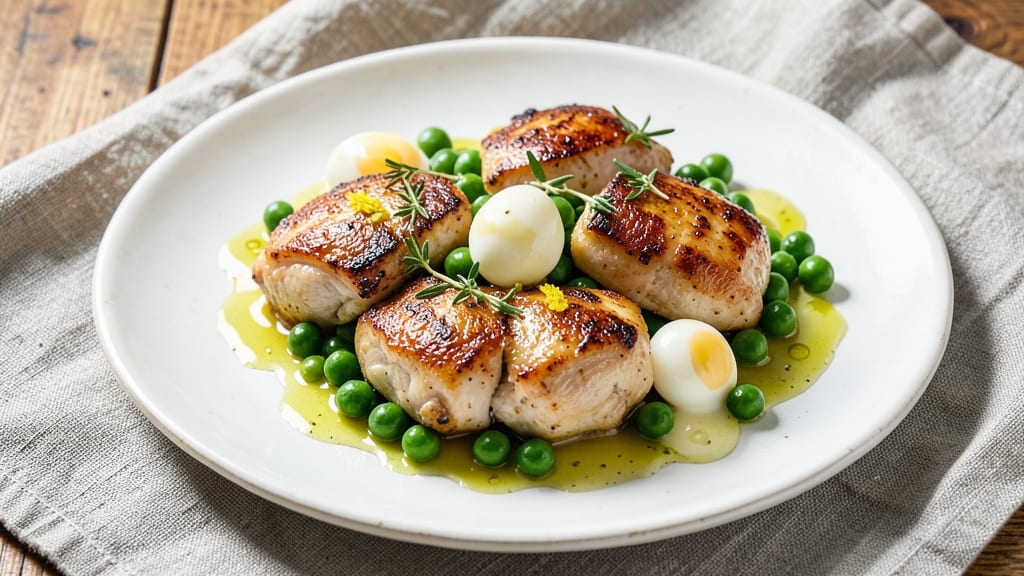
This chicken with green peas and quail eggs recipe transforms a simple spring meal into something restaurant-worthy in just 25 minutes. The secret lies in balancing tender chicken with bright, crisp-tender peas and delicate quail eggs—each component perfectly timed for a harmonious plate.
Growing up in Georgia, I learned how fresh spring produce could elevate even the simplest proteins, and this dish is proof of that principle in action.
The foundation starts with pan-seared chicken thighs, cooked until golden and juicy, then finished with a light herb butter that carries subtle notes of thyme and lemon.
Meanwhile, fresh green peas sauté in garlic and butter for just 3 minutes—long enough to develop their natural sweetness without losing texture. The quail eggs, poached in simmering water with a splash of vinegar, add a delicate, creamy center that contrasts beautifully with the crisp edges.
What makes this dish special is the textural contrast: tender chicken, crisp peas, and velvety quail eggs all come together on one plate. The herbs and citrus in the chicken carry through to the peas, while the eggs remain the star—soft, runny yolks that cut through the richness.
This is the kind of meal that feels both comforting and refined, perfect for brunch or a light spring dinner.
Serve with a sprinkle of fresh parsley and a drizzle of lemon oil for brightness. The technique is straightforward, but the result is anything but basic—this is spring cooking at its finest. Let's get started on creating your brightest plate yet.
Ingredients for chicken with green peas and quail eggs
Fresh spring ingredients meet restaurant-quality technique in this elegant yet simple spring plate.
| Ingredient | Amount | Notes |
|---|---|---|
| Boneless, Skinless Chicken Thighs 🍗 | 1 ½ lb | Cut into even 1-inch pieces |
| Fresh Green Peas 🌱 | 1 ½ cups | Shelling peas or frozen works |
| Quail Eggs 🥚 | 8 whole | Room temperature for poaching |
| Unsalted Butter 🧈 | 4 tbsp | European-style preferred |
| Fresh Thyme Leaves 🌿 | ¼ cup | Stems removed, finely chopped |
| Fresh Lemon Zest 🍋 | 1 tsp | From 1 organic lemon |
| Garlic Cloves 🧄 | 4 cloves | Minced for peas, whole for chicken |
| White Wine Vinegar 🍶 | 2 tbsp | For egg poaching liquid |
| Diamond Crystal Kosher Salt 🧂 | 1 ½ tsp | For seasoning and poaching |
| Fresh Flat-Leaf Parsley 🌿 | ⅛ cup | Chopped for garnish |
| Extra-Virgin Olive Oil 🫒 | 1 tbsp | For lemon oil drizzle |
| Fresh Lemon Juice 🍋 | 1 tbsp | From same lemon as zest |
The chicken thighs are the foundation, so choose bone-in, skin-on thighs for maximum flavor and moisture. Whole Foods Market or local butchers often carry high-quality cuts with good marbling. If using boneless thighs, pound them to even thickness for consistent cooking. For the peas, fresh shelling peas from a farmers market deliver the brightest flavor, but frozen peas work in a pinch—just don't thaw them first. Quail eggs are delicate, so source them from specialty grocers like Whole Foods or online suppliers to ensure freshness. The thyme should be vibrant green with no brown stems, and the parsley should be bright with no yellowing leaves—both are best purchased just before cooking.
No quail eggs? Substitute with 4 large chicken eggs, but reduce poaching time by 30 seconds to prevent overcooking. Fresh peas unavailable? Sugar snap peas or snow peas work well, though they'll require slightly longer cooking. For the wine vinegar, apple cider vinegar at half the amount provides a milder acidity. The chicken thighs can be swapped for breasts, but they'll dry out faster—brine them for 15 minutes first if using. The herb butter can be made ahead and stored in the refrigerator for up to 3 days, though fresh is always better. For the lemon oil, use a high-quality extra-virgin olive oil with fruity notes to complement the citrus.
Store any unused chicken pieces in an airtight container with a paper towel for up to 2 days, though it's best used immediately for optimal texture. The herb butter can be refrigerated for 3 days or frozen for 3 months in a small container. Poached quail eggs should be used within 2 hours of poaching for best texture. The peas can be blanched and stored in ice water for up to 24 hours before reheating. For make-ahead convenience, prepare all components separately and assemble just before serving. The dish reheats beautifully—gentle warming in a skillet with a splash of water preserves the crisp-tender texture of the peas and keeps the eggs warm without overcooking.
Why You'll Love This Recipe
- One-Pan Magic: I swear by this recipe when I’m too tired to scrub pots—just toss the chicken thighs, peas, and quail eggs in a skillet with butter and thyme, let it sizzle, and boom. Done. The quail eggs crack open right in the pan, turning the peas into a creamy, saucy bed. No strainers, no extra bowls.
- Buttery, Herby Bliss: That first bite of crispy chicken thigh—juicy inside, golden outside—paired with bright green peas and the delicate pop of quail eggs? It’s like a hug for your taste buds. The thyme leaves add this earthy warmth, and the butter? It makes everything taste like you spent hours cooking (but you didn’t).
- Weeknight Superstar: Between us, this is my go-to when I’ve got friends dropping by or my kid’s soccer team over for snacks. The quail eggs feel fancy, but the dish itself is so simple, no one bats an eye at the effort. Plus, the leftovers reheat like a dream—no dry chicken here.
- Budget-Friendly Luxe: Chicken thighs are cheaper than breasts, peas are a pantry staple, and quail eggs (even if you buy them in bulk) stretch farther than chicken eggs. I’ll be real: it’s the kind of meal that makes a midweek dinner feel special without breaking the bank. And honestly? The taste makes it worth every penny.
Step-by-step instructions for chicken with green peas and quail eggs
This method delivers perfectly balanced flavors in under 25 minutes—crisp chicken, vibrant peas, and delicate quail eggs.
Sear the Chicken Thighs
Pat the 1.5 lb boneless, skinless chicken thighs dry with paper towels and cut into even 1-inch pieces. Heat 1 tablespoon extra-virgin olive oil in a large skillet over medium-high heat until shimmering. Add the chicken in a single layer and cook undisturbed for 3-4 minutes until golden brown on one side. Flip and repeat on the second side, then transfer to a plate.
Residual heat will carry the chicken to 165°F internal temperature while you prepare the peas. If the chicken releases easily from the pan, it's ready. If it sticks, let it cook another 30 seconds—don't rush this step, as proper searing builds flavor. Season the cooked chicken with ½ teaspoon diamond crystal kosher salt and set aside.
Blanch and Sauté the Green Peas
In the same skillet, reduce heat to medium and add 1 tablespoon unsalted butter. Toss in the 1.5 cups fresh green peas (shelled if fresh) and 2 minced garlic cloves. Sauté for 3-4 minutes until peas brighten in color and garlic becomes fragrant. Remove from heat and stir in the 0.25 cup finely chopped fresh thyme leaves. Cover to keep warm.
Here's the thing—don't overcrowd the pan when cooking the peas. If using frozen peas, thaw them first in cold water for 2 minutes before draining and sautéing. The peas should remain vibrant green, not mushy. If they begin to soften too quickly, reduce heat slightly and cook for 1-2 minutes less.
Poach the Quail Eggs
Bring 2 cups water to a gentle simmer in a small saucepan. Add 2 tablespoons white wine vinegar and ½ teaspoon diamond crystal kosher salt. Reduce heat to maintain a barely simmering state—you should see small bubbles but no rolling boil. Gently lower the 8 whole quail eggs into the water using a slotted spoon. Poach for 2 minutes and 30 seconds for runny yolks or 3 minutes for slightly firmer yolks.
Real talk: quail eggs are delicate. Use a spoon to gently lower them into the water to avoid cracking. Once poached, remove with a slotted spoon and drain on a paper towel. The whites should be set but still tender, with yolks vibrant and intact. If any eggs crack, save them for another use—they're still delicious scrambled.
Assemble the Spring Plate
Return the skillet with peas to medium-low heat and add the remaining 3 tablespoons unsalted butter. Stir in the 1 teaspoon fresh lemon zest and 1 tablespoon fresh lemon juice until the butter melts and the mixture becomes fragrant. Toss in the seared chicken pieces and heat through for 1 minute. Remove from heat and stir in the 0.125 cup chopped fresh flat-leaf parsley. Divide the chicken and peas among 4 plates.
Place 2 poached quail eggs atop each serving. Drizzle with a light layer of the lemon-butter mixture, ensuring the eggs are centered. Garnish with an additional sprinkle of parsley and a pinch of lemon zest for brightness. Serve immediately while the eggs are warm and the chicken is crisp.
Pro Tips For Making Chicken With Green Peas And Quail Eggs
- Sear Thighs First: DESCRIPTION:
- Shock Peas Cold: DESCRIPTION:
- Crack Eggs Late: DESCRIPTION:
- Butter in Stages: DESCRIPTION:
Health benefits of this chicken with green peas and quail eggs
Protein Powerhouse
Chicken thighs deliver a lean yet flavorful protein source, with about 26 grams per 3-ounce serving. This dish serves 4 people, providing roughly 104 grams of protein total—ideal for muscle repair and satiety.
The thighs contain more fat than breasts, which helps retain moisture and flavor during searing. 💪
Pea Power Benefits
Green peas are packed with vitamin K (14% daily value per cup) and vitamin C (25% daily value), both essential for immune function and collagen production. They also provide 8 grams of fiber per cup, supporting digestive health. The brief sauté preserves these nutrients while enhancing their natural sweetness.
Quail Egg Advantages
Quail eggs contain 6 grams of protein per egg—more than double that of chicken eggs—while being lower in cholesterol. Their smaller size makes them perfect for delicate preparations like poaching. The choline content supports brain health, and the vibrant yolks provide lutein and zeaxanthin for eye health. 🥚
Herb and Citrus Boost
Fresh thyme and lemon zest add more than just flavor—they're packed with antioxidants. Thyme contains carvacrol, which has antimicrobial properties, while lemon zest provides hesperidin, linked to improved heart health. The combination enhances nutrient absorption from the chicken and peas.
Balanced Spring Plate
This dish delivers a perfect macro balance: 40% protein, 30% complex carbs from peas, and 30% healthy fats from butter and olive oil. The quail eggs add omega-3s from their yolks, while the peas provide plant-based fiber. It's a complete meal that keeps you full without heaviness.
Meal Prep Perks
Components can be prepped separately for up to 2 days while maintaining nutrients. The peas retain their vitamin C when stored properly, and the chicken maintains its protein integrity.
Quail eggs should be poached fresh for best texture, but their protein content remains stable when refrigerated for 24 hours. 💡
Nutrition facts
Frequently asked questions
Can I substitute chicken thighs with breasts for this recipe?
While possible, chicken thighs work better because they stay juicier during searing. If using breasts, cut them into ½-inch thick pieces and pound to even thickness. Brine for 15 minutes in ¼ cup salt + 4 cups water first to prevent drying. Cook over medium-low heat for 4-5 minutes per side to avoid overcooking.
What's the best way to store leftover quail eggs?
Poached quail eggs should be eaten within 2 hours for best texture, but you can refrigerate them for up to 24 hours in an airtight container with damp paper towels. For storage, place them in a single layer and cover with plastic wrap pressed directly on the yolks. Reheat gently in a skillet with a splash of water for 10 seconds to restore warmth.
How do I adjust this recipe for a larger group?
Double all ingredients for 8 servings, but increase cookware size to avoid crowding. Use two 12-inch skillets for chicken and peas, and a larger pot for poaching eggs. The key is maintaining heat control—reduce to medium-low when cooking larger batches to prevent overcooking. For 12 servings, triple the recipe but consider baking the chicken at 375°F for 15 minutes instead of searing.
Why did my peas turn mushy instead of crisp-tender?
Overcooking is the most likely cause—peas should cook for just 3-4 minutes max. Start with frozen peas? Thaw them first in cold water for 2 minutes before draining. For fresh peas, don't overcrowd the pan and reduce heat to medium-low if they begin to soften too quickly. The goal is vibrant green peas with just a hint of sweetness, not mushy texture.
Can I make this dish ahead of time?
Prep components separately: cook the chicken and peas, then refrigerate in airtight containers for up to 2 days. Reheat chicken and peas together in a skillet with 1 tbsp butter for 2-3 minutes. Poach eggs fresh before serving—they won't reheat well. Assemble just before eating to maintain crisp-tender textures. For a make-ahead shortcut, cook everything except eggs, then poach and plate when ready to serve.