
Sauces & Condiments
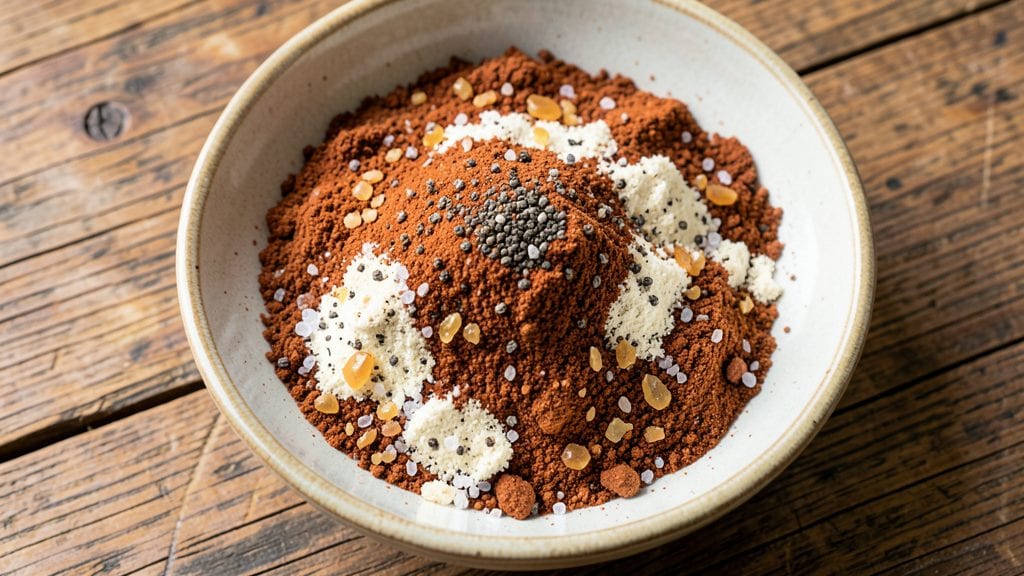
Creating the perfect chicken thigh rub recipe starts with a carefully balanced blend of spices that delivers deep smoky flavor while keeping the meat impossibly juicy. This dry rub transforms ordinary chicken thighs into fall-off-the-bone bites with a rich, aromatic crust—no liquid ingredients needed.
The secret lies in the precise ratio of smoky paprika, warm spices, and just enough salt to enhance natural flavors without overpowering.
This professional-grade spice mix combines smoked paprika, garlic powder, onion powder, brown sugar, salt, black pepper, and cayenne in measured amounts that create a harmonious balance. The brown sugar adds subtle caramelization during cooking, while the cayenne introduces just enough heat to elevate the dish.
Perfect for grilling, baking, or pan-searing, this rub works equally well on bone-in or boneless cuts.
What makes this recipe stand out is its ability to deliver restaurant-quality results with minimal effort. Simply coat your chicken thighs generously before cooking, and let the spices work their magic.
The result? A tender, juicy interior with a flavorful crust that locks in moisture and intensifies taste. No complicated techniques—just precise seasoning for maximum impact.
Use this versatile rub on chicken thighs, drumsticks, or even wings for consistent, mouthwatering flavor. Store any leftovers in an airtight container for up to three months, ready to elevate your next meal. The key to juicy, flavorful chicken starts with the right seasoning—this blend delivers every time.
Ingredients for chicken thigh rub
Nine essential spices blend to create a smoky, aromatic crust that transforms ordinary chicken thighs into restaurant-quality bites.
| Ingredient | Amount | Notes |
|---|---|---|
| Smoked Paprika 🌶️ | 3 tbsp | High-quality smoked variety preferred |
| Garlic Powder 🧄 | 2 tsp | Freshly ground preferred for depth |
| Onion Powder 🧅 | 2 tsp | Diamond Crystal preferred for purity |
| Light Brown Sugar 🍚 | 2 tbsp | Packed for consistent measurement |
| Kosher Salt 🧂 | 1 ½ tsp | Diamond Crystal preferred |
| Freshly Ground Black Pepper 🌶️ | 1 tsp | Cracked peppercorns preferred |
| Cayenne Pepper 🔥 | ½ tsp | Adjust for desired heat level |
| Ground Cumin 🌿 | 1 tsp | Toasted for enhanced aroma |
| Mustard Powder 🍯 | ½ tsp | Adds subtle tanginess |
The foundation of this rub lies in the smoked paprika—Penzeys or McCormick Gourmet varieties deliver the deepest flavor profile. For the garlic and onion powders, Diamond Crystal brands are ideal due to their purity and finer grind, which ensures even distribution on the meat. The brown sugar should be light and packed to avoid clumping, while the kosher salt provides the perfect balance without overpowering. Professional kitchens often toast their spices before blending, which intensifies their aromatic compounds—worth considering if you're aiming for maximum depth. Store-bought blends often contain anti-caking agents that can dull flavor, so making your own guarantees superior results.
No smoked paprika? Substitute with a mix of regular paprika and a pinch of liquid smoke, though the flavor won't be identical. For a milder heat profile, reduce the cayenne to one-quarter teaspoon or omit entirely. If you're sensitive to mustard flavors, simply omit the mustard powder—it's more about complexity than necessity. The cumin can be toasted in a dry pan for 30 seconds before grinding to release its full potential. For a sweeter profile, consider adding one-half teaspoon of cinnamon, though it's not traditional. Always measure spices by volume using the spoon-and-level method for consistency, especially when scaling up for larger batches.
This rub maintains its potency for up to three months when stored in an airtight container away from light and heat sources. For long-term storage, divide into smaller portions to minimize exposure to air each time you open the container. The blend works equally well on frozen chicken—simply apply the rub before freezing and thaw thoroughly before cooking. For optimal flavor development, apply the rub generously to chicken thighs at least one hour before cooking, allowing the spices time to penetrate the meat. Any unused portions can be refrigerated for up to six months in a sealed container.
Why You'll Love This Recipe
- Five-Ingredient Magic: I swear by this rub—just mix those spices and sugar, pat it on, and boom. No fancy prep, no measuring headaches, just pure, hands-off flavor.
- Sweet-Smoky Crunch: That brown sugar caramelizes into a sticky, slightly crispy crust while the paprika adds this deep, smoky warmth. It’s the kind of bite that makes you reach for seconds without thinking.
- Tailgate to Tuesday: Grill it for game day, bake it for a lazy night, or toss it on a sheet pan for meal prep. Honestly, I’ve used this on everything from wings to roasted potatoes, and it never lets me down.
- Budget-Friendly Hero: Chicken thighs are forgiving, and this rub costs pennies. Double the batch, freeze half, and you’ve got dinner covered for weeks—no takeout guilt, just pure satisfaction.
Step-by-step instructions for smoky-spiced crust on chicken thighs
This method delivers deep flavor penetration and a crackling crust without drying out the meat.
Combine All Dry Ingredients in a Mixing Bowl
In a medium bowl, whisk together the 3 tablespoons smoked paprika with the 2 teaspoons garlic powder and 2 teaspoons onion powder. The paprika should disperse evenly, creating a rich, reddish base that forms the foundation of your rub. I always use a whisk for this step—it ensures no clumping occurs, which can happen with paprika's fine particles.
Next, add the 2 tablespoons light brown sugar, 1.5 teaspoons kosher salt, 1 teaspoon freshly ground black pepper, 0.5 teaspoon cayenne pepper, 1 teaspoon ground cumin, and 0.5 teaspoon mustard powder. Mix thoroughly until all ingredients are uniformly distributed. The sugar will help create a caramelized crust, while the cayenne and mustard powder add subtle complexity that elevates the flavor profile beyond basic seasoning.
Adjust Seasoning and Texture for Optimal Adherence
Taste the mixture directly from the bowl to assess balance. You should detect smoky, slightly sweet, and earthy notes with a hint of heat from the cayenne. If needed, adjust the cayenne or salt—this is your flavor baseline before it touches the chicken. The texture should be coarse enough to cling to the meat but fine enough to distribute evenly.
For best results, I recommend using a fine-mesh sieve to sift the mixture over the chicken. This prevents clumping and ensures an even, paper-thin layer that adheres perfectly. If you notice any dry spots in the bowl, press the mixture through with the back of a spoon to break up any stubborn clumps before applying.
Apply the Rub Generously to Chicken Thighs
Pat the chicken thighs completely dry with paper towels—this is critical for both flavor development and crust formation. Moisture prevents the rub from sticking properly and can lead to steaming instead of browning. Season both sides of each thigh generously with the rub, pressing firmly so it adheres to the meat's texture. Don't be shy—use about 1 tablespoon per thigh to ensure full flavor penetration.
For even better results, I like to coat the thighs in a thin layer of neutral oil (like avocado or vegetable oil) after applying the dry rub. This creates a barrier that helps the spices stick during cooking and promotes that coveted crispy crust. Let the seasoned thighs rest at room temperature for 15-20 minutes before cooking—this allows the rub to penetrate slightly and develop deeper flavor bonds with the meat.
Rest Before Cooking for Maximum Flavor Development
During the resting period, the spices will begin to hydrate and adhere more firmly to the chicken's surface. This step is often overlooked, but it makes a noticeable difference in both flavor and texture. The rub should look evenly distributed with no bare spots, and you'll notice the thighs developing a faint sheen from the oil.
If you're grilling, broiling, or baking, this is also the time to preheat your cooking surface to the appropriate temperature. For optimal results, I recommend cooking the thighs over medium-high heat until they reach an internal temperature of 165°F—this ensures juicy, fall-off-the-bone tenderness while maintaining that perfect crust. The smoky-sweet aroma will fill your kitchen as the rub transforms into a flavorful crust during cooking.
Pro Tips For Making Chicken Thigh Rub
- Preheat the Pan: Get that skillet screaming hot—4-5 minutes on high—before adding the thighs. I used to rush this and ended up with steamed instead of seared skin. High heat locks in flavor and builds that crust you’re actually paying for.
- Mix the Rub Dry: Whisk the smoked paprika, garlic powder, onion powder, and brown sugar without oil first. Wet ingredients mess with the texture, and you’ll end up with a sticky paste instead of a clingy, flavor-packed crust. Trust me, it’s worth the extra 30 seconds.
- Salt the Thighs First: Generously season the raw chicken with kosher salt before applying the rub—at least 10 minutes ahead. This ensures the salt penetrates the meat, not just the surface, and prevents the rub from turning into a salty mess when you cook it.
- Rest Before Serving: Let the cooked thighs sit under foil for 5 minutes after coming off the heat. Skipping this step means juices everywhere, and the skin will stay soggy. (Yes, even if you’re impatient like me.)
Wine and beer pairings for this chicken thigh rub
Red Wine Pairings
A bold Zinfandel from California is my go-to pairing for this smoky-spiced chicken. Its jammy blackberry and plum notes complement the rub's sweetness while standing up to the cayenne's heat.
Look for a 2019 Dry Creek Vineyard Zinfandel—its medium body and 14.5% alcohol cut through the fat without overpowering the spices. Serve slightly chilled (55-60°F) to enhance its fruit-forward character. 🍷
White Wine Options
For those who prefer whites, a Riesling with a touch of sweetness works surprisingly well. I recommend a dry Riesling like Dr. Loosen Blue Slate from Germany—its bright acidity and hints of peach balance the smoky paprika while the slight residual sugar rounds out the cayenne.
Serve at 45-50°F to preserve its crispness. The wine's minerality also enhances the chicken's natural juiciness.
Beer Complements
A smoked porter like Goose Island Bourbon County Stout (with bourbon barrels) mirrors the rub's smoky depth while its chocolate notes add complexity. For a lighter option, try a honey brown ale such as Allagash Honey Brown—its caramel sweetness harmonizes with the brown sugar in the rub.
Both beers should be served at 50-55°F to maintain their malt profiles. 🍺
Cocktail Pairings
For a refreshing contrast, sip on a smoky old-fashioned made with bourbon, demerara syrup, and a dash of aromatic bitters. The caramel notes in the syrup echo the brown sugar while the bitters enhance the rub's complexity.
Alternatively, a mezcal margarita with reposado tequila and lime zest brightens the dish's richness. Both cocktails should be served well-chilled (40-45°F) to complement the warm spices.
Non-Alcoholic Options
For a non-alcoholic match, try a sparkling hibiscus tea infused with cinnamon and cloves. The tartness of the hibiscus cuts through the fat, while the warm spices mirror the rub's profile. Serve chilled (40-45°F) in a coupe glass for an elegant presentation.
Alternatively, a ginger beer with a squeeze of lime provides a zesty contrast that cleanses the palate between bites.
Regional Beer Styles
In the South, a Texas-style blonde ale like Deep Ellum Texas Blonde works perfectly—the light malt sweetness complements the rub's brown sugar. For Midwest palates, a wheat beer with coriander (like Blue Moon) adds a citrusy lift that balances the smokiness.
Each regional style enhances different aspects of the dish, making it versatile for any gathering. ✨
Nutrition facts
Frequently asked questions
Can I use this rub on other meats besides chicken thighs?
This versatile spice blend works beautifully on pork chops, beef ribs, or even salmon fillets. The smoky-sweet profile complements fatty cuts exceptionally well, while the cayenne adds a pleasant kick to fish. For poultry, it's perfect on drumsticks or wings too—just reduce the cayenne slightly if you prefer milder heat.
How do I store leftover rub for maximum freshness?
Keep your homemade rub in an airtight container away from light and moisture for up to three months. For longer storage, divide into small portions and freeze—this prevents flavor degradation from repeated opening. The spices will maintain their potency perfectly for future use on any protein.
What's the best way to remove excess rub before cooking?
Gently shake off loose rub or use a fine-mesh sieve to catch any stray spices before cooking. This prevents a bitter crust from over-applied spices. For stubborn clumps, lightly brush them off with a paper towel. The key is to leave a thin, even layer—this ensures perfect flavor without overwhelming the meat.
Can I make this rub spicier or sweeter?
Yes! For extra heat, increase the cayenne to 1 teaspoon or add ½ teaspoon chipotle powder. For more sweetness, boost the brown sugar to 3 tablespoons and add ½ teaspoon cinnamon. Always adjust in small increments and taste the rub before applying to chicken.
Why does my chicken turn out dry when using a dry rub?
Overcooking is the most common cause—chicken thighs are forgiving, but they should reach 165°F internally, not 180°F+. Use a meat thermometer and remove thighs 5°F below target to let residual heat finish cooking. Also, pat thighs completely dry before applying rub to prevent steaming instead of browning.