
Main Courses
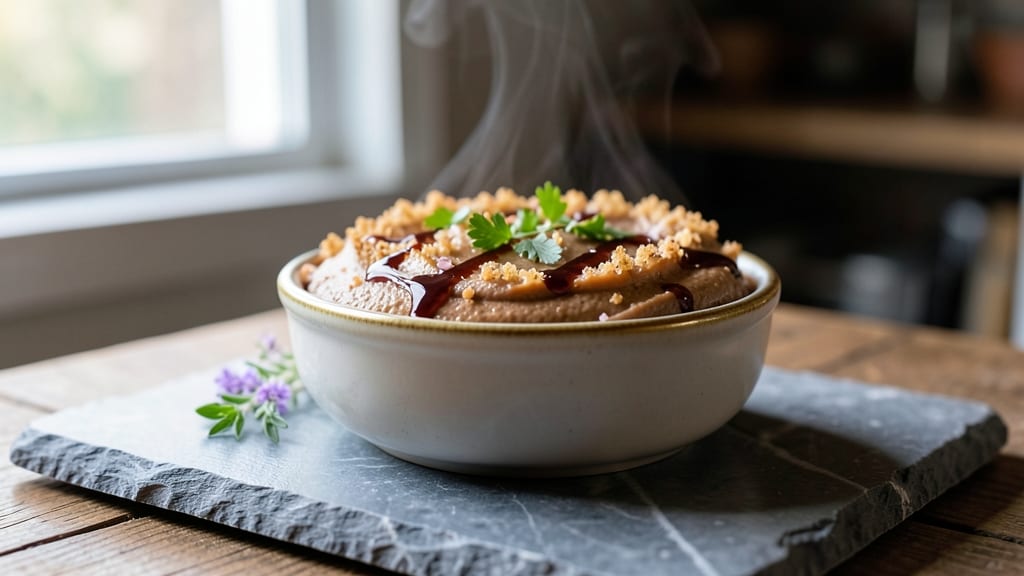
This chicken liver pâté recipe delivers restaurant-quality richness you can make at home, where every bite reveals velvety texture and layers of herbal complexity. The secret lies in rendering the fat properly—this step transforms what could be gamey into a luxurious, spreadable masterpiece.
My version balances tradition with modern twists, using fresh herbs and a touch of brandy for depth that elevates simple toast to gourmet status.
What sets this recipe apart is the precision in technique: poaching the livers just until tender, then blending them with rendered fat and aromatics until silky smooth. No food processor? A potato masher works just as well—this pâté doesn’t require fancy equipment, only patience and attention to detail.
The result is a spread so rich it becomes the star of any charcuterie board or elegant appetizer.
Serve this pâté chilled on toasted baguette slices, drizzled with a few drops of high-quality olive oil, or paired with crispy water crackers for the perfect balance of textures.
The herbal notes—thyme, parsley, and shallot—complement the liver’s natural richness without overpowering it, while a splash of brandy adds warmth that lingers on the palate. This is pâté that proves homemade can surpass store-bought in both flavor and sophistication.
For those who prefer a modern twist, consider adding a pinch of smoked paprika or a dash of hot sauce for a subtle kick. The recipe scales beautifully—double the batch and store it in the fridge for up to a week, ready to impress whenever the mood strikes.
Let’s create something truly special that will have your guests asking for the recipe.
Ingredients for chicken liver pate
Fresh livers, rich butter, and aromatic herbs come together for this luxurious pâté.
| Ingredient | Amount | Notes |
|---|---|---|
| Chicken Livers 🍗 | 1 lb | Fresh, trimmed of connective tissue |
| Unsalted Butter 🧈 | ½ cup | Cold, cut into cubes |
| Shallots 🧅 | 3 whole | Minced, about 2 tbsp |
| Fresh Thyme Leaves 🌿 | ½ cup | Stems removed, finely chopped |
| Fresh Parsley Leaves 🌿 | ¼ cup | Stems removed, finely chopped |
| Brandy 🍷 | 2 tbsp | High-quality, 80-proof minimum |
| Heavy Cream 🥛 | ¼ cup | Cold, for blending |
| Extra-Virgin Olive Oil 🫒 | 2 tbsp | For drizzling and finishing |
| Diamond Crystal Kosher Salt 🧂 | ½ tsp | For seasoning |
| Freshly Ground Black Pepper 🌶️ | ¼ tsp | Adjust to taste |
| Baguette 🍞 | 1 whole | For serving, sliced and toasted |
| Water Crackers 🍪 | 1 package | For serving |
The quality of chicken livers makes all the difference—look for bright red, firm livers at your local butcher or specialty market like Whole Foods or D'Artagnan. Trim any connective tissue or blood vessels carefully, as they can make the pâté bitter. If you can't find fresh livers, frozen works too, but thaw them in the fridge overnight. The butter should be cold and unsalted—this ensures proper rendering without excess moisture. For the herbs, fresh thyme and parsley are non-negotiable; dried versions simply can't replicate the bright, fresh notes needed here.
No brandy on hand? Substitute with apple cider or even a splash of dry vermouth, though brandy's depth is ideal. If you prefer a modern twist, add a pinch of smoked paprika or hot sauce to the blend for subtle complexity. For the cream, full-fat is essential—it creates the signature silky texture. If you're avoiding dairy, coconut cream can replace heavy cream, though the flavor will differ slightly. The shallots should be minced finely—a food processor works best, but a sharp knife and steady hand will do. For the herbs, don't skip the stems—they add extra flavor when finely chopped.
This pâté keeps beautifully in the fridge for up to 1 week, though it develops even more depth after 24 hours. For longer storage, portion into small jars and freeze for up to 3 months. When serving, drizzle with high-quality olive oil just before eating to enhance the flavors. The baguette should be toasted until crisp—a blowtorch works wonders—and the crackers add a satisfying crunch. Double the batch if you're entertaining; it disappears quickly.
Why You'll Love This Recipe
- Foolproof First-Timer: I’ve made this at least six times now, and I still don’t measure the butter—just eyeball it. The livers cook down fast, and the shallots sweeten into caramelized bits without watching. Honestly, it’s the kind of recipe that makes me feel like a chef, even when I’m distracted.
- Rich, Earthy Magic: That first bite of creamy, buttery pate with the bright parsley and thyme? It’s like a hug for your taste buds. The chicken livers add depth—no blandness here—and the butter ties it all together with a luxurious finish. (Yes, even on a Tuesday night.)
- Party Crowd-Pleaser: Serve it on crusty bread for a charcuterie board, dollop it on toast for brunch, or pack it in mini tarts for a fancy appetizer. Between us, it’s the one thing people always ask for seconds on—no one expects it, but everyone loves it.
- Budget Luxury: Chicken livers are a steal compared to beef or duck pâté, and they stretch further. I make a double batch, store half in the fridge, and still have leftovers for days. It’s fancy without the grocery-store price tag—my wallet thanks me every time.
Step-by-step instructions for chicken liver pâté recipe
Here's the method for creating a velvety pâté with rich herbal notes and perfect texture.
Prepare the Chicken Livers
Trim any connective tissue or membrane from the 1 lb chicken livers using a sharp knife. Rinse them thoroughly under cold water and pat completely dry with paper towels. This step is crucial—any moisture will prevent proper browning and affect the pâté's texture.
Place the livers in a bowl and season generously with the 0.5 tsp diamond crystal kosher salt and 0.25 tsp freshly ground black pepper. Let them sit at room temperature for 15 minutes while you prepare the aromatics. This resting period allows the seasoning to penetrate evenly and helps the livers cook more uniformly.
Sear the Livers and Aromatics
Heat a large skillet over medium-high heat and add 2 tbsp extra-virgin olive oil. Once the oil shimmers, add the chicken livers in a single layer and cook undisturbed for 2-3 minutes per side until they develop a deep golden-brown crust. This searing step creates depth of flavor and prevents the pâté from becoming overly smooth.
Remove the livers from the skillet and set aside. In the same pan, reduce heat to medium and add the 3 whole minced shallots. Cook for 3-4 minutes until softened and translucent. Add the 0.5 cup finely chopped fresh thyme leaves and 0.25 cup finely chopped fresh parsley leaves, cooking for another 30 seconds until fragrant. This aromatic base forms the flavor foundation of your pâté.
Blend the Pâté Mixture
Transfer the seared livers and shallot-thyme mixture to a food processor fitted with the metal blade. Add the 0.5 cup cold unsalted butter cut into cubes and process until the butter is fully incorporated and the mixture begins to break down, about 1-2 minutes. The texture should be coarse but starting to come together.
With the food processor running, slowly drizzle in the 2 tbsp brandy through the feed tube. This adds a subtle depth of flavor that complements the richness of the livers. Process for another 30 seconds to fully blend the brandy into the mixture. The alcohol will cook off during the next step, leaving behind just the flavor.
Create the Silky Texture
Transfer the mixture to a heatproof bowl and place it over a pot of simmering water (bain-marie), making sure the bowl doesn't touch the water. This gentle heat allows you to control the cooking process precisely. Add the 0.25 cup cold heavy cream and stir gently with a silicone spatula until the cream is fully incorporated and the mixture reaches 160°F on an instant-read thermometer, about 5-7 minutes.
Remove from heat and let the pâté cool slightly for 5 minutes. The mixture should be smooth and velvety, with a glossy sheen. If it's too thick, you can thin it slightly with 1-2 teaspoons of water or additional cream. The texture should be spreadable but still hold its shape when piped.
Finish and Serve
Transfer the pâté to a serving dish or small ramekins and let it cool completely at room temperature. Once cooled, cover with plastic wrap pressed directly onto the surface to prevent a skin from forming. Refrigerate for at least 4 hours or overnight to allow flavors to fully develop.
To serve, drizzle with an additional 1 tbsp extra-virgin olive oil for extra richness. Pair with slices of the 1 whole baguette, toasted until golden, and serve with the 1 package water crackers. The pâté can be stored in the refrigerator for up to 5 days or frozen for up to 3 months.
Pro Tips For Making Chicken Liver Pate
- Sear the Livers First: After trimming the livers, hit them with a quick sear in a dry pan over medium-high heat for 30 seconds per side—just until they lose their raw sheen. This step removes bitterness and tightens the texture before blending, so they don’t turn to mush when you add the butter later. (Yes, even if you’re impatient like me, resist the urge to rush this.)
- Blanch Shallots in Butter: Cook the shallots in the butter until they’re pale gold and just starting to soften—about 5 minutes on low heat. Overcooking them turns them mushy and dulls the flavor, which means your pate will taste like a sad, butter-soaked side dish instead of a rich, aromatic base. Stir occasionally, but don’t walk away.
- Skip the Crowding: When blending the cooked livers, butter, and herbs, don’t overload the food processor. Divide the mixture into two batches if needed—packing it all in at once means you’ll end up with a grainy, uneven pate. A smooth texture starts with a less crowded processor.
- Finish with Cold Butter: Fold in the last tablespoon of cold, cubed butter at the very end, right before serving. It melts into the warm pate without turning it greasy, giving you that perfect silky mouthfeel. (Pro move: Let the pate sit at room temp for 10 minutes before serving—it firms up just enough to slice neatly.)
Make-ahead tips for leftovers
Prep Ahead Strategy
Start by trimming and seasoning the 1 lb chicken livers up to 24 hours ahead. Store them in an airtight container in the fridge, covered with plastic wrap pressed directly onto the surface.
This early prep allows the seasoning to penetrate deeply, resulting in more flavorful pâté. I find this step cuts down on last-minute stress when entertaining. 💡
Fat Rendering Shortcut
Render the fat from the livers in advance by cooking them in a skillet until golden, then straining through a fine-mesh sieve to remove all solids. Store the rendered fat in a small jar in the fridge for up to 1 week.
Use this pre-rendered fat when blending your pâté—it simplifies the process and ensures consistent texture. This step is especially helpful if you're making multiple batches.
Herb Prep Efficiency
Chop all your shallots, thyme, and parsley at least 1 day ahead and store them in a sealed container in the fridge. Fresh herbs stay vibrant longer when prepped in advance, and having them ready speeds up the cooking process.
I like to keep them in a small glass jar with a sprinkle of salt to preserve their color and flavor. This prep work makes the actual pâté-making process feel effortless. 🌿
Chilling Timeline
After blending, transfer your pâté to serving dishes and refrigerate for at least 4 hours—overnight is ideal. This chilling time is non-negotiable for developing the perfect texture. I often make my pâté the night before gatherings, so it's ready to serve without any last-minute rushing.
The flavors meld beautifully during this resting period, creating that luxurious mouthfeel we all love.
Portioning for Guests
Divide your pâté into small ramekins or jars before serving to keep things organized. These individual portions stay fresh longer and make serving effortless. I like to use 4-ounce portions for appetizer servings, which is perfect for a crowd.
Label each container with the date to track freshness—this pâté keeps well for up to 5 days in the fridge.
Freezing for Later
For long-term storage, portion your pâté into airtight freezer-safe containers, leaving ½ inch headspace for expansion. Freeze for up to 3 months. When ready to serve, thaw in the fridge overnight.
The texture remains silky when properly stored, and the flavors stay vibrant. This makes it perfect for holiday entertaining or spontaneous dinner parties. ✨
Nutrition facts
Frequently asked questions
Can I substitute chicken livers with another type of liver?
While chicken livers work beautifully, duck or pork livers can also be used for a richer flavor profile. For duck livers, reduce cooking time slightly as they cook faster. Pork livers are milder but work well in this recipe. Avoid beef liver—it has a stronger, gamier taste that doesn't blend as smoothly into pâté.
Why does my pâté turn out grainy instead of silky?
Graininess usually means the livers were overcooked or the butter wasn't properly incorporated. Always cook livers just until they reach 160°F (they'll carry over to 165°F). Process the butter in small batches, and use a food processor with a sharp blade. If it's still too thick, add 1 tsp of cold water while blending to emulsify.
How do I serve this pâté for a crowd?
Double the recipe and portion into small ramekins or jars for easy serving. Arrange on a platter with toasted baguette slices, water crackers, and pickled vegetables. For a festive touch, garnish with fresh thyme sprigs or a drizzle of high-quality olive oil. This pâté works beautifully as part of a charcuterie spread or as an elegant appetizer.
Can I make this pâté ahead of time?
This pâté tastes even better after 24 hours of chilling. Prepare it a day in advance and store it in an airtight container in the fridge. The flavors meld beautifully during this time, creating a more cohesive texture. For parties, make it the night before and serve straight from the fridge.
What if I don't have brandy?
No problem! Substitute with 2 tbsp apple cider or dry vermouth for a similar depth of flavor. If you prefer a non-alcoholic version, use 2 tbsp chicken stock instead. The key is adding a liquid with a bit of acidity or complexity to complement the richness of the livers.