
Soups & Stews
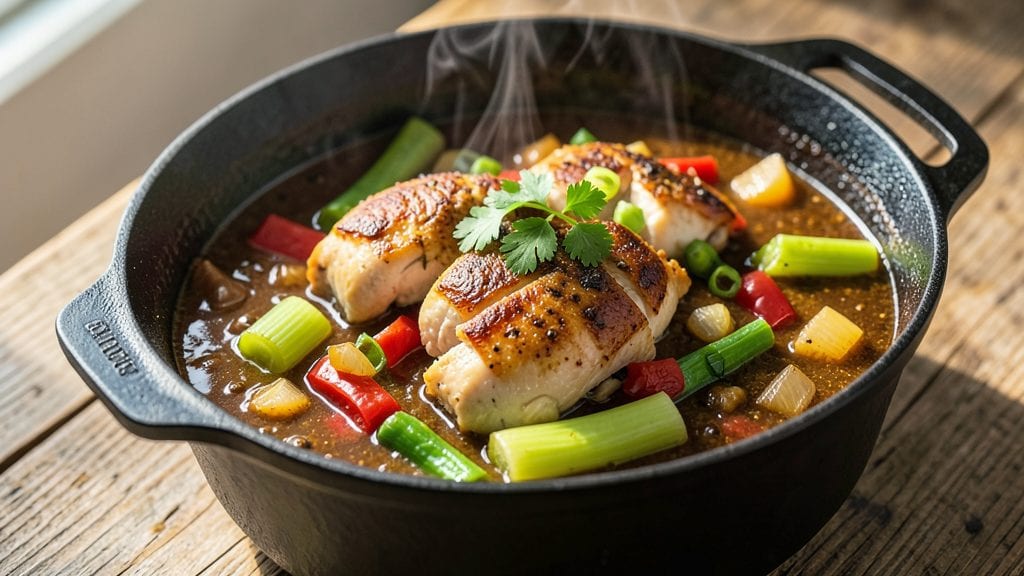
Mastering this chicken gumbo recipe transforms a simple stew into Louisiana’s most beloved dish, where a dark, nutty roux builds the foundation for layers of smoky, spicy, and savory flavors. The secret lies in patience—letting that roux develop its signature depth before adding the trinity of onions, celery, and bell peppers—while balancing heat with just enough cayenne to leave your taste buds tingling. After years of perfecting this technique, I’ve cracked the code for achieving that perfect gumbo consistency: thick enough to coat the back of a spoon but never gluey, with tender chicken and vegetables swimming in a rich, aromatic broth.
What sets this recipe apart is the balance of tradition and approachability—no shortcuts, but no unnecessary complexity either. You’ll start with a classic dark roux, then build flavor through careful sautéing, deglazing, and simmering.
The filé powder, a key ingredient in authentic gumbo, adds that earthy, almost nutty depth that elevates the dish from ordinary to extraordinary.
This isn’t just a recipe; it’s a lesson in how small techniques—like browning the chicken properly or letting the gumbo simmer low and slow—make all the difference in the final result.
The reward? A steaming bowl of gumbo that’s rich, hearty, and packed with smoky, spicy, and savory notes—each bite a perfect harmony of textures and flavors. The roux gives it that unmistakable depth, while the chicken and vegetables stay tender and flavorful.
Serve it over steamed white rice or with a side of cornbread to soak up every last drop of that velvety broth. This is the kind of dish that feels like a hug in a bowl, perfect for cold evenings or gatherings with friends and family.
Ready to create a gumbo that rivals your favorite Louisiana restaurant? The process is methodical but rewarding, and the result is always worth the effort. Let’s get started on building that smoky, flavorful foundation—your taste buds will thank you.
Ingredients for chicken "gumbo
The secret to perfect gumbo lies in these 17 ingredients—where smoky roux meets the holy trinity of flavors.
| Ingredient | Amount | Notes |
|---|---|---|
| Chicken Thighs 🍗 | 2 ½ lb | Bone-in, skin-on for flavor |
| All-Purpose Flour 🌾 | ½ cup | For dark roux foundation |
| Vegetable Oil 🫒 | ½ cup | For deep roux frying |
| Yellow Onion 🧅 | 1 whole | Diced, classic trinity |
| Green Bell Pepper 🍅 | 1 whole | Diced, fresh and crisp |
| Celery Stalks 🥬 | 3 whole | Diced, trinity complete |
| Garlic Cloves 🧄 | 4 cloves | Minced, aromatic punch |
| Dried Thyme 🌿 | 1 tbsp | Or 1 tbsp fresh thyme |
| Dried Oregano 🍃 | 1 tbsp | Earthy depth flavor |
| Smoked Paprika 🌶️ | 1 tbsp | For that smoky gumbo taste |
| Cayenne Pepper 🔥 | ½ tsp | Adjust for heat preference |
| Salt 🧂 | 1 ½ tsp | Kosher or sea salt |
| Black Pepper 🌶️ | ½ tsp | Freshly ground preferred |
| Chicken Broth 💧 | 4 cups | Low-sodium preferred |
| Filé Powder 🌿 | 2 tbsp | Must be added last |
| Green Onions 🌱 | ¼ cup | Sliced, for garnish |
| Lemon Wedges 🍋 | 2 whole | For serving |
The roux is non-negotiable here—this is where the magic happens. Grab all-purpose flour from the bulk bins at Whole Foods or Trader Joe's for the best quality. Vegetable oil should be neutral; Mazola or Crisco work perfectly for that dark, nutty roux. Chicken thighs? Bone-in, skin-on is essential—those bones infuse the broth with flavor, and the skin gives you crispy bits. Look for thighs with a good layer of fat; Costco or your local butcher often have the best cuts. Fresh thyme and oregano make all the difference—Penzeys or the spice aisle at Gourmet Garage carry premium dried herbs. And that filé powder? It’s a must—Tony Chachere’s is the gold standard, but any good brand will do.
No smoked paprika? Substitute half with regular paprika and a pinch of liquid smoke—it’s not the same, but it’ll get you close. Short on green bell pepper? Use yellow or red—just make sure it’s fresh. The cayenne is where you can play—start with half the amount if you’re sensitive to heat. For the trinity (onion, celery, bell pepper), pre-chopped veggies from the salad bar save time, but fresh is always better. Chicken broth? Homemade is ideal, but Swanson or Pacific Foods low-sodium options work in a pinch. And if you’re out of filé powder, a pinch of cornstarch can thicken, but it won’t give that same earthy depth.
This gumbo tastes even better the next day—double the batch and freeze half for lazy nights. Store leftovers in the fridge for up to 5 days, or freeze for 3 months. The roux and filé powder are the stars, so keep them sealed tightly—they go stale fast. Garnish with green onions and lemon wedges right before serving; those bright notes cut through the richness. And trust me, the first bowl is always the best—save some for seconds!
Why You'll Love This Recipe
- No-Fuss Roux Magic: I swear by that golden flour-oil roux—just chicken thighs, onion, and bell pepper simmering in it. The moment the flour stops fighting you and turns nutty-brown? That’s when the real flavor starts. (Yes, even if you burn it once or twice.)
- Deep, Smoky Comfort: That crispy edge on the chicken thighs? The slow simmer with bell pepper and onion? It’s the kind of rich, savory depth that makes you forget you’re eating a weeknight dinner. Honestly, my husband asks for it when he’s stressed.
- Weeknight to Party: Same recipe, different vibes—serve it over rice with green onions for a lazy Tuesday or add a splash of hot sauce and extra veggies for game day. The roux handles it all, and leftovers? Even better the next day.
- Budget Wins Big: Chicken thighs are cheap, flour and oil last forever, and onions/peppers stretch across meals. I’ve fed six people for under $15 with this—plus, the pot gets cleaner than most takeout containers. (Not the prettiest, but the taste makes up for it.)
Step-by-step instructions for chicken gumbo
This is where the magic happens—building that rich, smoky roux that makes gumbo unforgettable.
Build the Dark Roux Foundation
Heat the 0.5 cup vegetable oil in a heavy-bottomed Dutch oven over medium heat. Add the 0.5 cup all-purpose flour all at once and stir constantly with a wooden spoon. This is where patience pays off—don't walk away. The roux will go from pale to peanut butter color, then chocolate brown, and finally deep mahogany as it develops that nutty, almost burnt flavor that defines gumbo.
Watch closely as it cooks for 20-25 minutes. The smell will change dramatically—from raw flour to toasted nuts. If it starts to smoke or smells burnt, reduce the heat slightly. You're aiming for that perfect dark roux stage, not burnt rubber. This foundation carries the entire dish, so take your time here.
Sauté the Holy Trinity
Once your roux reaches that deep mahogany color, immediately add the diced yellow onion, green bell pepper, and celery stalks (that classic trinity). Stir well to coat everything in the roux. Cook over medium heat for 8-10 minutes, stirring occasionally, until the vegetables soften and release their moisture. You'll see the roux lighten slightly as it absorbs the vegetable juices.
Add the minced garlic cloves and cook for another 1-2 minutes until fragrant. This step develops the base flavors that will infuse the entire gumbo. If you smell the garlic burning, reduce the heat immediately. The vegetables should be tender but not mushy—you want them to hold their shape in the final dish.
Brown the Chicken Thighs
Push the vegetable mixture to one side of the Dutch oven and add the 2.5 lb chicken thighs, skin-side down. Let them sear undisturbed for 3-4 minutes until the skin becomes golden brown and crispy. This creates that beautiful crust that adds texture and flavor. Flip the thighs and brown the other side for another 3-4 minutes. Remove the chicken and set it aside on a plate.
Here's where it gets good—the rendered chicken fat in your pot will help build even more flavor. Leave it in the pot for now; we'll use that fat to deglaze. The chicken will finish cooking in the broth later, so don't worry about fully cooking it now. Just get that beautiful brown crust on those thighs.
Deglaze and Simmer the Broth
Return the chicken to the pot and add the 4 cups chicken broth, scraping up all those delicious browned bits from the bottom. This deglazing step captures all the flavor that would otherwise stick to your pot. Stir well to combine, then add the 1 tbsp dried thyme, 1 tbsp dried oregano, 1 tbsp smoked paprika, 0.5 tsp cayenne pepper, 1.5 tsp salt, and 0.5 tsp black pepper. Bring the mixture to a gentle simmer over medium-low heat.
Let it simmer uncovered for 45-50 minutes, stirring occasionally. You want the liquid to reduce slightly and the flavors to meld together. The chicken should be tender enough to pull apart with a fork. If the gumbo starts to get too thick, add a splash of water to loosen it. This is where your gumbo develops its depth of flavor—don't rush this step.
Finish and Serve
Once the chicken is fully cooked, remove it from the broth and let it rest for 5 minutes. Shred the meat using two forks and return it to the pot. Stir in the 2 tbsp filé powder—this is crucial as it thickens the gumbo and gives it that signature gumbo texture. Add the 0.25 cup sliced green onions and give everything one final stir.
Taste and adjust the seasoning if needed. Serve immediately in bowls with a lemon wedge on the side. The gumbo should be thick enough to coat the back of a spoon but still have a nice, hearty consistency. Each bite should deliver that perfect balance of smoky, spicy, and savory flavors with tender chicken and vegetables in every spoonful.
Pro Tips For Making Chicken "Gumbo
- CRISP THE THIGHS FIRST: Pat those chicken thighs bone-dry with paper towels before seasoning—no wet spots. I learned this the hard way when my first batch turned out sappy instead of golden. A hot pan and 5 minutes per side (until deep brown, not cooked through) builds flavor that flour alone can’t match. (Yes, even if you’re impatient like me.)
- SWEAT ONIONS LOW AND SLOW: Don’t rush the onion and bell pepper step—aim for 8–10 minutes over medium-low heat until they’re almost translucent, not charred. High heat burns them before they render properly, and you’ll taste the bitterness in your roux later. Stir occasionally, but let them cook undisturbed in patches.
- SKIP THE CROWDED PAN: Resist the urge to dump all the chicken thighs in at once. Cook them in batches if needed—too many in the pan steams them instead of searing, and you’ll end up with pale, flavorless meat. A single layer in the pan guarantees that crispy crust everyone craves.
- USE A LIGHT TOUCH WITH FLOUR: When making the roux, whisk in the flour gradually over 3–5 minutes—don’t just dump it all in. Too much at once clumps and burns before it turns golden. If it smells like burnt toast, you’ve gone too far; back off to medium heat and start over. (I’ve done it. It’s not pretty.)
Troubleshooting perfect results
Roux Gone Wrong
If your roux turns burnt or smells like rubber instead of toasted nuts, you’ve pushed it too far. Reduce the heat immediately and stir constantly—this is your only fix.
For a quick recovery, remove the pot from heat for 1-2 minutes to cool slightly, then resume cooking on low heat while stirring vigorously. I’ve salvaged many a burnt roux this way, though it’ll have a slightly bitter edge. 🌡️
A pale roux? You didn’t cook it long enough. Return it to medium heat and stir continuously for another 5-10 minutes, watching for that deep mahogany color. If it’s already too light, add 1 tsp extra flour and cook until it darkens properly—just don’t walk away!
Mushy Vegetables
Overcooked trinity (onion, celery, bell pepper) turns to mush when simmered too long. The fix? Remove the gumbo from heat, strain out the vegetables, and replace them with fresh, quickly sautéed trinity cooked for just 5 minutes in a separate pan.
This keeps their texture crisp while preserving the broth’s flavor.
For prevention, add the trinity after the chicken returns to the pot during the simmering phase. This way, they cook for only 15-20 minutes total, staying tender but still flavorful.
Chicken Too Tough
If your chicken thighs are rubbery or overcooked, you likely simmered them too long. The solution? Shred the chicken and return it to the pot to soak up the broth’s flavors for 10-15 minutes off the heat.
This doesn’t reverse toughness but makes the dish more palatable. For next time, remove chicken when it reaches 165°F internal temperature—it’ll finish cooking in the broth.
Pro tip: Use bone-in, skin-on thighs—they stay juicier than boneless cuts. If you’re in a hurry, poach the chicken separately in broth for 15 minutes before adding it to the gumbo.
Broth Too Thin
A watery gumbo often means the roux wasn’t cooked long enough or the broth wasn’t reduced properly. Stir in 1 tbsp cornstarch mixed with 2 tbsp cold water and simmer for 3-5 minutes until thickened.
For a more authentic fix, whisk in 1 extra tbsp filé powder—it’ll thicken naturally as it cools.
To prevent this, simmer the gumbo uncovered on medium-low heat for the full 45-50 minutes, stirring occasionally. If it’s still too thin, reduce heat to low and let it thicken gradually—don’t rush it!
Filé Powder Clumping
Filé powder clumps when added to hot gumbo because it absorbs moisture too quickly. The fix? Whisk it into 2 tbsp cold water first to create a slurry, then stir it into the gumbo off the heat.
This ensures an even distribution and prevents lumps. For extra insurance, sift the filé powder before measuring.
If clumps form anyway, strain the gumbo through a fine-mesh sieve and return it to the pot. No sieve? Use a blender to puree the gumbo briefly, then return it to the heat—just don’t over-blend or it’ll turn mushy.
Lack of Smoky Flavor
Weak smokiness usually means insufficient smoked paprika or rushed roux development. Boost the flavor by adding ½ tsp liquid smoke (like La Choy) to the broth during simmering.
For a deeper fix, toast 1 tsp extra smoked paprika in a dry pan for 1 minute until fragrant, then stir it into the gumbo.
For prevention, cook your roux 5 minutes longer than you think it needs—smoky depth builds in those final minutes. Also, use hot peppers (like jalapeños) in the trinity to add subtle heat and aroma.
Nutrition facts
Frequently asked questions
Can I substitute chicken breasts for thighs in gumbo?
Chicken breasts will work, but they won’t give you that same rich, juicy texture. For best results, use bone-in, skin-on thighs—the skin adds crispy bits and the bones infuse the broth with deeper flavor. If you must use breasts, poach them separately for 12-15 minutes before adding to the gumbo to prevent dryness.
How do I adjust the spice level in this gumbo?
The cayenne pepper controls the heat, so start with ¼ tsp if you prefer mild and add more to taste. For extra depth without heat, add ½ tsp smoked paprika or a pinch of chipotle powder. Always taste as you go—you can’t remove spice, but you can balance it with a splash of broth or a squeeze of lemon.
What’s the best way to store leftover gumbo?
Let gumbo cool completely, then transfer to an airtight container and refrigerate for up to 5 days or freeze for 3 months. Reheat gently on the stove over low heat, stirring frequently to prevent scorching. The flavors actually improve overnight—just add a splash of broth if it thickens too much.
Can I make gumbo without filé powder?
Filé powder is traditional, but you can substitute with 1 tbsp cornstarch mixed with 2 tbsp cold water for thickening. For authenticity, use 1 tbsp ground sassafras (the source of filé), though it’s harder to find. Without filé, your gumbo will be thinner—simmer longer to reduce the broth.
What’s the secret to a perfect dark roux?
Patience and constant stirring! Cook the roux over medium heat for 20-25 minutes, stirring every 2-3 minutes to prevent burning. The key stages: peanut butter → chocolate brown → deep mahogany. If it smells burnt, reduce heat immediately—it’s salvageable but may taste bitter. Never walk away!