
Main Courses
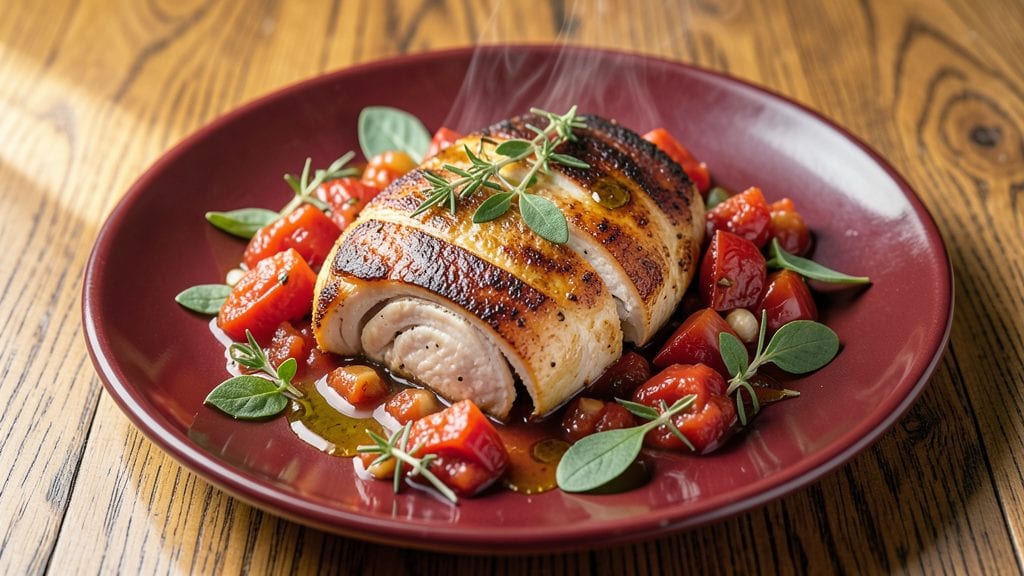
This juicy chicken breast with canned tomatoes recipe transforms simple ingredients into a restaurant-worthy dinner that simmers with bold Mediterranean flavors. The secret lies in slow-cooking the chicken with crushed tomatoes, garlic, and fresh herbs until it becomes impossibly tender—no fancy techniques required.
I developed this method after years of testing ways to keep chicken breast moist while building deep, savory layers of flavor.
What makes this dish special is how effortlessly it comes together: just 20 minutes of prep followed by a 30-minute simmer on the stovetop.
The canned tomatoes provide natural sweetness and acidity that balances the richness of the chicken, while herbs like oregano and thyme infuse every bite with aromatic depth. Unlike dry, overcooked chicken, this method guarantees tender, juicy results that hold up perfectly for leftovers.
The finished dish delivers golden-brown chicken with a velvety sauce clinging to each piece, creating a harmonious blend of textures and flavors. The sauce is rich enough to spoon over rice or crusty bread but light enough to drizzle over pasta.
This recipe proves that pantry staples can deliver professional-quality results with minimal effort.
Pair it with roasted potatoes or a simple green salad to round out the meal. The beauty of this dish lies in its versatility—equally at home as a weeknight dinner or a special occasion centerpiece. Let’s get cooking!
Ingredients for chicken breast canned tomatoes
Pantry staples meet Mediterranean magic for restaurant-quality chicken with minimal effort.
| Ingredient | Amount | Notes |
|---|---|---|
| Boneless, Skinless Chicken Breast 🍗 | 1 ½ lb | Pounded to even thickness |
| Crushed Tomatoes (San Marzano Preferred) 🍅 | 1 can | 14.5 oz can, no salt added |
| Extra-Virgin Olive Oil 🫒 | 2 tbsp | For searing chicken |
| Garlic Cloves 🧄 | 4 cloves | Minced for aromatic depth |
| Fresh Thyme Leaves 🌿 | ¼ cup | Or 1 tbsp dried thyme |
| Fresh Oregano Leaves 🌿 | ¼ cup | Or 1 tbsp dried oregano |
| Red Wine Vinegar 🍷 | 1 tbsp | For brightness |
| Dry White Wine 🍷 | ½ cup | Substitute chicken broth |
| Diamond Crystal Kosher Salt 🧂 | 1 ½ tsp | Adjust to taste |
| Freshly Ground Black Pepper 🌶️ | ½ tsp | For seasoning |
| Unsalted Butter 🧈 | 1 tbsp | For finishing sauce |
| Fresh Parsley Leaves 🌿 | ⅛ cup | Chopped for garnish |
| Lemon Zest 🍋 | 1 tsp | Brightens flavors |
The San Marzano tomatoes are non-negotiable for this recipe—their natural sweetness and low acidity create the perfect balance. Whole Foods or specialty Italian markets carry them year-round, though most grocery stores stock them during summer months. If you can't find them, Muir Glen or Cento brands are excellent alternatives. The chicken breast should be pounded to even thickness—about 1/2-inch—to ensure even cooking. Costco or Walmart often sell pre-pounded chicken breasts, saving you prep time. For fresh herbs, Trader Joe's consistently offers high-quality bundles at reasonable prices.
No white wine? Substitute an equal amount of low-sodium chicken broth—the dish won't miss the alcohol's presence. Dried herbs work in a pinch, but use one-third the amount of fresh. For example, if the recipe calls for 1/4 cup fresh thyme, 1 tablespoon dried will suffice. The red wine vinegar can be swapped for apple cider vinegar or balsamic vinegar, though the flavor profile will shift slightly. Trader Joe's sells affordable bottles of both. If you're avoiding wine entirely, lemon juice at double the amount adds brightness without alcohol's bite. The butter at the end is crucial—it emulsifies the sauce for that velvety texture professional chefs covet.
This dish reheats beautifully—simply warm the sauce and chicken together for 3-4 minutes on the stovetop. Store leftovers in an airtight container in the refrigerator for up to 4 days, though the flavor actually improves after the first day as the sauce melds further. For longer storage, freeze portions for up to 3 months. The sauce thickens when chilled, so simply reheat with a splash of water or broth to restore its consistency. Garnish with fresh parsley just before serving to maintain vibrant color and freshness.
Why You'll Love This Recipe
- One-Pan Magic: I swear by this—just sear the chicken, toss in the San Marzano tomatoes, garlic, and thyme, and let it simmer. No chopping, no fuss, and one pan to wash. That’s my kind of cooking.
- Garlic-Thyme Kiss: The moment the garlic sizzles in olive oil and those crushed tomatoes hit? Pure flavor payoff. The thyme leaves add this bright, herbal note that makes it taste like you spent hours, not 20 minutes.
- Meal Prep Hero: This keeps beautifully in the fridge for four days—perfect for lunches or when you’re too tired to cook. Reheat it, grab a slice of crusty bread, and boom: dinner’s ready.
- Budget-Friendly Feast: Chicken breast and canned tomatoes stretch into a hearty meal without breaking the bank. Plus, the San Marzano tomatoes make it feel special, even if you’re feeding a crowd on a tight budget.
Step-by-step instructions for chicken breast with canned tomatoes
This method delivers perfectly juicy chicken breast with a rich, herb-infused tomato sauce every time.
Pound and Season the Chicken Breast
Place the 1.5 lb boneless, skinless chicken breast between two sheets of plastic wrap. Using a meat mallet, pound it to an even ½-inch thickness throughout. This ensures even cooking and prevents dryness in the center. The goal is to create a uniform surface that will sear properly without overcooking the edges.
Season both sides generously with 1.5 tsp diamond crystal kosher salt and 0.5 tsp freshly ground black pepper. I like to press the seasoning into the meat gently so it adheres well. Let the seasoned chicken sit at room temperature for 15 minutes while you prepare the remaining ingredients. This brief resting period allows the seasoning to penetrate slightly and ensures more even cooking.
Sear the Chicken in Olive Oil
Heat 2 tbsp extra-virgin olive oil in a large skillet over medium-high heat until shimmering. Add the chicken breast and cook for 4-5 minutes per side, or until the exterior develops a deep golden-brown crust. You'll know it's ready to flip when it releases easily from the pan—don't force it before this point, as premature flipping can prevent proper browning.
Once golden on both sides, remove the chicken from the skillet and set it aside on a plate. The residual heat will carry over slightly, so don't worry if the internal temperature hasn't reached 165°F yet. This searing step creates a flavorful crust that prevents the chicken from drying out during the long simmer ahead.
Build the Herb-Infused Tomato Base
In the same skillet (no need to clean it—the browned bits add flavor), reduce the heat to medium. Add 4 minced garlic cloves and cook for 30 seconds until fragrant. Immediately add 0.25 cup fresh thyme leaves and 0.25 cup fresh oregano leaves, stirring for 10 seconds to release their aromatic oils. Pour in 1 tbsp red wine vinegar and deglaze the pan, scraping up any browned bits from the bottom.
Add 1 can crushed tomatoes (San Marzano preferred) and 0.5 cup dry white wine. Stir well to combine, then bring the mixture to a gentle simmer. Let it cook uncovered for 5 minutes to allow the alcohol to evaporate and the flavors to meld. The sauce should reduce slightly but still coat the back of a spoon.
Simmer the Chicken to Juicy Perfection
Return the seared chicken breast to the skillet, nestling it into the tomato sauce. Add 1 tsp lemon zest and 1 tbsp unsalted butter, then pour in enough water to come about halfway up the sides of the chicken (approximately 1 cup). This liquid helps maintain moisture during the long cooking process.
Bring the mixture to a gentle simmer, then reduce the heat to low. Cover the skillet and cook for 20-25 minutes, or until the chicken reaches an internal temperature of 165°F. The sauce should thicken slightly as it simmers, coating the chicken in a rich, herbaceous layer. If the sauce reduces too much before the chicken is done, add a splash of water or white wine to maintain the proper consistency.
Finish and Garnish
Once the chicken reaches the proper temperature, remove it from the skillet and let it rest for 5 minutes on a cutting board. During this time, return the sauce to a gentle simmer and reduce it by half, stirring occasionally. This final reduction intensifies the flavors and creates a more concentrated sauce.
Slice the chicken breast against the grain into ½-inch thick pieces and return it to the skillet. Stir gently to coat the chicken in the reduced sauce. Garnish with 0.125 cup chopped fresh parsley leaves and serve immediately. The chicken should be fork-tender with juices running clear, and the sauce should cling beautifully to each piece, delivering layers of herbed tomato flavor in every bite.
Pro Tips For Making Chicken Breast Canned Tomatoes
- Sear First, Simmer Slow: Hit the chicken with a quick, hard sear in olive oil—no need for fancy cuts, just 2-3 minutes per side until golden. Then drop the heat to medium-low and let it cook through in the tomatoes. I used to rush this and ended up with dry, sad chicken; the sear locks in flavor and keeps it juicy while the tomatoes mellow out.
- Crush Garlic Like a Pro: Don’t mince—smashed cloves release more flavor without burning. Use the flat side of your knife to bruise 3-4 cloves right in the pan before adding the tomatoes. (Yes, even if you’re impatient like me, wait the 30 seconds for the oil to shimmer—it’s worth it.)
- Salt the Tomatoes: Taste those crushed tomatoes first—San Marzano are sweeter but still need a boost. Sprinkle in ½ teaspoon of salt (or more if it’s bland) while heating them with the garlic. This balances acidity and saves you from over-salting later. I learned this the hard way after serving a dish that tasted like tomato soup.
- Deglaze with a Splash: After searing the chicken, don’t scrape the browned bits—add a splash of water or white wine (even 2 tablespoons) to lift those flavors into the sauce. It’s the difference between “okay” and “oh wow.” (Your future self will thank you for the extra 10 seconds of scraping.)
Flavor customization for this chicken breast canned tomatoes
Mediterranean Herb Boost
Swap the fresh thyme and oregano for 1 tbsp each of dried rosemary and basil to capture Mediterranean flavors. Add ½ tsp ground fennel seeds to the tomato base for a subtle anise note that pairs beautifully with chicken. I recommend Penzeys Spices for high-quality dried herbs and seeds. 🌿
Spicy Kick Options
For heat lovers, stir in 1 tbsp Calabrian chili paste with the crushed tomatoes or add 2-3 sliced jalapeños to the simmering sauce. If you prefer milder heat, try ½ tsp smoked paprika instead. Always taste before serving—adjust to your preference. 🌶️
Creamy Variations
Add ¼ cup heavy cream or ½ cup Greek yogurt at the end for a richer sauce. For a lighter option, use ¼ cup coconut milk and a pinch of nutmeg. Stir in just before serving to prevent curdling. The creaminess balances the acidity beautifully. 🧈
Umami Depth
Boost savory notes with 1 tbsp soy sauce or 1 tsp fish sauce when building the tomato base. For a vegetarian option, add 1 tbsp miso paste (white or red) to the simmering sauce. These additions add complexity without overpowering the herbs. 🍜
Citrus Brightness
Increase lemon zest to 1.5 tsp and add 1 tbsp fresh lemon juice at the end for extra zing. For variety, try orange zest and juice instead—the sweetness complements the tomatoes perfectly. Garnish with extra zest for visual appeal. 🍋
Cheesy Finish
Sprinkle ¼ cup grated Parmesan cheese over the finished dish for a salty, umami boost. For a melty option, stir in ½ cup shredded mozzarella during the last 5 minutes of simmering. The cheese adds a luxurious touch to the sauce. 🧀
Nutrition facts
Frequently asked questions
Can I use boneless, skin-on chicken breast instead?
Yes, but you'll need to adjust the cooking time slightly. Skin-on chicken stays juicier because the fat renders out during cooking. If using skin-on, reduce the simmering time by 5 minutes and watch closely to avoid overcooking. The skin adds flavor, but remove it before serving if you prefer a cleaner presentation.
What if my chicken turns out dry?
Dry chicken usually happens from overcooking or skipping the resting step. Always use a meat thermometer to check for 165°F internal temperature, and never overcrowd the pan during searing. The 5-minute rest after cooking is critical—it lets juices redistribute. For extra moisture, simmer the chicken in ½ cup broth instead of water during the final cooking step.
How can I make this recipe vegetarian?
Replace the chicken with firm tofu or extra-firm tempeh, cut into similar-sized pieces. Press the tofu to remove excess water first, then marinate it in the tomato-herb mixture for 15 minutes before "searing" in olive oil. Simmer for 15-20 minutes instead of 25, checking for tenderness. The sauce will still cling beautifully to the plant-based protein.
Can I make this in a slow cooker?
Sear the chicken first, then transfer it to a slow cooker with all sauce ingredients. Cook on Low for 4-5 hours or High for 2-3 hours. The slow cooking enhances tenderness, and the sauce will be even more flavorful. Just add 1 tbsp cornstarch mixed with water at the end to thicken if needed.
What's the best way to store leftovers?
Store in an airtight container in the fridge for up to 4 days. The flavors actually improve overnight as the sauce melds further. Reheat gently on the stovetop with a splash of water or broth to restore sauce consistency. For freezing, portion into single servings and freeze for up to 3 months. Thaw overnight in the fridge before reheating.