
Soups & Stews
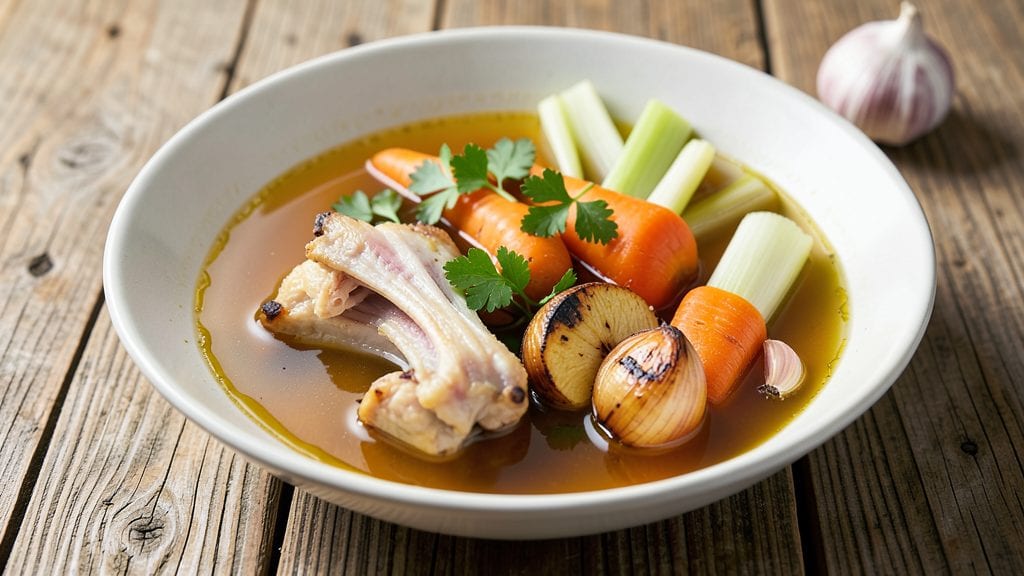
This one-pot chicken and veg broth recipe delivers restaurant-quality depth in just 30 minutes—no fancy techniques required. Growing up in small-town Georgia, I learned that the secret to bold flavor lies in slow-simmered bones and aromatic vegetables, not complicated steps.
The result? A rich, umami-packed broth that works as a standalone soup or elevates everything from risotto to braised meats.
What sets this recipe apart is the two-stage roasting of vegetables and chicken bones before simmering. This caramelization unlocks deeper flavors without extra effort, while a simple bundle of herbs and spices infuses the broth with complexity.
The one-pot method means minimal cleanup, and the broth stays fresh in the fridge for up to 5 days—perfect for meal prep or last-minute cooking.
By the time you strain the finished broth, you'll have a golden, aromatic liquid with layers of savory notes from the chicken, sweetness from the roasted vegetables, and a subtle herbal brightness.
It's the kind of broth that transforms simple meals into something special, whether you're serving it as-is with crusty bread or using it as the foundation for your next culinary creation.
For even more versatility, consider finishing the broth with a splash of lemon juice or fresh herbs before serving. This recipe is designed to be your go-to base—foolproof, flexible, and packed with professional-level flavor without the fuss. Let's get started on building your flavor foundation.
Ingredients for chicken and veg broth
Two pounds of bones, aromatic vegetables, and a handful of herbs transform into restaurant-quality broth.
| Ingredient | Amount | Notes |
|---|---|---|
| Chicken Bones 🍗 | 2 lb | With attached meat, preferably backs or necks |
| Yellow Onion 🧅 | 1 whole | Quartered, skin on for color |
| Carrots 🥕 | 4 medium | Whole, scrubbed clean |
| Celery Stalks 🥬 | 4 whole | Brown ends trimmed |
| Garlic Cloves 🧄 | 6 cloves | Smash slightly for faster infusion |
| Fresh Parsley 🌿 | ¼ cup | Stems included, packed |
| Fresh Thyme 🌿 | 2 sprigs | Stems intact for easy removal |
| Fresh Bay Leaves 🍃 | 2 whole | Dried works in pinch |
| Black Peppercorns 🌶️ | 1 tbsp | Crushed lightly |
| Sea Salt 🧂 | 1 ½ tsp | Diamond Crystal preferred |
| Extra-Virgin Olive Oil 🫒 | 2 tbsp | For roasting vegetables |
| Water 💧 | 8 cups | Filtered preferred |
| Lemon Juice 🍋 | 1 tbsp | Freshly squeezed for finishing |
The chicken bones are where the magic happens. Look for chicken backs or necks at your butcher counter—they've got more marrow and meat than just wings or drumsticks. Whole Foods or local farms often have them fresh, but the frozen section at Kroger works too. If you're using store-bought, check for any plastic packaging (it can impart weird flavors). The vegetables? Organic carrots and celery have more flavor, but regular will do. Just scrub them well—dirt adds bitterness. For the herbs, fresh thyme and parsley make all the difference, but dried will work if you're in a pinch (use half the amount).
No fresh herbs? Dried thyme and parsley at one-third the amount gets you close. Running low on bay leaves? Two dried leaves work, but they're stronger—start with one. The olive oil matters here—use something fruity (none of that cheap stuff). The water? Filtered is best, but tap works if you boil it first. For extra depth, add a single crushed red pepper flake if you like heat. Want more umami? One mushroom stem (like cremini) tossed in with the veggies adds richness without overpowering.
This broth tastes even better the next day once all the flavors meld. Keeps 5 days in the fridge, 3 months frozen. For freezing, portion into ice cube trays—perfect for future recipes. The bones? Save them—they make great stock for next time. Strain through a fine-mesh sieve for the smoothest texture, or leave it slightly cloudy for extra body (like a consommé). Always finish with a splash of lemon juice—brightens everything up.
Why You'll Love This Recipe
- Pantry Magic: I swear by this—no fancy shopping, just whatever’s in my fridge or freezer. That onion, celery, and carrot combo? It’s the holy trinity of broths, and the garlic cloves tie it all together with that deep, savory punch.
- Deep Umami Boom: The chicken bones simmering for hours? Chef’s kiss. That’s where the magic happens—rich, meaty flavor without a single bite of grease. Honestly, the first sip makes me pause mid-stir.
- Meal Prep MVP: Freeze half the batch right after making it. Need soup? Dumplings? Risotto? This broth’s the backbone of all three. I’ve got jars labeled for every occasion, and they last months—no waste, just flavor.
- Budget-Friendly Luxury: Chicken bones are practically free if you ask your butcher for the “seconds.” A few dollars buys enough broth to feed my whole family for days. Between us, this is how I stretch my grocery budget without sacrificing taste.
Step-by-step instructions for homemade chicken and vegetable broth
This one-pot method extracts maximum flavor from every ingredient in under 30 minutes.
Roast the Vegetables and Bones for Deep Flavor
Preheat your oven to 425°F. In a large Dutch oven, combine the 2 lb chicken bones, 1 whole yellow onion (quartered with skin on), 4 medium carrots (whole and scrubbed), and 4 whole celery stalks (brown ends trimmed). Drizzle with the 2 tbsp extra-virgin olive oil and toss gently to coat all surfaces.
Spread the mixture in a single layer and roast for 20 minutes, stirring once halfway, until the vegetables begin to caramelize and the bones develop a golden crust. This roasting step is what transforms ordinary broth into something extraordinary—it develops complex Maillard reactions that create that rich, umami depth you can't get from raw ingredients alone.
Here's the thing—don't skip this step. The caramelization on the vegetables and the seared surface on the bones are where most of the flavor lives. If you're worried about burning, just stir once after the initial 10 minutes to redistribute any hot spots.
Add Aromatics and Simmer for Maximum Extraction
After roasting, remove the Dutch oven from the oven and carefully add the 6 cloves garlic cloves (smash them slightly first for faster infusion), 2 sprigs fresh thyme (stems intact), 2 whole fresh bay leaves, 1 tbsp black peppercorns (lightly crushed), and 1.5 tsp sea salt. Pour in the 8 cups water and stir everything together to combine.
Return the pot to the stove over medium-high heat and bring to a rolling boil. Once boiling vigorously, reduce heat to medium-low to maintain a gentle simmer. This is where patience pays off—simmer uncovered for 20 minutes to allow all the flavors to meld together and the collagen in the bones to break down into gelatin, which gives broth its signature body.
I know it's tempting to crank the heat higher to speed things up, but simmering gently is crucial. Too much heat creates a skin on top that blocks flavor extraction. You'll know you're doing it right when you see small bubbles breaking the surface consistently and hear a soft, steady murmur from the pot.
Strain and Finish with Bright Acidic Notes
After simmering, remove the pot from heat and let it sit for 5 minutes to allow any settled particles to sink to the bottom. Line a fine-mesh strainer with cheesecloth or a coffee filter if you have one—this catches even the finest particles for crystal-clear broth. Pour the broth through the strainer into a clean pot or bowl.
Discard the solids in the strainer. Return the strained broth to the pot and stir in the 1 tbsp lemon juice. This final step brightens the flavor profile and cuts through any richness that might develop from the long simmer. The acidity also helps preserve the broth if you plan to store it.
Here's a pro tip: If you're using this broth immediately, you can skip the straining step for a more rustic, heartier texture. But for the clearest, most refined broth, the extra effort is worth it. The result should be a rich, golden liquid with layers of savory depth and a subtle herbal complexity.
Pro Tips For Making Chicken And Veg Broth
- BLANCH BONES FIRST: Skip the raw chicken bones straight into the pot—they’ll take forever to render fat and flavor. Give them a quick 10-minute boil, drain, then rinse to remove impurities. This cuts cooking time by 30 minutes and guarantees a cleaner broth.
- CHAR THE VEGETABLES: Don’t just toss chopped onions, carrots, and celery into the pot. Sear them in a dry skillet or Dutch oven with a splash of oil until deeply browned—especially the onions. That caramelization builds depth of flavor that no slow simmer alone can match.
- STRAIN TWICE: After simmering, strain the broth through a fine-mesh sieve, then pour it back through a cheesecloth-lined strainer. The first pass catches big bits; the second removes the cloudy sediment that ruins clarity. (Yes, it’s extra work, but your broth will look—and taste—like a restaurant’s.)
- ADD GARLIC LATE: Toss whole garlic cloves in with the bones, but peel and crush them only in the last 15 minutes of cooking. Raw garlic burns easily, and overcooking it turns bitter. This keeps the flavor bright and aromatic without any off-notes.
Creative variations of chicken and veg broth
Southern-Inspired Gumbo Base
Transform this broth into a classic Louisiana gumbo by adding 1 cup chopped okra and ½ cup diced smoked andouille sausage during the simmer. After straining, return the broth to the pot and stir in 1 tbsp Cajun seasoning (like Tony Chachere's) and 1 tsp smoked paprika.
Simmer for another 15 minutes to infuse the flavors. Serve over steamed white rice with sliced green onions and hot sauce. 🌶️
Italian Risotto Foundation
Use this broth as the liquid base for creamy Arborio rice risotto. Reserve 2 cups of broth for finishing, then use the remaining 6 cups to cook 1½ cups Arborio rice over medium-low heat for 18 minutes.
Stir in ½ cup grated Parmigiano-Reggiano and the reserved broth at the end. Finish with 2 tbsp white wine and fresh parsley. The herbal notes in the broth complement the richness perfectly. 🍷
Asian-Inspired Noodle Soup
For a Thai-inspired chicken noodle soup, strain the broth and stir in 1 tbsp fish sauce, 1 tsp palm sugar, and ½ cup coconut milk. Add 4 oz rice noodles and simmer for 5 minutes.
Top with sliced Thai basil, lime wedges, and chili oil. The umami from the broth balances the coconut milk beautifully, creating a harmonious fusion dish. 🌿
Herb-Infused Cold Soup
Chill the broth overnight, then blend with 1 cup fresh dill and ½ cup Greek yogurt until smooth. Strain again through a fine-mesh sieve for a silky texture. Serve chilled with crusty bread, a drizzle of extra-virgin olive oil, and a sprinkle of toasted pine nuts.
This chilled herb soup is perfect for summer—light yet deeply flavorful. ❄️
Moroccan Tagine Broth
For a Moroccan tagine twist, add 1 tsp ground cumin, 1 tsp ground coriander, and ½ tsp cinnamon to the simmering broth. After straining, return it to the pot with 1 cup diced chicken breast and 1 cup chopped apricots.
Simmer for 15 minutes until the chicken is cooked. Finish with fresh cilantro and serve with couscous. The warm spices transform the broth into something entirely new. 🌟
Spicy Tomato-Broth Fusion
Blend 1 cup roasted red peppers and ½ cup tomato paste into the finished broth for a Spanish-inspired tomato-broth fusion. Simmer for 10 minutes, then finish with 1 tsp smoked salt and fresh basil.
Serve with grilled shrimp and crusty bread. The smoky depth of the broth pairs wonderfully with the bright acidity of the tomatoes. 🍅
Nutrition facts
Frequently asked questions
Can I use chicken thighs instead of bones for this broth?
Chicken thighs work beautifully—they add extra richness and meatiness to your broth. For best results, use 1.5 lbs bone-in thighs (skin-on for extra flavor) and follow the same roasting and simmering steps. The skin will crisp slightly, adding depth to the broth's texture and flavor profile.
How do I make this broth even more flavorful?
Roast your vegetables and bones 5 minutes longer at 450°F for deeper caramelization. Add a 1-inch piece of ginger or 1 parsnip to the roasting pan for extra sweetness. After simmering, finish with 1 tsp fish sauce or ½ tsp soy sauce for umami depth—just don't add it too early or it'll turn bitter.
Can I make this broth in a slow cooker?
Yes! Roast the vegetables and bones first as directed, then transfer everything to a 6-quart slow cooker with 8 cups water. Cook on low for 6-8 hours instead of simmering. The slow cooker method extracts even more collagen for a richer texture. Just add aromatics (garlic, thyme, etc.) after roasting and strain before serving.
What if my broth tastes bitter?
Bitterness usually comes from overcooked vegetables or under-simmered bones. To fix it, stir in 1 tbsp lemon juice or ½ tsp apple cider vinegar per quart of broth. For prevention, remove vegetables after 20 minutes of roasting (don't let them burn) and simmer bones for exactly 20 minutes—no longer.
Can I freeze this broth for later use?
Freezing works perfectly! Portion into ice cube trays or 1-cup containers for easy measuring later. Label with the date—it keeps 3 months in the freezer. Thaw overnight in the fridge before using. Pro tip: Add a bay leaf to each container to preserve freshness during freezing.