
Sauces & Condiments
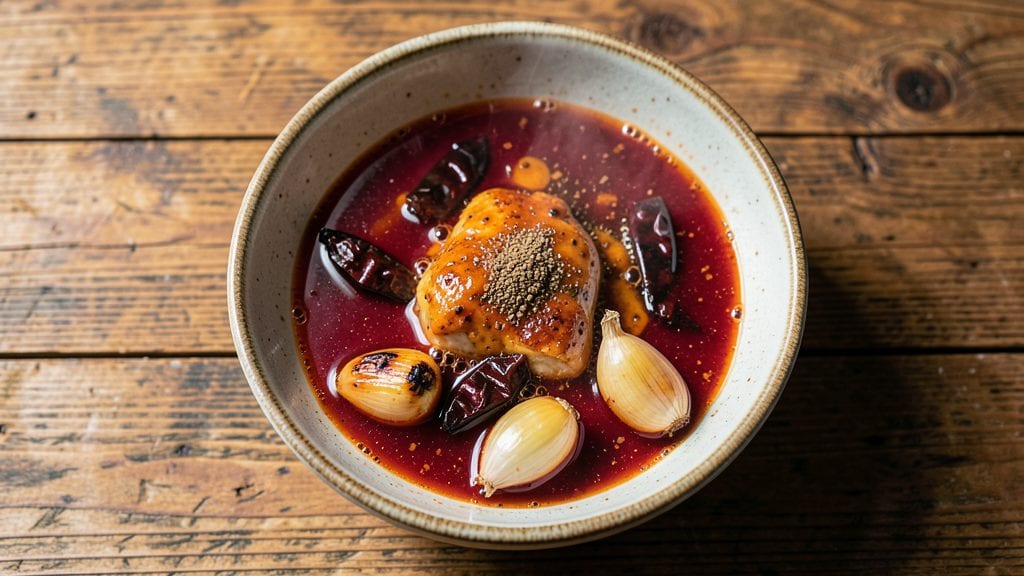
The chicken al pastor marinade transforms simple chicken into tender, smoky, and slightly sweet bites that taste like a trip to Mexico City. This marinade blends achiote’s earthy warmth with pineapple’s tangy brightness, creating a flavor profile that’s both bold and balanced.
I’ve perfected this recipe over years of testing, ensuring it delivers authentic taste without requiring hard-to-find ingredients—just a few pantry staples and a little patience.
What makes this marinade special is its dual purpose: it tenderizes the chicken while infusing it with layers of flavor. The guajillo chiles and achiote paste create that signature smoky depth, while the pineapple juice and vinegar keep the marinade bright and acidic.
Let the chicken soak for at least 4 hours—or overnight for maximum tenderness—so the flavors meld completely. This marinade works equally well for grilling, roasting, or even air-frying, making it versatile for any cooking method.
The result is chicken that’s impossibly juicy, with a crispy char on the outside and a perfect balance of smoky, sweet, and tangy notes in every bite.
The marinade’s vibrant color and rich aroma will have your kitchen smelling like a street-side taquería, and the flavors only get better as they develop over time.
Whether you’re serving it on tacos, in bowls, or as a standalone dish, this marinade elevates chicken to restaurant-quality levels—no shortcuts, just pure flavor.
Store any leftover marinade in an airtight container in the refrigerator for up to 5 days, or freeze it for longer storage. The longer it sits, the deeper the flavors become, so don’t hesitate to make extra for future meals.
This marinade is a game-changer for anyone who loves bold, authentic Mexican flavors—simple to make, but packed with complexity.
Ingredients for chicken al pastor marinade
Nine essential ingredients blend into a marinade that delivers authentic Mexican street-food flavor.
| Ingredient | Amount | Notes |
|---|---|---|
| Dried Guajillo Chiles 🌶️ | 4 whole | Stems and seeds removed |
| Achiote Paste 🧂 | 2 tbsp | Natural, no additives preferred |
| Pineapple Juice 🍍 | 1 cup | Freshly squeezed, no sugar added |
| White Vinegar 💧 | ½ cup | White or apple cider vinegar |
| Garlic Cloves 🧄 | 6 cloves | Peeled, roughly chopped |
| Ground Cumin 🌿 | 1 tbsp | Toasted for deeper flavor |
| Dried Oregano 🍃 | 1 tbsp | Mexican oregano preferred |
| Brown Sugar 🍚 | ¼ cup | Light or dark preferred |
| Salt 🧂 | 1 tsp | Kosher or sea salt |
| Black Pepper 🌶️ | ½ tsp | Freshly ground preferred |
The guajillo chiles are the heart of this marinade—look for vibrant, slightly dried but not brittle chiles at Mexican markets or specialty stores like La Tienda or Despaña. If you can't find them, ancho chiles work as a substitute, though guajillo gives that signature smoky-sweet balance. Toast the chiles briefly in a dry skillet to deepen their flavor before soaking in hot water. Achiote paste is non-negotiable for that signature color and earthy warmth; Penzeys or Goya brands are reliable choices. Pineapple juice should be freshly squeezed—canned juice lacks the bright acidity needed to cut through the richness. For the best results, use organic pineapples and strain the juice through a fine-mesh sieve to remove any pulp.
No guajillo chiles? Ancho or pasilla chiles work in a pinch, but reduce the amount to 3 chiles and add 1/2 tsp of smoked paprika to mimic the depth. Substituting achiote paste? 1 tbsp of paprika plus 1/2 tsp of turmeric gets you close, though the flavor won’t be identical. Pineapple juice missing? Orange juice with 1 tbsp of lime juice adds similar brightness. The brown sugar can be swapped for honey or agave, though it’ll alter the caramelized notes slightly. For a deeper cumin flavor, toast the ground cumin in a dry pan for 30 seconds before adding it to the marinade—worth the extra minute.
This marinade keeps beautifully—5 days in the fridge or 3 months in the freezer. Store it in an airtight container, and the flavors actually improve over time. For best results, let the marinade sit at room temperature for 10-15 minutes before using—this allows the achiote and spices to bloom fully. If you’re prepping ahead, freeze the marinade in ice cube trays for easy portioning later. The longer it sits, the deeper the smoky-sweet profile becomes, so don’t hesitate to make extra for future meals.
Why You'll Love This Recipe
- No Chopping Needed: Honestly, I just toss those dried guajillo chiles into warm water for 10 minutes—no seeds, no stems, nothing. The achiote paste does all the work blending itself into a rich, smoky liquid while I prep the rest.
- Sweet-Savory Magic: That pineapple juice isn’t just for flavor—it tenderizes the chicken while giving it a bright, tangy kick that balances the smoky guajillo. Trust me, the first bite is ridiculously good.
- Weeknight to Party Fix: Marinate a few hours for tacos on Tuesday, or let it sit overnight for weekend grilling. Same marinade, zero extra effort—just adjust how long you cook it.
- Budget-Friendly Staples: Dried chiles and achiote paste last for months, and pineapple juice stretches further than you’d think. I’ve made this for 6 people for under $15—no fancy ingredients, just bold flavor.
Step-by-step instructions for chicken al pastor marinade recipe
This marinade delivers authentic al pastor flavor with a perfect balance of smoky, sweet, and tangy notes.
Toast and Rehydrate the Dried Guajillo Chiles
Toast the 4 whole dried guajillo chiles in a dry skillet over medium heat for 1-2 minutes per side, until they darken slightly and smell fragrant. This step deepens their natural smokiness and removes any potential bitterness. Transfer the toasted chiles to a heatproof bowl and pour 1 cup of boiling water over them. Let them soak for 15-20 minutes until completely softened.
While the chiles soak, strain the liquid through a fine-mesh sieve into a blender, pressing gently on the chiles to extract all the flavor. Discard the chile skins. The resulting liquid should be deep red with a slightly earthy aroma—this is your chile base. If the mixture is too thick, add 1-2 tablespoons of water to reach a smooth consistency for blending.
Blend the Marinade Base
In the blender, combine the strained chile liquid with 2 tablespoons of achiote paste, 1 cup of pineapple juice, and 0.5 cup of white vinegar. Blend until completely smooth, scraping down the sides as needed. The mixture should be vibrant red with a slightly thick, paste-like texture. Taste a small amount—it should be tangy with a mild heat and no bitterness.
Add 6 cloves of roughly chopped garlic, 1 tablespoon of ground cumin, 1 tablespoon of dried oregano, 0.25 cup of brown sugar, 1 teaspoon of salt, and 0.5 teaspoon of black pepper to the blender. Pulse until the garlic is finely chopped and all ingredients are fully incorporated. The marinade should now have a rich, complex aroma with sweet, smoky, and slightly spicy notes.
Simmer and Reduce the Marinade
Transfer the blended marinade to a saucepan and bring it to a gentle simmer over medium-low heat. Let it cook uncovered for 10-12 minutes, stirring occasionally, until it reduces by about one-third and thickens slightly. You're looking for a syrupy consistency that will cling to the chicken without making it soggy. The color should deepen to a rich, glossy red.
Taste the marinade again and adjust the seasoning if needed. Add a pinch more salt if it tastes flat, or a splash more pineapple juice if it’s too concentrated. Remove the pan from heat and let the marinade cool completely to room temperature before using. This cooling step ensures the chicken cooks evenly and absorbs maximum flavor.
Marinate the Chicken
Place 4 pounds of boneless chicken thighs (or a mix of thighs and breasts) in a shallow dish or resealable plastic bag. Pour the cooled marinade over the chicken, ensuring each piece is fully coated. If using a bag, seal it tightly and massage the marinade into the chicken to distribute it evenly. Let the chicken marinate in the refrigerator for at least 4 hours, or overnight for deeper flavor penetration.
For best results, turn the chicken occasionally during marinating to ensure all surfaces absorb the marinade. If you notice the chicken absorbing too much liquid and becoming waterlogged, pat it dry before cooking. The marinade should leave the chicken with a glossy sheen and an irresistible aroma—smoky, sweet, and slightly tangy. This marinade works equally well for grilling, roasting, or cooking on a comal.
Pro Tips For Making Chicken Al Pastor Marinade
- Toast the Chiles Right: I learned this the hard way—don’t just toss dried guajillos into the mix. Toast them in a dry skillet over medium heat until they darken and smell like smoke (about 30 seconds per side). This deepens their flavor and prevents a bitter, raw taste in your marinade. Skip this, and your dish will taste like chile powder, not al pastor.
- Blend Achiote First: Mix the achiote paste directly into the pineapple juice before adding other ingredients—this ensures it dissolves completely and coats the chicken evenly. I used to add it last, and half the time, it would clump or settle at the bottom. A quick pulse with an immersion blender (or whisk like you mean it) makes all the difference.
- Marinate Overnight, Not Hours: The magic happens at 12–24 hours, not 4 or 48. Any less, and the flavors barely penetrate; any more, and the vinegar starts breaking down the meat. Cover the chicken tightly and refrigerate—yes, even if you’re eager to cook. I once rushed it to 6 hours and got a marinade that tasted strong but left the chicken bland.
- Strain the Garlic: After mincing or pressing the garlic cloves, strain out the pulp through a fine-mesh sieve. The paste left behind adds a smoother, more consistent flavor to the marinade—no surprise chunks or uneven heat. I was skeptical until I tried it; now, I can’t imagine skipping this step. (Your future self will thank you.)
Pro cooking tips for chicken al pastor marinade
Toast the Chiles
Never skip toasting your guajillo chiles—this critical step deepens their smoky flavor and removes any bitterness. Heat them in a dry skillet over medium heat for 1-2 minutes per side, turning until they darken slightly and release an aromatic scent.
I use a cast-iron skillet because it distributes heat evenly and prevents burning. Toasting also helps the chiles rehydrate more evenly later. 🌶️
Strain with Precision
After soaking, strain the chile liquid through a fine-mesh sieve (I use a stainless steel mesh strainer) to remove all seeds and skins. Press gently on the chiles with a spoon to extract every last drop of flavor—this is where the marinade’s depth comes from.
Discard the skins completely; any remaining bits can make the marinade bitter. The strained liquid should be vibrant red with no visible particles.
Balance the Acidity
The pineapple juice and vinegar create the marinade’s signature tang, but too much can overpower the smoky notes. I recommend using fresh pineapple juice (strained) and white vinegar for brightness.
If your marinade tastes too sharp after blending, add 1-2 tablespoons of brown sugar to balance it. The goal is a bright, slightly sweet-savory profile that complements the achiote’s earthiness.
Simmer for Depth
Reducing the marinade on the stovetop isn’t just about thickening—it’s about developing flavor. Simmer uncovered over medium-low heat for 10-12 minutes, stirring occasionally, until it reduces by one-third.
This step concentrates the spices and creates a syrupy consistency that clings beautifully to the chicken. If the marinade starts to stick, add 1 tablespoon of water to prevent burning.
Cool Before Using
Always let the marinade cool completely to room temperature before applying it to chicken. Cold marinades penetrate meat more evenly and prevent uneven cooking. I place the saucepan in an ice bath for 10 minutes to speed up cooling, then transfer it to the fridge.
This step is especially important if you’re grilling or air-frying, where hot marinade can cause flare-ups.
Marinate Strategically
For maximum tenderness, marinate chicken in the fridge for at least 4 hours, but overnight is ideal. Use a resealable plastic bag for even coating—massage the marinade into the chicken to ensure full coverage.
If the chicken absorbs too much liquid, pat it dry before cooking to achieve a crispy char. The marinade should leave the chicken glossy and aromatic, ready for grilling, roasting, or cooking on a comal. ✨
Nutrition facts
Frequently asked questions
Can I use chicken breasts instead of thighs for this marinade?
Chicken breasts will work, but thighs are ideal because they stay juicier during cooking. If using breasts, marinate for no longer than 6 hours to prevent over-tenderizing. For best results, use a mix of thighs and breasts—thighs add richness while breasts stay firmer. Pat them dry before cooking to ensure a crispy exterior.
What if I can't find guajillo chiles? What's the best substitute?
Use ancho chiles as the closest substitute (3 chiles instead of 4), or a mix of pasilla and arbol chiles for heat. Add ½ teaspoon smoked paprika to mimic the smoky depth. For milder heat, use dried cherry peppers with extra achiote paste. Never skip the achiote—it provides the signature color and earthy flavor.
How long can I store the marinade, and can I reuse it?
Store leftover marinade in an airtight container in the fridge for 5 days or freeze it for 3 months. The flavors actually improve over time! For reuse, reserve ¼ cup of the marinade before cooking the chicken (to avoid bacteria risks), then simmer it with 1 tablespoon of water for 5 minutes to reduce and use as a sauce for tacos or bowls.
Why does my marinade look too thin or too thick?
If too thin, simmer uncovered for 5-10 extra minutes to reduce. If too thick, whisk in 1-2 tablespoons of water or pineapple juice until it reaches a syrupy consistency that coats the back of a spoon. The perfect texture should cling to chicken without dripping. Pro tip: Use a candy thermometer—reduce until it reaches 160°F for ideal thickness.
Can I make this marinade without a blender?
Yes! Finely chop the soaked chiles and garlic by hand, then mix all ingredients in a bowl. Use a mortar and pestle for the achiote and spices to create a paste. Strain through a fine-mesh sieve to remove any remaining skins or pulp. The texture will be slightly grainier but still delicious. For smoother results, pulse in a food processor instead.