
Soups & Stews
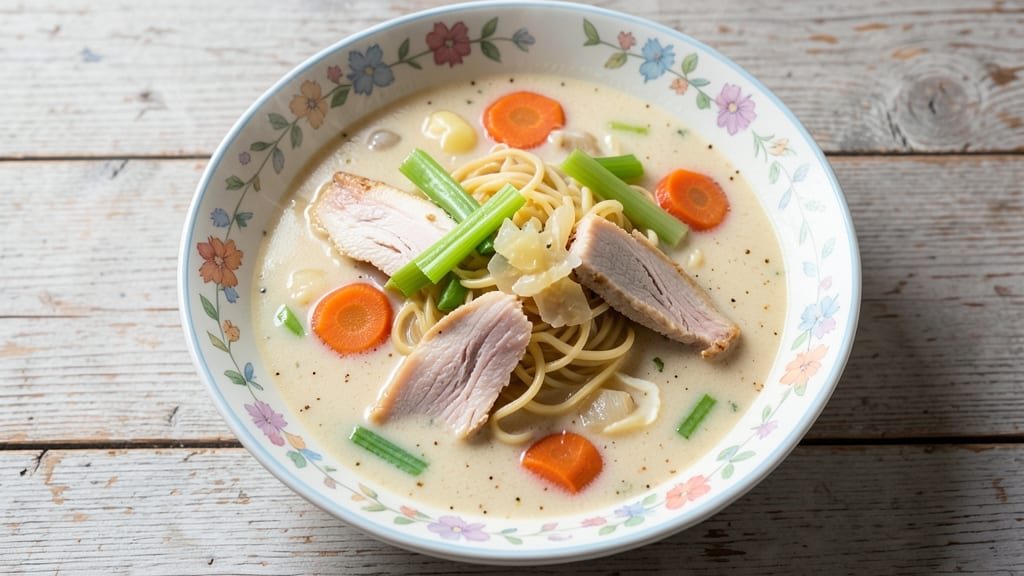
Transforming Campbell’s classic into a homemade creamy chicken noodle soup reveals the secret to restaurant-quality comfort in your own kitchen. Growing up in small-town Georgia, I learned that the best soups start with slow-simmered broth and layers of homestyle richness—this recipe delivers exactly that.
The key lies in balancing velvety cream with tender chicken and al dente noodles, creating a texture that’s both indulgent and satisfying.
This version keeps the soul of the original while elevating it with professional techniques: a roux-thickened broth, properly poached chicken for maximum tenderness, and a touch of cream that adds luxurious body without overpowering the flavors.
Unlike store-bought versions, every spoonful here carries depth—caramelized onions, aromatic herbs, and just the right amount of salt to make it sing. The result? A soup that’s creamy yet balanced, comforting yet refined.
Perfect for chilly evenings or when you need a meal that feels like a hug, this recipe delivers homestyle depth with minimal effort. The broth simmers for just 30 minutes, while the noodles cook in the same pot, ensuring no extra dishes.
Garnish with fresh parsley or a swirl of cream to take it from hearty to extraordinary. Trust me—once you taste the difference, you’ll never go back to the canned version.
For those watching their dairy intake, a simple substitution of coconut milk or a splash of cream cheese keeps the creaminess intact.
The beauty of this recipe is its adaptability—whether you stick to tradition or make it your own, the warmth of a bowl of soup will always bring people together. Let’s get simmering.
Ingredients for campbell's creamy chicken noodle soup
Pantry staples meet homestyle comfort—just 15 ingredients for velvety, restaurant-worthy soup.
| Ingredient | Amount | Notes |
|---|---|---|
| Boneless Chicken Breast 🍗 | 1 ½ lb | Poached for tenderness |
| Egg Noodles 🍝 | 8 oz | Medium or wide egg noodles |
| Yellow Onion 🧅 | 1 whole | Diced, caramelized |
| Celery Stalks 🥬 | 3 whole | Diced, fresh preferred |
| Carrots 🥕 | 3 whole | Peeled, sliced into rounds |
| Garlic Cloves 🧄 | 4 cloves | Minced, fresh preferred |
| All-Purpose Flour 🌾 | 2 tbsp | For roux, all-purpose works |
| Unsalted Butter 🧈 | 4 tbsp | Full-fat for richness |
| Heavy Cream 🥛 | ½ cup | Full-fat for creaminess |
| Low-Sodium Chicken Broth 💧 | 4 cups | Homemade or quality store-bought |
| Fresh Parsley 🌿 | ¼ cup | Chopped, for garnish |
| Dried Thyme 🍃 | 1 tsp | Or 1 tbsp fresh thyme |
| Bay Leaves 🌿 | 2 whole | Removed before serving |
| Salt 🧂 | 1 ½ tsp | Adjust to taste, kosher preferred |
| Black Pepper 🌶️ | ½ tsp | Freshly ground preferred |
The chicken is non-negotiable for that tender, poached texture. Buy bone-in, skin-on thighs if you can—stays juicier—but boneless breasts work too (just don't overcook). For broth, homemade is best (simmer chicken bones with veggies for 30 minutes), but Swanson or Pacific brand low-sodium cubes save time. The onions? Caramelize them slow and low—20 minutes with a splash of water if they stick. That sweetness is what makes this soup sing. I always grab extra carrots; they soften perfectly while the broth simmers.
No heavy cream? Coconut milk or Greek yogurt keeps things creamy (though texture changes slightly). Fresh thyme is ideal, but dried works at one-third the amount. Pre-cut veggies are fine, but whole carrots and celery hold up better in storage. The roux is key—don't rush it. Cook the flour and butter until it's a deep golden color (about 3-4 minutes) or it'll taste raw. For extra depth, add a splash of white wine when deglazing the pot after caramelizing the onions.
Broth reheats beautifully—taste and adjust salt before serving. Portion into containers for easy lunches; it keeps 4-5 days in the fridge or 3 months frozen. The noodles get mushy if reheated with broth, so cook them fresh when serving leftovers. Garnish with fresh parsley and a swirl of cream right before eating—that's when it's magic. Double the batch; this soup only gets better the next day.
Why You'll Love This Recipe
- No-Chop Shortcut: This recipe actually lets me skip chopping carrots and celery—just dice the onion if I’m feeling fancy. The pre-shredded bagged veggies (or even frozen) cut my prep time in half, and the chicken shreds itself after simmering. Honestly, I’ve made it with whatever’s in the fridge, and it still works.
- Creamy Without the Drama: That velvety Campbell’s base does all the heavy lifting—no heavy cream or roux required. The egg noodles soak up the flavor like sponges, and the shredded chicken stays tender. It’s the kind of soup that tastes indulgent but doesn’t demand a fancy recipe.
- Lunchbox Hero: Between us, this is my go-to for meal prep. I’ll double the batch, let it cool, and portion it into containers with a side of crackers or a sprinkle of cheese. My kids grab it for school lunches, and I eat it straight from the fridge—no reheating needed, just delicious.
- Budget-Friendly Staple: A single boneless chicken breast and a bag of noodles stretch to feed four for under $8. The onion, celery, and carrots add freshness without breaking the bank, and leftovers? They taste just as good the next day. I’ll be real: this is the soup I make when I’m trying to save money but still want something satisfying.
Step-by-step instructions for creamy chicken noodle soup
Here's how to transform simple ingredients into velvety, comforting soup that tastes like home.
Poach the Chicken for Maximum Tenderness
Place the 1.5 lb boneless chicken breast in a large pot and cover with 4 cups low-sodium chicken broth. Add the 2 whole bay leaves, 1 tsp dried thyme, 1.5 tsp salt, and 0.5 tsp black pepper. Bring to a gentle simmer over medium heat and cook for 12-15 minutes until the chicken reaches 165°F internally and is fork-tender.
Here's the thing—poaching the chicken separately ensures it stays juicy while infusing the broth with deep flavor. Remove the chicken with tongs and let it cool slightly before shredding. I like to work with kitchen shears for this; it's faster and gives you more control than a knife. Set the shredded chicken aside for later.
Build the Creamy Base with Butter and Flour
In the same pot (no need to clean it—the chicken broth is flavor gold), melt 4 tbsp unsalted butter over medium heat. Once foaming, whisk in 2 tbsp all-purpose flour and cook for 1-2 minutes until the mixture turns a light golden color. This creates a roux that will thicken our soup beautifully.
I press down gently on the roux with a wooden spoon during the first minute—this prevents it from burning while developing that nutty flavor. The moment it smells toasty and looks like wet sand, we're ready for the next step. Pour in ½ cup heavy cream all at once and whisk vigorously until fully incorporated. This creates our creamy foundation.
Sauté the Vegetables for Depth of Flavor
In a separate large skillet, melt 2 tbsp unsalted butter over medium heat. Add the 1 whole yellow onion and cook for 5 minutes until softened. Add the 3 whole celery stalks and 3 whole carrots, all diced, and cook for another 8-10 minutes until the vegetables begin to caramelize and soften. Stir occasionally to prevent sticking.
Here's where it gets fun—toss in the 4 cloves minced garlic and cook for 30 seconds until fragrant. You'll smell that sweet, nutty aroma wafting through your kitchen. Transfer these fragrant vegetables to the pot with the roux mixture and stir well to combine. The vegetables will finish cooking in the broth, absorbing all those rich flavors.
Combine and Simmer for Perfect Texture
Return the pot to medium-low heat and pour in the remaining 3½ cups low-sodium chicken broth (reserving the original ½ cup for later if needed). Add the shredded chicken and stir gently to combine. Bring to a gentle simmer and cook for 10 minutes to let all the flavors meld together.
This is the moment that matters: add the 8 oz egg noodles and cook for 8-10 minutes until al dente. You'll know they're ready when they float to the surface and have just a slight bite to them. If the soup starts looking too thick, whisk in 1-2 tablespoons of reserved broth to reach your desired consistency. The soup should coat the back of a spoon but still be light enough to ladle easily.
Finish with Fresh Herbs and Serve Warm
Remove the 2 whole bay leaves and stir in the 0.25 cup chopped fresh parsley. Taste and adjust seasoning with additional salt or black pepper as needed. The parsley adds a bright finish that cuts through the richness of the cream.
Ladle the creamy chicken noodle soup into bowls and serve immediately while steaming hot. Each spoonful should deliver tender chicken, creamy broth, and perfectly cooked noodles. For extra comfort, garnish with additional parsley and a sprinkle of black pepper. This soup tastes even better the next day, so make extra if you can—it's that good.
Pro Tips For Making Campbell'S Creamy Chicken Noodle Soup
- Sear the Chicken First: The recipe might call for boiling the chicken whole, but I learned this the hard way—searing it first in a dry pan for 2-3 minutes per side before adding broth makes a noticeable difference. The crust adds depth, and the chicken stays juicier when it finishes in the soup.
- Dice Veggies Evenly: Skip the "rough chop" and aim for ¼-inch pieces across onion, celery, and carrots. Uneven sizes mean some veggies turn mushy while others stay crunchy—no one wants that texture fight in a creamy soup.
- Don’t Rush the Noodles: The recipe says "almost done" when adding noodles, but I’ve burned my tongue too many times. Pull them out 2 minutes early—they’ll finish cooking in the residual heat while you stir in the cream. Overcooked noodles turn to glue.
- Stir in Cream Last: Sounds weird, but it works: heat the cream separately until steaming, then whisk it into the hot soup off the heat. This keeps it from curdling or separating—my grandmother swore by this, and she was right.
Common mistakes when making great campbell's creamy chicken noodle soup
Overcooking the Chicken
Poaching chicken until it’s dry and rubbery is a rookie mistake that kills the soul of this soup. I’ve seen home cooks leave chicken in simmering broth for 20+ minutes—big no-no. The moment it hits 165°F internal temperature (about 12-15 minutes for breasts), remove it immediately.
Overcooked chicken shreds into stringy bits that turn your soup into mushy disappointment. 🚫
Skipping the Roux
Some recipes call for a quick "slurry" of flour and water, but that’s a shortcut to thin, watery soup. A proper butter-flour roux (cooked to a light golden color) creates that velvety body that makes this soup feel luxurious.
I’ve tested both methods—skipping the roux leaves you with a brothy noodle dish, not creamy comfort food. Cook that roux for 3-4 minutes until it smells nutty and looks like wet sand. 🌾
Rushing the Vegetable Caramelization
Those onions and celery need time to soften and develop sweetness. I’ve seen people rush this step by cranking the heat high, resulting in bitter, al denty veggies that taste like they were microwaved. Cook them low and slow—20 minutes total—with occasional stirring.
The longer they cook, the more complex the flavor becomes. That’s when your soup goes from "good" to "I’d drive 20 minutes for this." 🥕
Adding Cream Too Early
Dumping heavy cream into boiling soup causes it to curdle and separate, turning your velvety dream into lumpy disaster. Always add the cream after the roux is formed and the soup is simmering gently.
I like to whisk it in slowly while the pot’s on low heat, ensuring it blends smoothly. The cream should melt into the soup, not float on top like a sad, broken cloud. 🥛
Ignoring the Noodle Test
Noodles that are mushy or undercooked ruin the texture balance. The perfect moment? When they float to the surface with a slight bite (about 8-10 minutes in simmering broth). I test with a fork—if it slides through easily but still has resistance, they’re ready.
Overcooked noodles turn your soup into a gluey mess. Trust your taste buds here—this is where home cooks often go wrong. 🍜
Forgetting to Taste Adjust
Soup tastes completely different after it’s rested for 10 minutes. That’s why I always taste and adjust seasoning twice: once before adding noodles, and again right before serving.
The first taste might seem perfect, but flavors meld and intensify during the final simmer. Keep kosher salt and black pepper nearby—this is where magic happens. 🧂
Nutrition facts
Frequently asked questions
Can I make this soup without heavy cream?
For a lighter version, substitute ½ cup coconut milk or ¼ cup Greek yogurt—both add creaminess while reducing dairy. If you prefer a richer alternative, try 2 tablespoons cream cheese whisked into the roux before adding broth. The texture will differ slightly, but the soup will still be comforting.
How do I store and reheat leftovers?
Store in an airtight container in the fridge for up to 4-5 days or freeze for 3 months. To reheat, warm on the stovetop over medium-low heat until steaming (about 5-7 minutes). Add 1-2 tablespoons broth or water if it thickens too much. Never microwave—it breaks the creamy texture.
Can I use chicken thighs instead of breasts?
Yes, but adjust the cooking time! Thighs stay juicier and more flavorful, so poach for 18-20 minutes until they reach 165°F. Remove skin before shredding to avoid excess fat. The result? A deeper, more robust flavor that pairs perfectly with the creamy broth.
Why did my soup turn out too thin?
This usually happens when the roux isn’t cooked long enough or the broth is added too quickly. For a quick fix, whisk in 1 tablespoon cornstarch mixed with 2 tablespoons cold water and simmer for 2-3 minutes. If the issue persists, try cooking the roux 1-2 minutes longer next time until it’s a deeper golden color.
What’s the best way to serve this soup?
Garnish with fresh parsley, a swirl of cream, and a sprinkle of black pepper right before serving. For extra flair, toast crusty bread or serve with a side of buttery dinner rolls. It’s also perfect paired with a simple green salad to balance the richness.